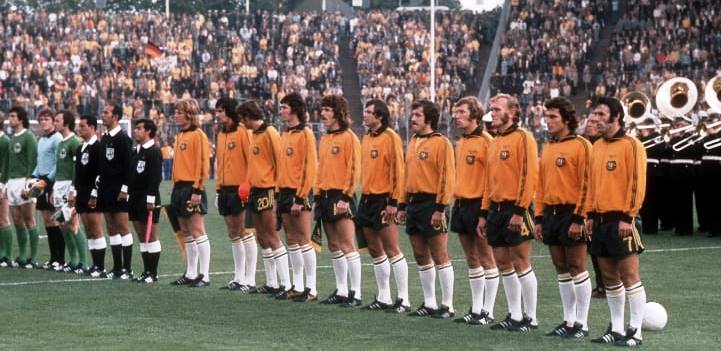
For those who had followed the Socceroos through the 2023-24 Asian Cup group stage, their exit at the hands of South Korea in the quarter finals, was not unexpected. Favourably drawn in anything but a “Group of Death” and then fortuitously matched against 142nd ranked Indonesia in the Round of Sixteen elimination match, Australia stuttered through the competition, failing again to make an impression on this tournament.

The reasons for Australia’s consistent below par performances were plentiful from the coach Graham Arnold and supported by the flattering media and match commentators. We were told that our opponents’ defensive blocks made it hard for us to create meaningful chances. We had too much possession because we were a counter attacking team (can you have too much possession in a football match?). The popular excuse for the early poor performances was that most cup champions “grow into the tournament” and it would take a few games for the team to shine. The Socceroos did indeed start slowly and then ultimately fizzled out of the Asian Cup. This has left many questions for coach Arnold to ponder before Australia takes on Lebanon, in the upcoming FIFA World Cup qualifying matches.

The most compelling justification for our failure was that it was difficult for Graham Arnold to get the Socceroos to play as a collective unit as they had been gathered hastily from many different parts of the world. The best eleven should have been set in concrete well before the start of the tournament but this was not the case. Instead of having a regular starting line up, there were four or five changes with each game, not the modus operandi for consistent cohesive performances. As might be expected, with the squad comprising players from most corners of the football world, including some new to the national team group, the team arrived as relative strangers and this was reflected in their performances.

For many years, Australian football has been afflicted by the belief that playing club football almost anywhere but in Australia, is better than playing at home. Sadly, those responsible for selecting the present national team, appear to be disciples of this mantra. The squad selection reflected this and I believe that the impact of having so many foreign based players was responsible for the Socceroos tepid performances at the Asian Cup
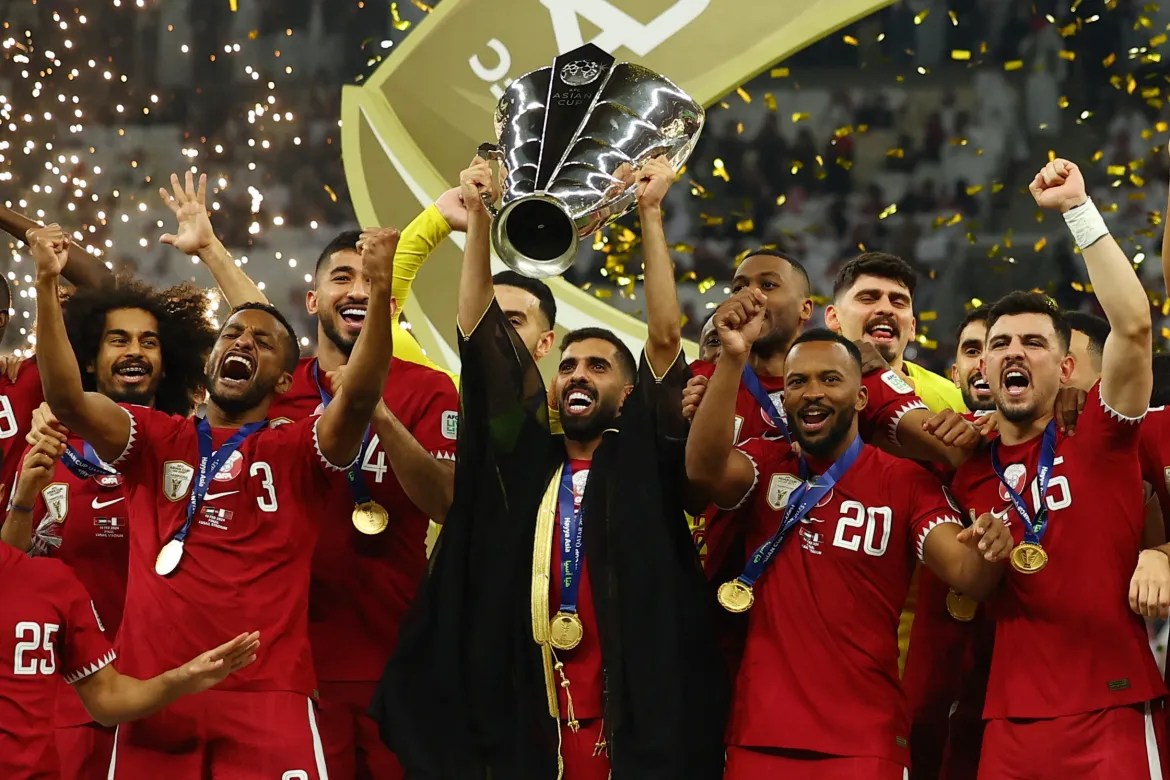
Contrast our performance with that of the ultimate winners, Qatar. The entire Qatari squad plays in that country and their cup final opponents, Jordan, had twenty of their group playing their club football at home in Jordan. In the Australian squad, only four (including two goalkeepers) play in this country. The other unsuccessful pre tournament favourites, Japan, South Korea and Iran also boasted a swathe of players on the “world circuit”, clearly demonstrating that there is a lot to be said for selecting home based players to help produce unified, organised performances.
Leaving aside too much possession, defensive blocks and inadequate preparation, this team individually and collectively was not good enough. We struggled throughout the Asian Cup. In particular, the Australian midfield was devoid of any semblance of creativity or invention. The engine room was staffed with European based players, who excel at playing ten to fifteen metre passes, sideways or backwards and little else. “But Jackson Irvine plays in Bundesliga 2?” you say. Mitchell Duke is a regular with Machida Zelvia in the Japanese second division. We even managed to naturalise and recruit an unknown Welshman, Bolton Wanderers 28 year old full back, Gethin Jones. “Hey mate, Bolton Wanderers? Sign these papers – you’re in!”

There are scores of young and not so young Australian footballers earning their living overseas but, aside from the financial aspect, are they any better off for it? Does playing in a foreign country, coming to grips with learning a foreign language and having to assimilate into that country’s culture, provide the best environment for the development of Australian footballers? If you are going to sit on the bench in winter in second or third division football in Europe, you may be better off sitting on the bench in the sunshine of Melbourne or Adelaide. At least in Adelaide your friends and family can come and watch you sit on the bench.

The very talented young Garang Kuol was whisked off with much fanfare to English Premier League Newcastle United, only to be immediately offloaded on loan to Hearts in Scotland and then Volendam in the Netherlands, where his appearances have been spasmodic at best. Kuol should have been pushing for a spot in the Socceroos starting line but more than a year of this player’s footballing life has now been wasted – another pawn in the club / agent football merry go round. Has it been worthwhile?
Australian club football is capable of being a rewarding foundation for local players. With thousands of talented footballers of all genders playing the game locally at grassroots level, not to mentioned the private academies churning out potential Socceroos or Matildas, local club football could be and should be very strong. To create the ideal foundation however, will require a drastic change to Australian club football, particularly the men’s game. Whatever it takes, Football Australia has to abandon the APL A Leagues that are lurching from one calamity to another and create two connected divisions of senior professional football for both men and women. Promotion and relegation is not negotiable and would have to commence immediately.

Everyone, especially Graham Arnold, agrees that local players need to play more matches. If Football Australia were to place serious restrictions on imported players, the senior competitions would be able to provide regular professional football for the local Australian product. As the popularity of the competitions grew, the leagues could expand allowing a more extensive match calendar, importantly providing more game time for all locals. Remuneration would increase in vibrant local leagues, which would entice more home grown players to make a footballing career in this country.

Despite their current problems and matches often having to be played in stifling heat and humidity, the A Leagues can provide some quality and entertaining football. There are enough talented footballers doing the rounds of the A Leagues, that could form a very strong national team, without us having to resort to @ancestry.com or play those in far away lands, who may be sitting on substitute benches, watching their football lives ebb away.
Nestory Irankunda and Daniel Arzani are two gifted A League players who were overlooked for overseas based Martin Boyle, Marco Tilio and John Iredale as Asian Cup attacking options. Luke Brattan at Sydney FC has always been an outstanding footballer, despite successive club coaches blunting his attacking flair. Is there a better goal scorer presently in the A League Men than former Socceroo, Adam Taggart ? Taggart’s Perth Glory team mate Stefan Colakovski too, has been performing very well in a struggling Perth outfit. Western Sydney Wanderers have a number of talented Australian players, not the least Lachlan Brook, another Australian born player who found that playing football in the United Kingdom, had more than its’ share of challenges. Similarly, Brandon Borrello, who had a chequered five year stint in Germany.

Selection in the Socceroos squad of a disproportionate number of overseas based footballers, has to be addressed. If Graham Arnold was to pick a greater percentage of local players, this would offer him a chance to work regularly with the squad on home soil. I have no doubt that a team assembled from within Australian clubs, would be more than a match for the incumbent Socceroos. Also, more frequent international friendlies could be arranged, without the need to bow to the demands of overseas clubs.

Playing a largely home based team would enhance the flagging popularity of the Socceroos. If the national team comprised a substantial number of local players, ticket sales and other revenue streams would increase as local fans supported their club favourites, rather than those playing (or maybe not playing) for Hibernians, Hearts or St. Mirren in Scotland.
Local players must be given more opportunity to be selected for the national team. Selection must be based on merit and not deflected by the perception that if you are playing in Germany, Japan or Scotland, in whatever division, you must be a superior player to those back home in Australia.
David Jack ©2024

 David Jack