
* I am very grateful to the late Andrew Dettre, the journalists and all those associated with Soccer World that provided such a comprehensive weekly journal of football in NSW as well as in other States and on the international scene. I also want to thank Mark Boric for uploading all available issues of Soccer World to Blogspot, from which, so much of this article’s information has been derived
A full round of matches was played on the weekend of Saturday & Sunday 29th & 30th June 1968. There were no floodlit competition games in 1968 as no dedicated football grounds had lighting that would have been adequate for night time matches.

Leading into the weekend fixtures the unbeaten, star studded Hakoah side was three points clear of Pan Hellenic, who were soon to be reinforced by the arrival of Greek superstar, Takis Loukanidis. A Prague outfit, still able to call upon a 29 year old Les Scheinflug and their Argentinian import Raul Blanco, were one point behind on the table. At the bottom of the table, Division 1 debutants, Manly were finding the transition to the higher division challenging, although Canterbury were below them in last place on goal difference.

At the E S Marks Field, in a game described by Soccer World’s Lou Gautier as being “extraordinary”, Yugal earned a smash and grab victory over a strong Prague side, who had future Australian internationals David Zeman and an 18 year old Gary Manuel on show. Also, in the Prague line up was the speedy and ever dangerous winger, Australian under 23 international, Larry Armytage. Although only having three shots on goal, Yugal coach Ferdo Dunaj asserted that Yugal deserved their win and Lou Gautier agreed. A small crowd of 1,780 paying spectators was not unexpected for a Saturday fixture at E S Marks, although undoubtedly at least 100 fans would have enjoyed free admission on the aptly named “Scotsman’s Hill” overlooking the ground.
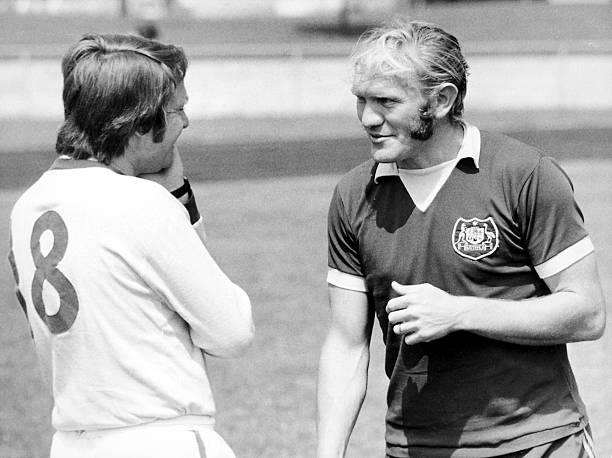
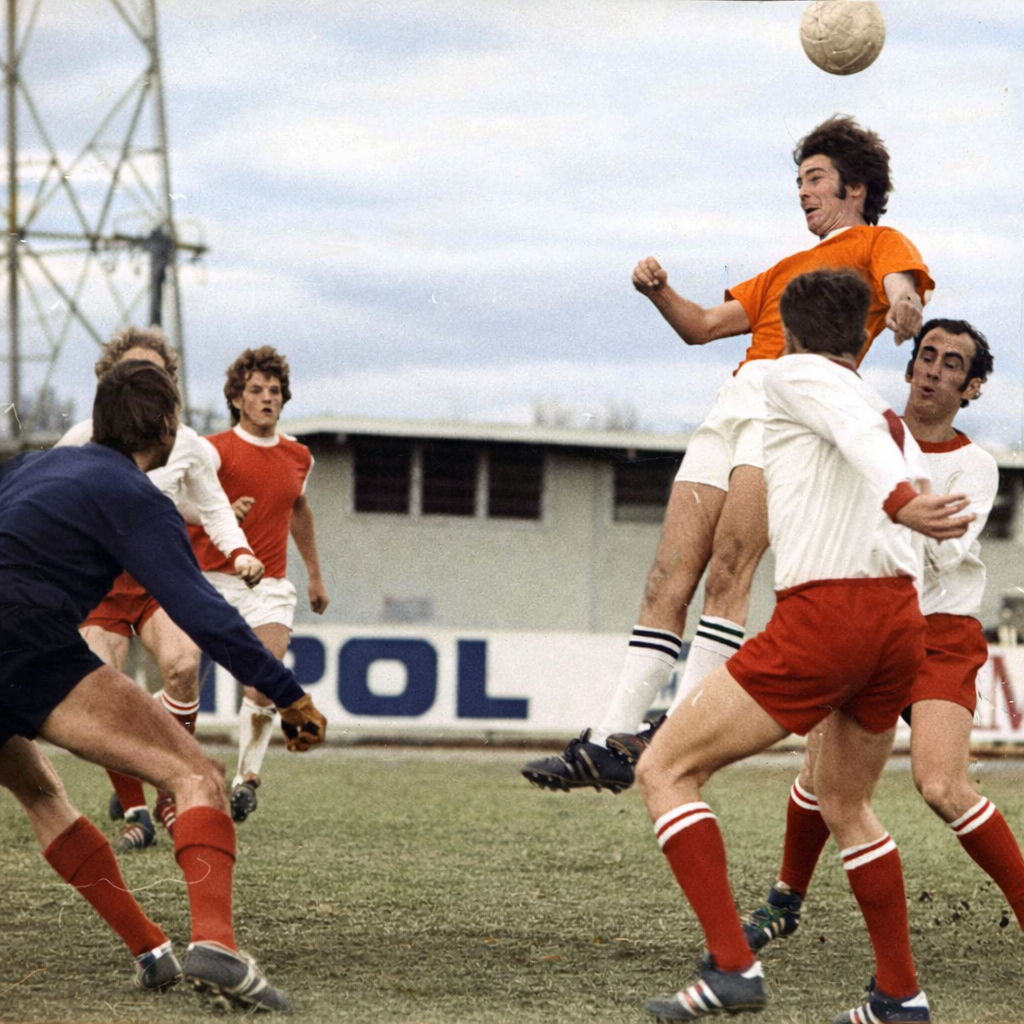
(Left) Les Scheinflug during his Australian coaching stint chatting to former rival Manfred Schaefer & Raul Blanco (far right) at E S Marks Field, playing for Prague in 1971.

Saturday matches were never favoured by Sydney football or “soccer” fans as they were known at the time. This was confirmed at the other Saturday match between Sydney’s second Greek sponsored club Canterbury Marrickville and South Coast United. A paltry crowd of only 800 was recorded at Arlington Oval, as local milk bar owners would have had to work all day on Saturday and travelling South Coast fans, customarily for away games, would most likely have only numbered wives, girlfriends and parents of players. South Coast had former Newcastle United (UK) striker Ron McGarry in their line up and the Englishman, a prolific goalscorer bagged more goals that season than both Max Tolson and Adrian Alston, squad members in the 1974 World Cup finals.
Reporter Charles Spiteri was not impressed and despite an Adrian Alston goal 7 minutes from time, Canterbury held on for a valuable point. Spiteri did however enjoy an impromptu comedic episode that resulted from a penalty kick being taken three times. Arlington Oval, like so many similarly named grounds, was not an oval but a quadrangle with peculiarly angled touchlines. It was also distinct because of a brick wall behind one goal that ran the width of the pitch and the remnants of a small fibro dwelling, masquerading as dressing rooms. Like the brick wall, another permanent fixture at Arlington Oval was club stalwart Andy Burton, who was always willing to share a half time nip of scotch to curry favour from supportive journalists.
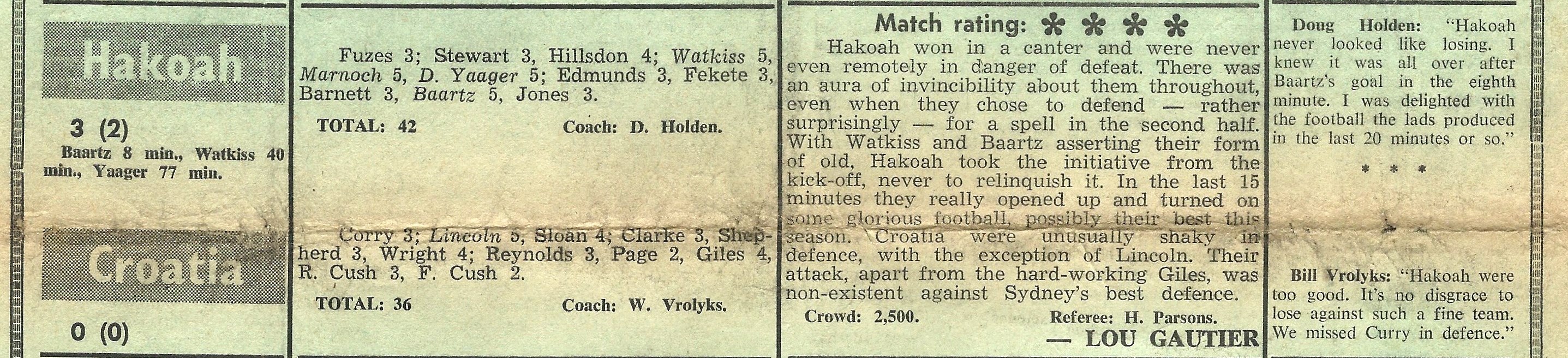
High flying Hakoah’s opponents at Wentworth Park on Sunday, South Sydney Croatia had a number of representative players on board, including the Rons, Corry and Giles (now recovered from a broken jaw from a not so friendly encounter with Manchester United’s Scottish international Denis Law 12 months earlier) as well as the brothers Cush, Frank and Ray. Not to be outdone, Hakoah boasted Ray Baartz, Johnny Watkiss, Peter Fuzes, Alan Marnoch, Denis Yaager, Rob Fekete and Welsh winger Keith Jones, all of whom were internationals, with Jones turning out for Wales before arriving in Australia.
Lou Gautier appeared to enjoy the encounter, reporting that Hakoah, “turned on some glorious football”. That Marnoch, Watkiss, Yaager and Baartz all recorded “5” in the player ratings emphasises the quality of this Hakoah team. The crowd was noted as a neat 2,500 and could well have been just a Frank Lowy estimate as the club president looked out from his “corporate box” above the Wentworth Park dressing rooms.
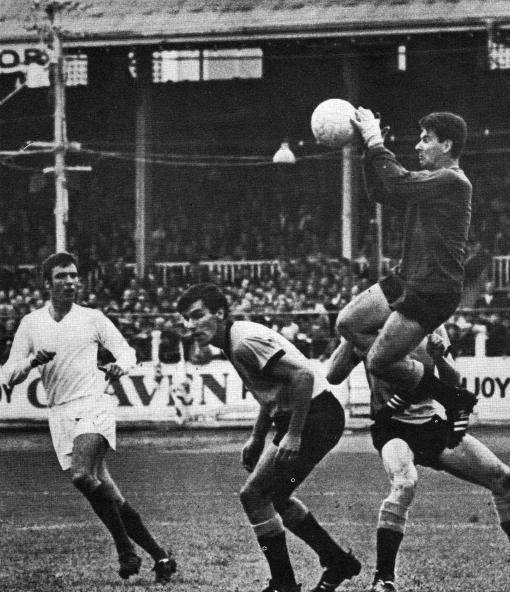
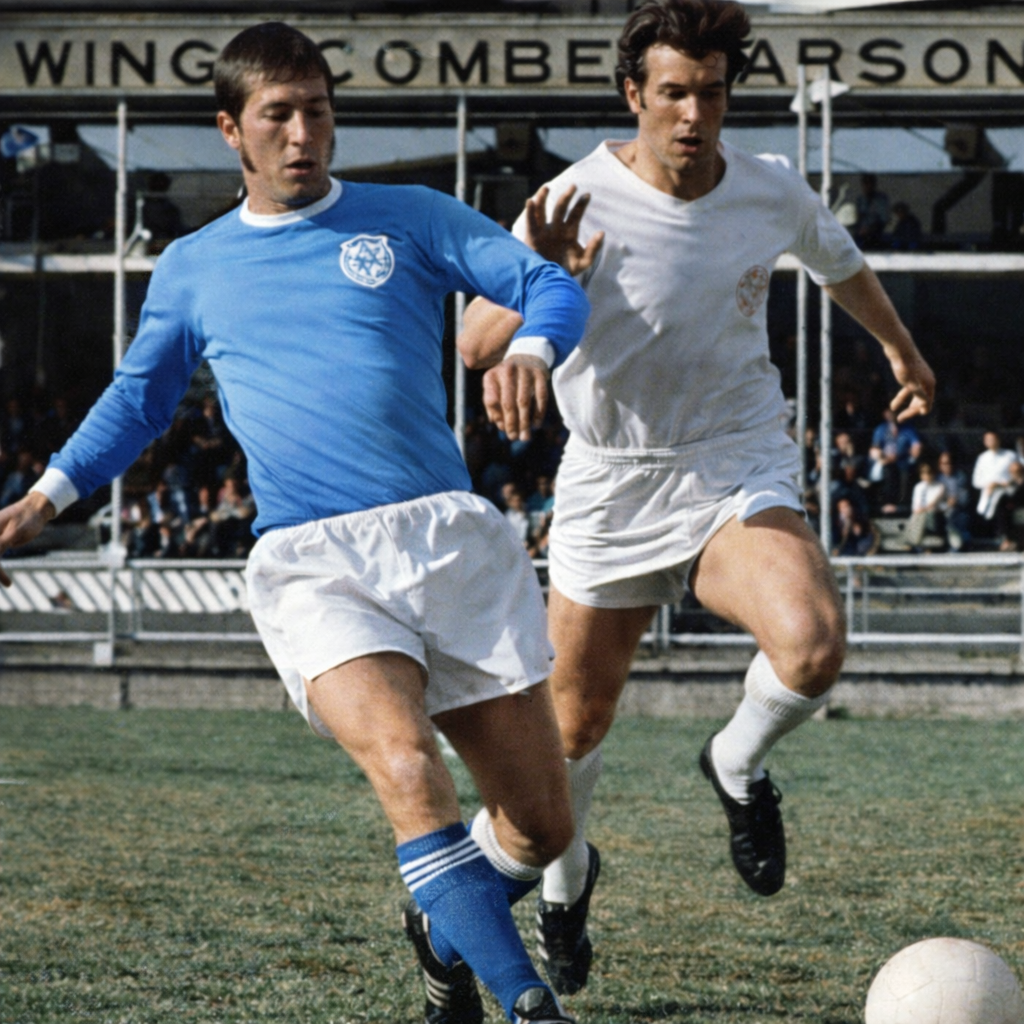
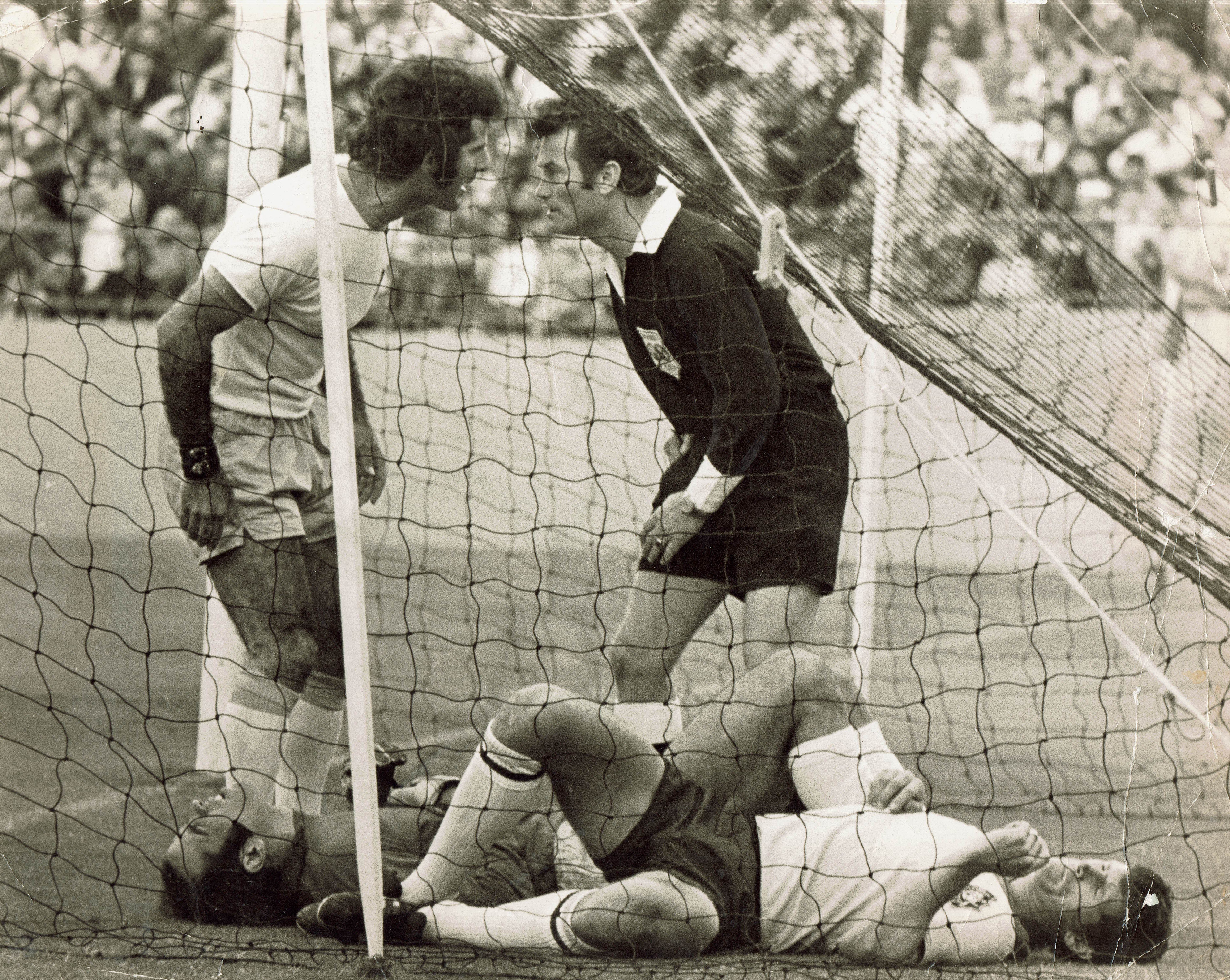
(Right) Dennis Yaager in control at Wentworth Park and (left) South Sydney Croatia goalkeeper Ron Corry in action for NSW against Man. United June 1967. David Sadler (Man. Utd.) and Johnny Watkiss are in close attendance.
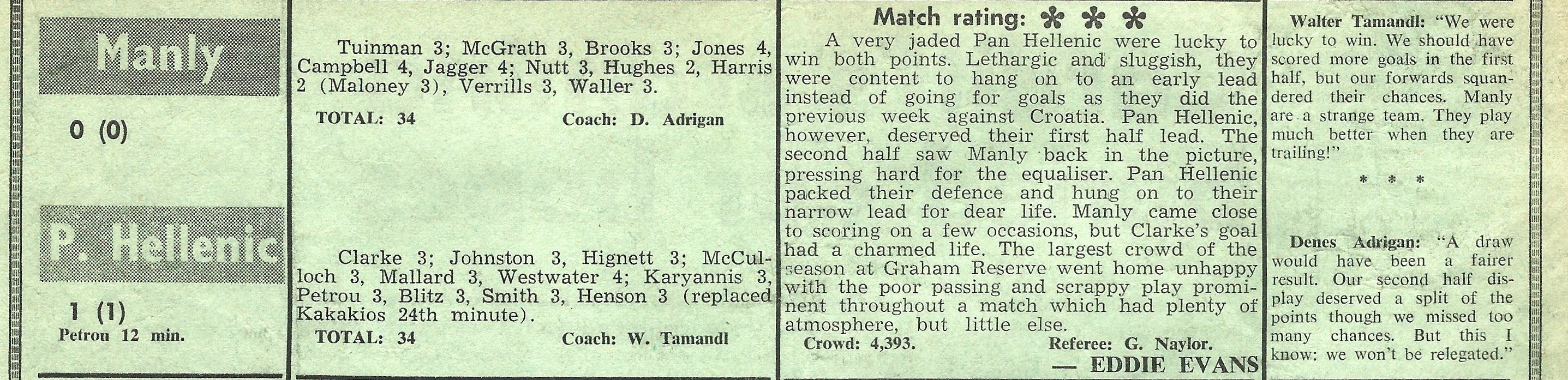
Next up, Manly against Pan Hellenic at LM Graham Reserve. I was at that game as a spectator, playing at the time in the Manly under 15 representative side. A bumper crowd of 4,393 attended, Manly’s highest of the season as rumours spread that Takis Loukanidis would make his debut for Pan Hellenic. Loukanidis was at the ground but didn’t pull on his boots, preferring to be a spectator, mixing amiably with the adoring Greek fans. Pan Hellenic took an early lead and although Manly became more threatening in the second half, Hellenic did enough to take both points.
Coach Wally Tamandl suggested that Pan Hellenic were lucky to win while rival Manly coach, Denes Adrigan asserted “this I know, we won’t be relegated”. Sadly for Manly fans, a few months later, the Hungarian born coach was to be proven wrong as Manly went back down to the second division. Pan Hellenic had a strong line up with a typically late 1960’s, Greek / UK mix, including Scots George McCullough, Dave Johnston and Alan Westwater, plus the very talented Roy Blitz. Among the Manly eleven was winger Gordon Nutt, who had made many first team appearances with Arsenal, prior to emigrating to Australia in 1966.

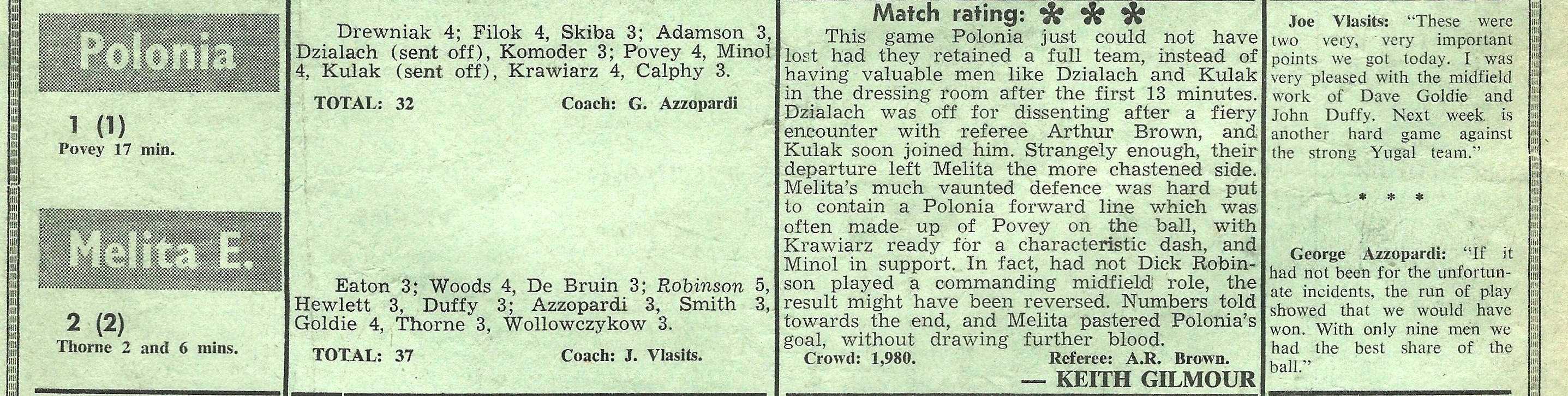
Next, not too far from Manly across the Spit Bridge to North Sydney Oval, another less than suitable ground for watching football. The playing surface, particularly in the winter months was hard and sparsely grassed and playing on the cricket square in the pitch centre, was akin to playing on concrete. Polonia North Side entertained Melita Eagles in front of 1,980 spectators. Never short of gifted Polish born players, with often unpronounceable names, Polonia had Richard Krawiarz and Kas Kulak in their ranks, while a 20 year old Jim Fraser was in the Polonia reserve team and soon to embark on his first team career and representative honours. My memories of Richard Krawiarz are that his waistline was as expansive as his football ability but nevertheless, he was an exceptional footballer. Soccer World reporter Keith Gilmour referred to his “characteristic dash” which, although I played against Richard once or twice, I must confess that I never saw that dash !
Polonia had two players sent off in the first thirteen minutes which killed off their hopes of victory and it is surprising that Kas Kulak was one of the players sent off. I got to know Kas quite well when he coached at Western Suburbs and my memory of Kas was that he was a very polite man, liked to dress well and was partial to sweet smelling after shave lotion. Former Ipswich Town and Notts County striker, Terry Thorne scored both goals early on for Melita with Melita’s goalkeeper Terry (“The Eagle”) Eaton, being called upon infrequently to handle the best efforts of the nine man Polonia side. For Melita, Wollowczykow appears to have mistaken the Polonia home team dressing room for that of the away team. Later that year, I made my grade debut at North Sydney Oval and I clearly remember that the away dressing room was the one with the cold showers !


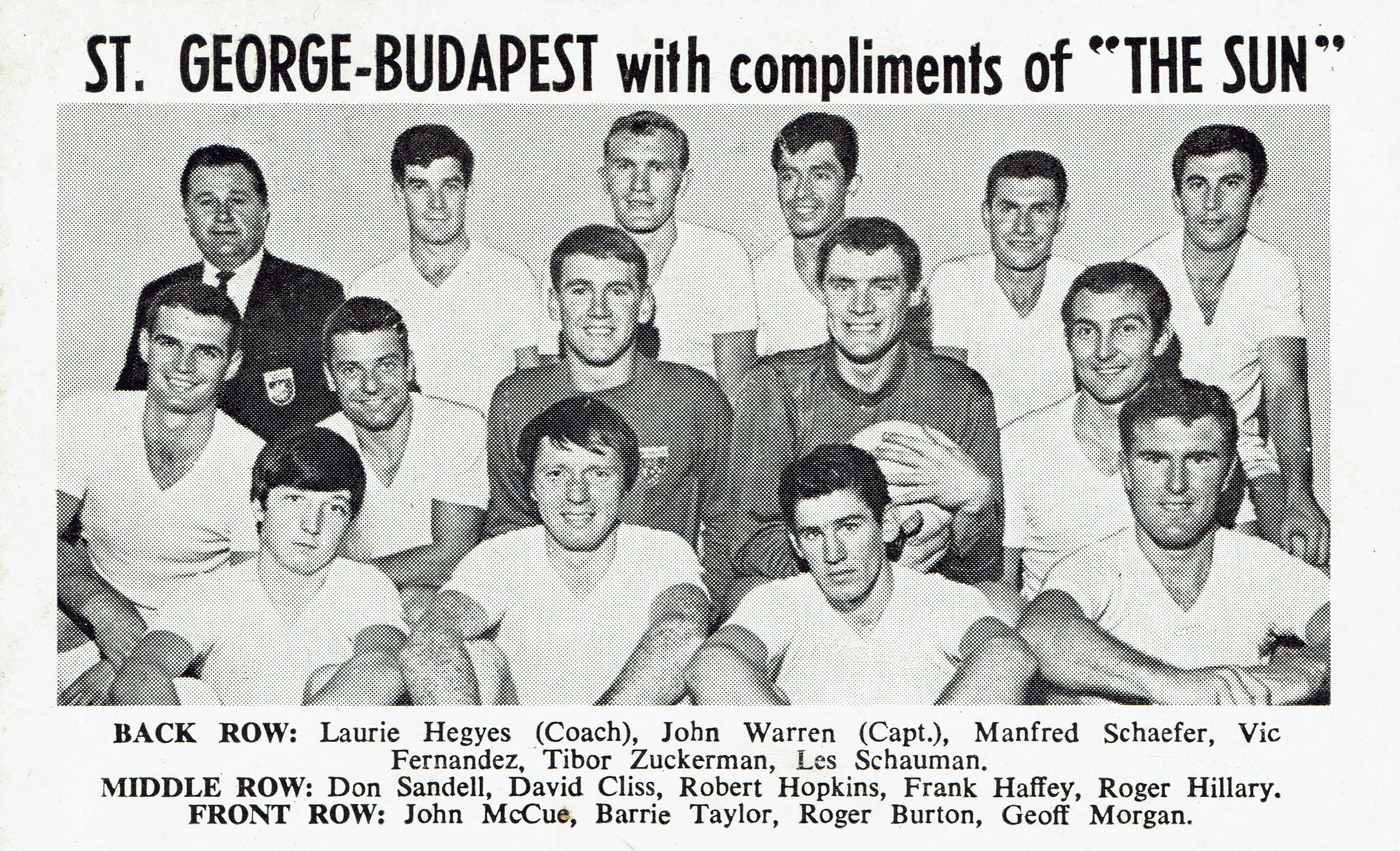
Hurstville Oval hosted the final match of the round between St. George and APIA Leichhardt. Both teams had a plethora of international or future international players and APIA took the lead through their skilful Argentinian, Ricardo Campana, just before half time. St. George equalised courtesy of a 19 year old George Harris and Soccer World’s Paul Dean remarked that APIA were “really the better team yet it is doubtful if they deserved to win”. The Soccer World editor also added that for St. George, goalkeeper Frank Haffey “was at his Celtic best” though APIA would have preferred that he reprise his Scotland form of 1963 when the affable Scotsman let England score 9 goals against him. It was reported that bang on 4,000 attended the match, which again is an indicator that nobody could really be bothered counting the cash in 1968 !
David Jack © 2024

 David Jack