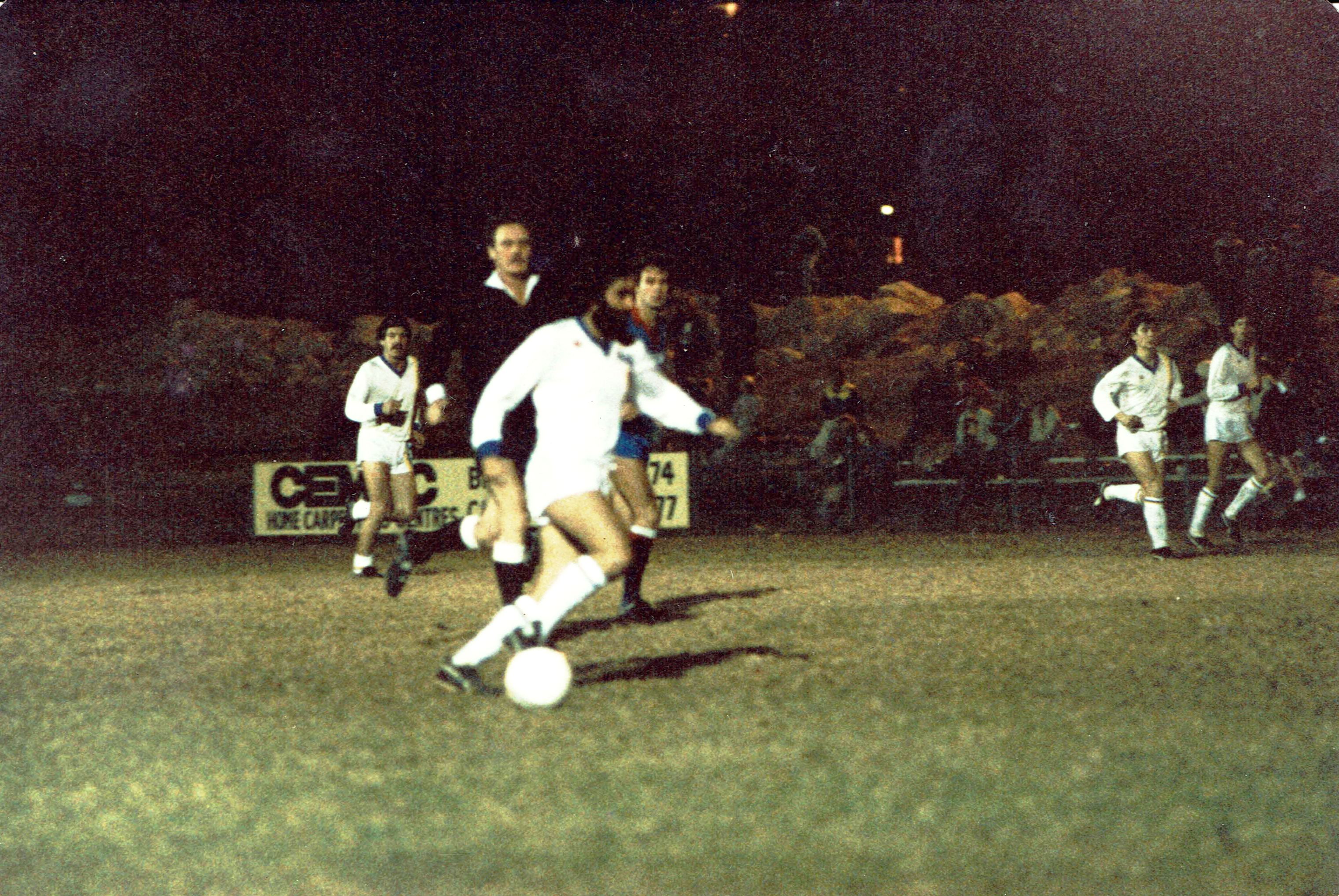
THE FUTURE OF AUSTRALIAN CLUB FOOTBALL

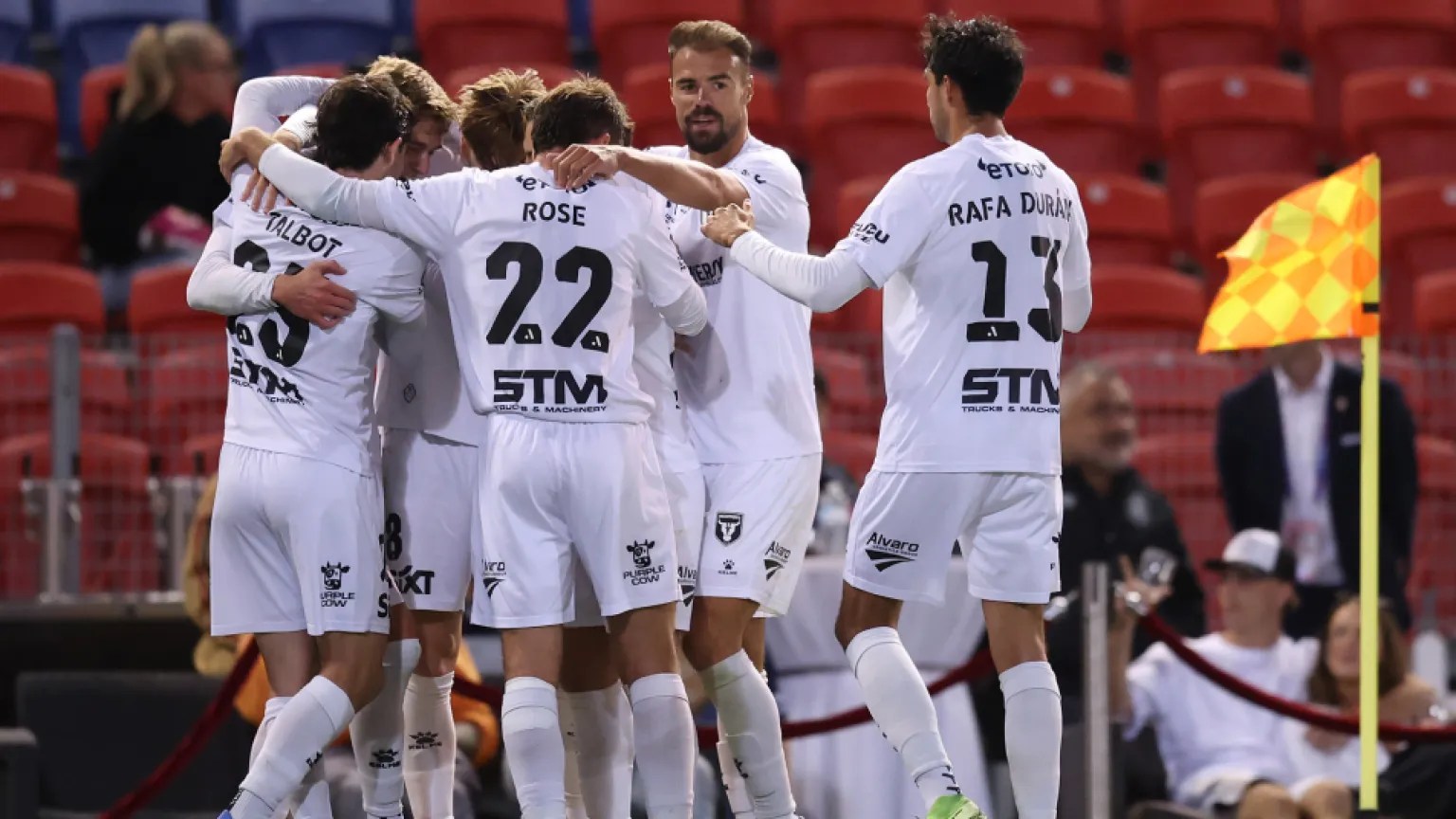
Macarthur Bulls players celebrate another goal against Newcastle Jets in their 5-4 win. Sadly, a minimal crowd

There are very good reasons why association football / soccer is the most popular sport on Earth. To play at the elite level requires an enormous amount of skill and athleticism but the beauty of football is that you don’t need to have the skill or athleticism of a professional footballer to compete and enjoy the game. The number of people playing different forms of the game has increased exponentially over the last twenty five years. This is due largely to a massive growth in female participants, expanding older age competitions and even grandfathers and grandmothers can get involved with walking football.

“Experienced” footballers enjoying the rigours of walking football

With an extraordinary number of football participants, why then does Australia not have thriving adult professional competitions, playing before packed crowds and why does our football rank well below Rugby League and Australian Rules football (“AFL”) in crowd numbers and media coverage ? There is nothing wrong with the product and excitement that our game can generate – consider the recent 5-4 victory by Macarthur Bulls over Newcastle Jets with the Macarthur winner being scored in the 6th minute of injury time. We still however need to have financially viable clubs consistently attracting crowds to their grounds supported by significant numbers of TV viewers.  

Steve Rosich APL Chief Executive – A big job ahead

I believe that our football brand (and we can call it “soccer” if we like) can become the number one spectator sport in the country but a major rethink of local club football is essential. We know that football is the largest participation sport in the country but 98% of participants, myself included, do not attend professional or semi professional football matches. Crowds and interest in the Isuzu A League and Ninja W League are floundering with management of the Australian Professional Leagues (“APL”) recently having passed to a new CEO, Steve Rosich, a person with no previous experience in our football.
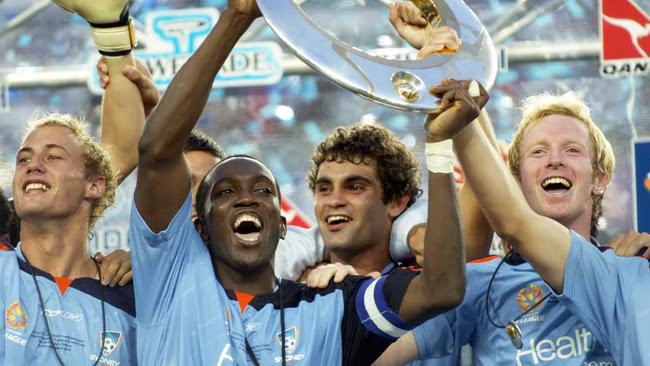
Dwight Yorke celebrates Sydney FC’s A League trophy win 2006

There have been a numerous false dawns in Australian club soccer. We’ve had the impact of mass European immigration after World War 11, qualification for our first FIFA World Cup in 1974, the inception of a National Soccer League in 1977 and then the birth of the A League in 2004. After a promising start boosted by marquee players, the A League and W League are struggling to engender media interest and crowds are declining.
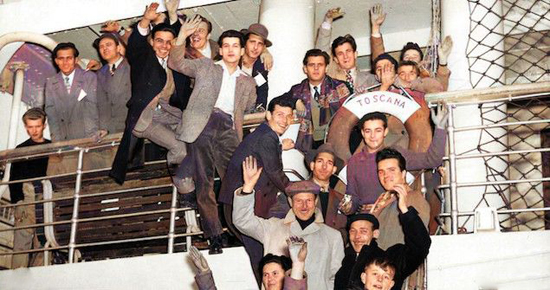
More potential APIA Leichhardt fans disembark in Sydney in 1958

Australian club football needs yet another reset and it is time to wind up the franchise model of former Football Australia chairman Frank Lowy and welcome back to the football fold, the “foundation” clubs and those district clubs nationwide, who are the primary source of football talent in this country.

We need senior competitions where clubs from all over the country can strive to replicate the exploits of Welsh club Wrexham. Last season, Wrexham gained promotion in the United Kingdom for the third successive season and are now knocking on the door of English Premier League football. Why can’t South Melbourne, APIA Leichhardt or Adelaide City have a similar dream to that of Wrexham? Why can’t the elation that the Wrexham fans enjoyed, be mirrored in Australian club football?       

Wrexham players celebrate their promotion in 2025

It all seems too hard for Football Australia who seem hell bent on keeping the status quo of the A-League and W-League franchises. Financially, Football Australia have been struggling, burdened by a significant debt owed by the APL, despite revenues reaching a record high as at April 2025. The governing body has been beset with staffing issues and although former CEO James Johnson resigned as far back as May 2025, a full time replacement CEO has still not been appointed.

I don’t believe that a thriving full time professional national football competition is possible in Australia. There is barely an A League or W League club that is financially buoyant and most clubs are living  beyond their means. The Isuzu A-League and Ninja W-League clubs presently rely on (diminishing) television rights, financial investment from dubious corporate entities and allocations from grass roots football registration fees to finance their operations.

Manny Aguek scores for Sth. Melbourne v Marconi – Aust. Championship

It will be considered radical and regressive but Australian club football must revert to State based competitions and some players will need to be part time professionals. The recently completed Australian Championship showcased a number of NPL and foundation clubs and considering the less than convenient match scheduling and minimal media coverage, the competition was successful, on and off the park. Under my model, the championship format could be retained with the top two clubs from each State based competition competing for the end of season Australian Championship.
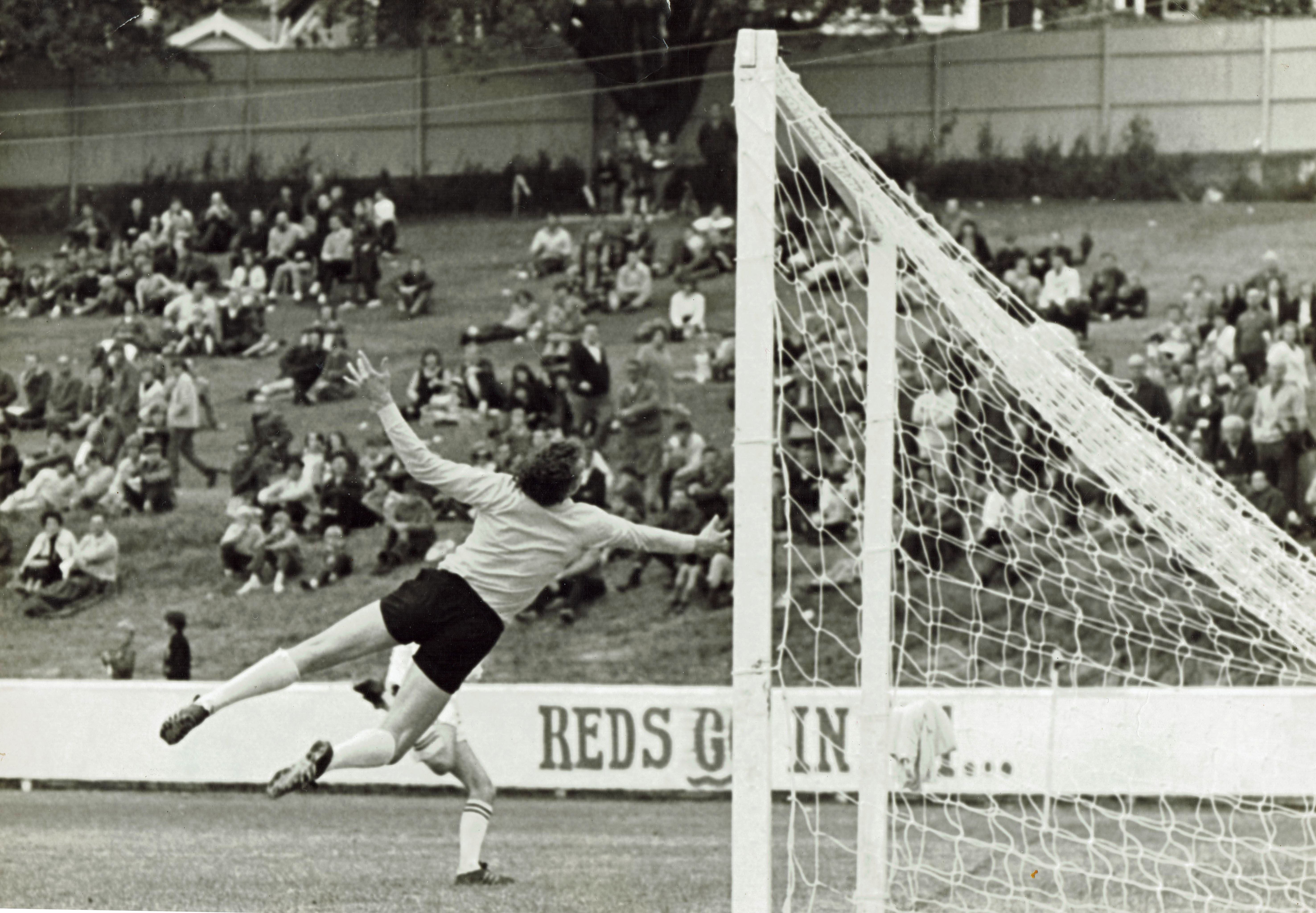
A healthy crowd at Drummoyne Oval – NSW Fed. 1971

Australian club football has to return to making district and community based clubs the focus of club football. Clubs must have their own grounds, which can be modest initially but grounds that become synonymous with the club rather than largely empty, soulless stadia. Those who have witnessed club football in days gone by at Lambert Park, Leichhardt or Lakeside Stadium (formerly Middle Park) Melbourne, remember how even a modest crowd could generate an electric atmosphere. These district and community based clubs must have the ability to play in the highest level of Australian club football.
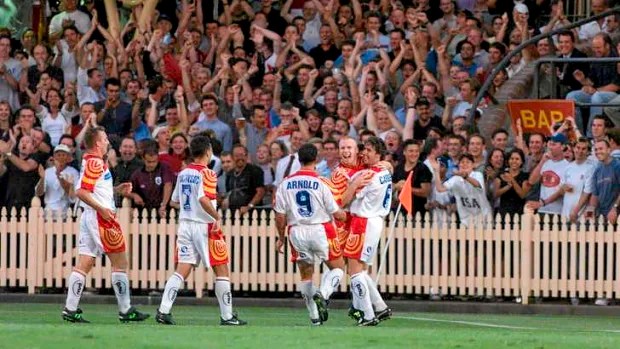
Short lived euphoria for Northern Spirit fans – NSL 1999

Playing State based competitions would have numerous financial benefits. Among these are the significant travel and accommodation cost reduction, increased crowd revenue generated by both sets of fans being able to travel regularly to home and away games and the lower staging expense if clubs were operating out of their own, more modest stadia. Community based clubs would also generate local interest so that young footballers had a clear pathway through the ranks to the top level without being sidetracked by expensive private football academies, whose primary objective is financial. Playing in the club’s home town would create an affiliation, an affection and sense of belonging for local residents, the club would be “our club”.
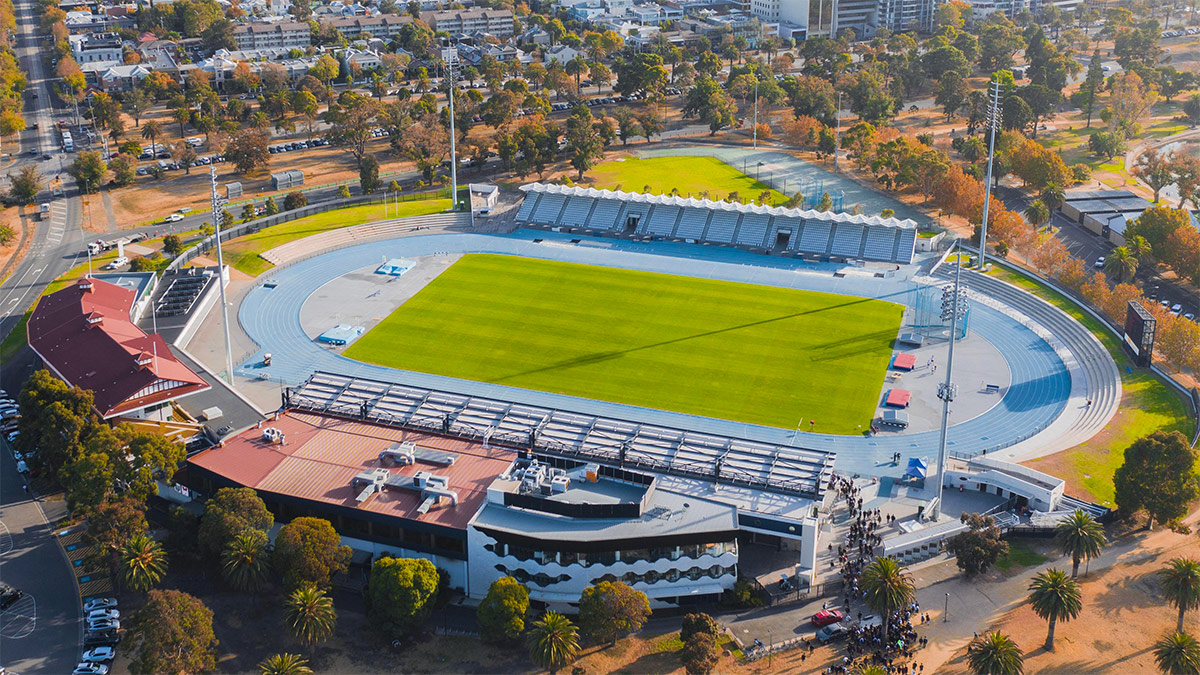
Lakeside Stadium- home ground of South Melbourne FC

Promotion and relegation from the lowest NPL divisions to the premier level of club football is imperative. No longer would there be meaningless top tier women and men’s football from mid season onwards played in front of empty grandstands. There would be true competition at the top and bottom of all divisions of club football and this would provide all Australian senior players with the opportunity to play at the summit of Australian club football.

The 2024 Isuzu A League Grand Final, played at Industree Group Stadium Gosford perfectly showed that the future of Australian club football lies not with centralised clubs playing in large sparsely populated stadia, Allianz Stadium Sydney and Suncorp Stadium Brisbane come to mind, but in smaller local grounds centred in the heartland of the clubs’ supporter base.
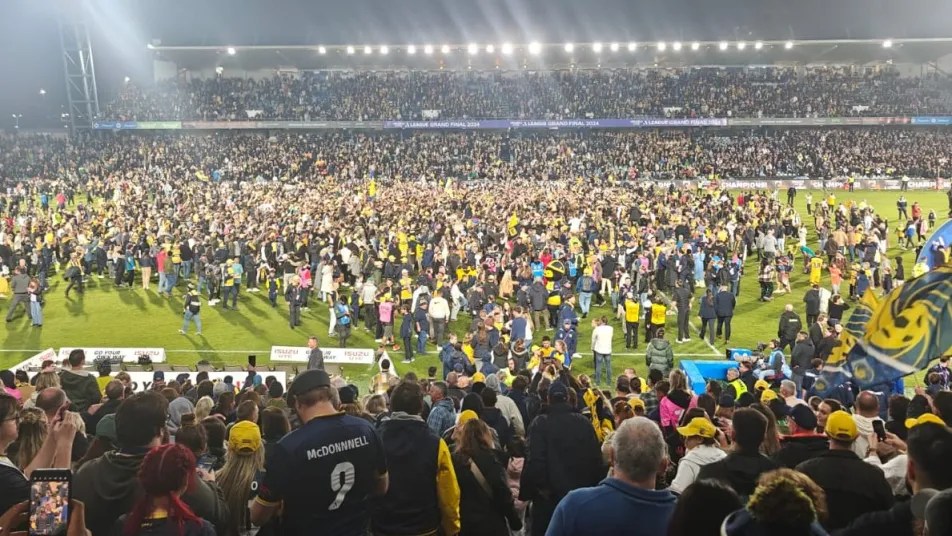
Jubilant CC Mariners fans celebrate their 2024 Grand Final victory

Admittedly, this was a grand final, but the Mariners “rags to riches” success captivated the district. This was the locals’ own team performing above expectation in their club’s backyard. Club supporters don’t want to have to battle city traffic or parking issues to watch their local team. The Manly Sea Eagles rugby league fans are a good example where the fans will rarely travel outside of what they call “God’s country” to support their team. However, give the Manly fans “Brookie Oval”, now 4 Pines Park on a Friday or Saturday night and the ground will be packed.  

Frank Lowy wanted football to become the primary football code in Australia but as Lowy’s grandiose plans for the A – League and W League have wilted and with crowds and interest diminishing, it is time for yet another reset of Australian club football. Premier level competitions where clubs are clearly aligned with a community and /or geographical location, playing at their appropriately sized and situated grounds, in front of excited, vibrant crowds.

David Jack  © 2026

SUMMERTIME SOCCER BLUES

wellington-pdf.jpg
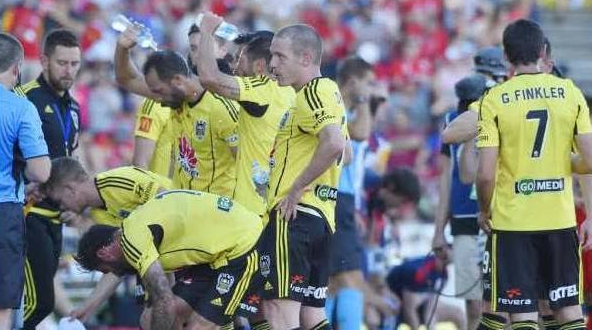
           Wellington Phoenix  players take some heat relief

As I sit here at midnight on a February evening in the stifling heat and humidity of suburban Sydney, I feel most uncomfortable. Sweat is dripping off my brow and the last thing I would want to do at the moment, is chase a ball around a football pitch. If however I was an A League or W League professional footballer, this would be my lot for the greater part of my football season and not in the comparative cool of midnight.

Back in 1984, crowds attending the Australian National Soccer League (NSL) were on the decline. Desperate times called for desperate measures. When the switch from playing football in winter to the warmer summer months was mooted that same year, then NSL General Manager, Stefan Kamasz, stated that the push to change to a summer season (which didn’t materialise until 1989), related entirely to the diminishing NSL crowds. The proposed switch to a summer soccer season was completely driven by negativity – a fear of competition from the other football variants.

During an SBS televised debate in 1984, Eddie Thompson, the former Australian national team coach said that playing in summer, would mean that soccer would only have to compete with cricket for spectators and media coverage. Thompson also said that “cricket was not everybody’s cup of tea,” although I would have expected no less a comment from a Scotsman.

No longer does soccer have competition solely from cricket and a couple of tennis tournaments. Without leaving our living rooms, we can now watch a range of sports from all around the world, including cricket’s Big Bash League, baseball, NBA, UFC and various forms of racing. When newspaper coverage of National Rugby League and Australian Rules Football can exceed four pages in their non playing months of November, December and January, the battle for print media exposure is still clearly evident.  

SBS Debate
         The 1984 Summer Soccer think tank – SBS Television

Now in 2019, attendances at our national league matches are again on a worrying downward slide and TV viewing audiences are not holding up any better. Eddie Cochran in 1958 sang that “there ain’t no cure for the summertime blues.” As far as our current attendance blues are concerned, my partial cure would be to revert to playing our football primarily in the winter months, a far more favourable climate for the world game.

Playing Australia’s foremost men’s and women’s football competitions, the A League and W League in the summer months when heat and humidity will sap the energy of even the fittest of professional players, does not make sense. U.S. WW2 General George Patten said “fatigue makes cowards of us all” and there is no doubt that the often oppressive conditions in summer, detract from the player’s energy and performance. Players make elementary errors simply due to fatigue. To improve crowds, we need to provide a better product that will thrill and excite the crowds. Playing matches in excessive heat will not increase the speed nor intensity of the games, basic skill levels drop and consequently the match as a spectacle will suffer. The essential drink’s breaks in extreme conditions also creates an unwelcome disruption to the traditional flow of the game.

Jack Sock 2

  American tennis player Jack Sock suffering from extreme heat stress

The original intention with summer soccer was for all games to be played in the evenings when it was expected that the temperatures would be more moderate. This has not been the case however, with late afternoon kick offs commonplace and the Women’s League starting even earlier. A recent A League fixture between Adelaide United and Brisbane Roar kicked off at 7.30 p.m. and yet the temperature was still thirty one degrees Celsius. Global warming is a fact that we cannot ignore. In NSW in January 2019, average day and night time temperatures in thirty two centres, were the highest ever recorded. If we continue to play professional football matches in the increasingly hot Australian summers, the health risks for our players could be dire.

The summer soccer protagonists claimed that football fans wouldn’t want to go out at night in the winter months. The Australian winter in the major cities /football centres is not harsh, in fact it is quite mild during most months other than July and August. Football spectators in the colder climates in Europe have coped successfully with winter seasons for over 100 years and if local fans have to wear a coat and scarf to go out and watch a football match, that should not deter them.

Brisbane Roar take time out as the temperature rises

     Brisbane Roar take time out in the sweltering Adelaide heat

Former NSL General Manager, Stefan Kamasz and many proponents of a summer soccer season also contended that the game was competing for spectators with itself in winter. The thinking was that grassroots players – men, women and children would not be playing in the summer, and would therefore be able to attend the senior professional competition games. This is true to an extent, however I would suggest that when the youngsters themselves are in season and playing in the morning or early afternoon, they would be more likely to be in the mood to attend an A League or W League game. When temperatures exceed thirty degrees Celsius in summer and the children’s football boots are gathering dust in the bottom of their wardrobe, I would say that the beach or a swimming pool would be theirs and their parent’s first consideration.

The availability of grounds from March to November should not be insurmountable with the current push towards “boutique”/ smaller grounds. If rugby and AFL competition at the major venues was an issue, there would be a number of smaller suburban stadia that could accommodate crowds of 15,000 – 20,000 people. Australian soccer cannot presently command crowds of 30,000 spectators consistently, so large capacity arenas are not necessary at the moment.

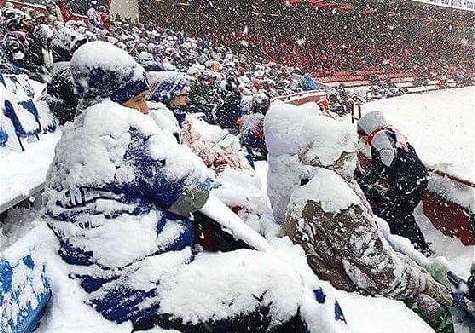
Fans covered in snow at a football match
                 Not quite the Australian winter

Our “winter” football season should extend from early March to mid November with no break. This would align us with the seasons of our Asian Football Confederation colleagues and would provide for an off season of around three and a half months, far more practical than the current five month layoff. The popular Football Federation Australia (FFA) Cup could take place during the season with the final taking place at season’s end. Currently the timing of the FFA Cup finale is anticlimactic, taking place very early in the A League season. Both National Premier League (NPL) and A League clubs would then have equitable preparation for the cup competition, unlike the present situation. Also, any Australian club progressing to the latter stages of the Asian Champions League would not be disadvantaged, by playing an Asian opponent, when they are out of season. Furthermore, overseas teams visiting Australia on their fundraising, replica shirt selling, “An Evening with Joe Bloggs” junkets, could expect sterner competition from season hardened local opponents, rather than a disjointed rabble of match shy players, who clearly would prefer to be at Bondi Beach.

Association football has thrived throughout the world for 140 years. In Australia, it’s time for us to stop worrying about competition, cease consistently looking over our shoulders and take all the steps necessary to focus on advancing our game in this country. It’s time to admit that the summer soccer experiment has not worked. Reverting to a winter football season for our men’s and women’s premier competitions would help raise the the standard and intensity of matches, improve player comfort and safety and bring our national leagues’ season into alignment with the rest of the football community, both in Australia and in Asia.

With the breaking news that the FFA is considering a shortened 2019-20 season to cater for the A League expansion, this would present an ideal opportunity for the launch of winter football for our male and female professional leagues in March 2020. Australian football, as Paul McCartney once sang of Jo Jo, needs to get back to where it once belonged – winter.

© David Jack  2019


GEORGE BEST

GEORGE BEST ( 1946 – 2005 )

by David Jack

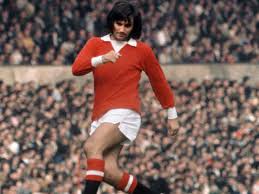
George_Best[1]

On 28th December 1963, on a cold Manchester afternoon, this 10 year old was smuggled (as usual) into the press box at Old Trafford, under my late father’s overcoat. My team Manchester United had been hammered by Burnley 6- 1 a few days earlier, continuing what for them had been an ordinary season. United’s manager, the legendary Matt Busby had made one notable change to the side thrashed a few days earlier, bringing in a slightly built 17 year old Irishman, George Best.

My memories of that game are blurred but I do remember the bright orange colour of the ball, in vogue in those days and that this young boy, George Best scored one of the goals as United exacted 5 -1 revenge on their Lancashire neighbours, Burnely. Best had made his debut earlier in September that year, but his fatherly mentor and manager, Matt Busby decided that George needed a little more toughening in the reserves before he would be let leash on the English first division. Best was never again left out of a United side during Busby’s reign, after that second Burnley match.

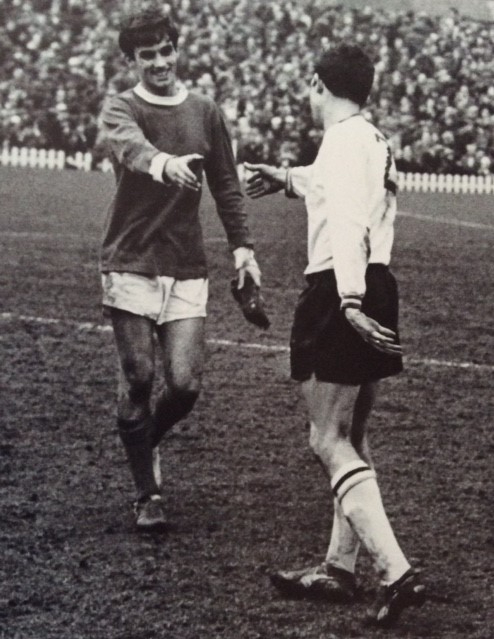
George Best holding his left boot after an F.A. Cup tie in 1965

I would subsequently forego the relative comfort of the press box to watch United with my school friends on the Old Trafford terraces. Best reigned supreme at United for 11 years, outshining no such lesser names as Bobby Charlton and Denis Law. Still a youngster, I was not allowed to attend mid week matches, but can remember many a morning waking up after a midweek fixture and asking my dad “How did we go ?”. Very often, the response would be simply “Bestie murdered them”

As a child I dreamed of playing for United and I wanted to be Georgie Best. I wore my shirt out over my shorts like George, I tried to imitate George’s dribbling style and mannerisms and as soon as I was able to shave, I would try to grow the “designer stubble”. My family moved to Australia in March 1967 and I was devastated. How could I live without my United, my idol, Georgie Best?I didn’t have to wait long however, as Manchester United toured Australia in June that year. On a rain soaked Sydney Showground pitch on a Wednesday evening, United put three goals past a Sydney representative side and George Best scored a memorable goal from a short corner. I later played with the man marking George that night, Cliff Van Blerk. Cliff was a lovely fellow but as a full back he could tackle as hard as anyone. Well Cliff fondly recalls that although he played in the NSW Federation (State League) into his 30’s, his struggle with George Best that night took 10 years off his life.

Having had this shot of Manchester United and Best, I carried on my life in Australia progressing through the local football ranks until 1970 when I was offered a trial with Manchester United. Truly a dream come true. I had three months at United and witnessed first hand the character and the footballing brilliance of George Best. I played in the United “B” team and was fortunate to be on the same training pitch and play in small sided games with George.

GB%20Versus%20Chelsea[1]
Once again, George gets the better of Ron “Chopper” Harris

United offered to keep me on for a further twelve months, but I was homesick and decided to return to Australia. Maybe I was still trying to imitate Best, who himself fled Manchester for Belfast, after just acouple of days at United, before later returning. I played many years in the local NSW State League still trying to be George. I tried (successfully) to flick the ball away from a goalkeeper like Best did to Gordon Banks in Belfast. I went through a period of consistently trying the audacious lob that Best pulled off against Spurs at Old Trafford. I gave up shooting with power for a whole season – just lobbed everything. How ridiculous !

I was content to live out my life in Australia and enjoy the childhood memories of a player whose artistry, courage, speed and sheer football brilliance will never be matched. Out of the blue I came across George again in 1983. By now his extravagant lifestyle had contrived to make George, by necessity, a footballing mercenary and he arrived in Australia that year to play for Brisbane Lions in the old National Soccer League. Along with thousands of others, I travelled to Sydney’s Marconi Stadium to see George play. All came with great expectations but George, by then 37 had a quiet match but we didn’t care – he was George Best.

George Best playing for Dee Why against Manly in 1983 – I’m in the blue strip of Manly, shadowing George

When George’s stint with Brisbane came to an end, he stayed on for a short while and amazingly I would again end up on the same pitch as my idol. The Best resume which showed “work experience” ranging from the world’s most famous football club to Dunstable Town, suddenly had a new entry – Dee Why Swans. George, a little short of cash at that time, agreed to play for Dee Why for a reputed sum of AUD5,000. A crowd of several thousand turned up at Cromer Park, Dee Why where my team Manly Warringah were to play Dee Why. George played the full match. He struck the post early in the first half from 35 metres, just to remind the crowd that they were in the presence of a one time superstar. Manly won 3 -2 but George did manage to get on scoresheet. When George scored, nobody cared that he was conservatively 3 metres offside. George rounded our keeper Mark Dower, with the same ease that he did when beating the Benfica  goalkeeper, Jose Henrique to score that famous 1968 European Cup Final goal.

item_4664[1]
The Belfast grave of George and mother Annie

A shy and modest man despite the fame and adulation, George Best was the complete footballer. The adjectives to describe his talent are never ending and only those who saw him at his peak can bear testament to his true greatness. The world of football is an immeasurably better place for his life and was greatly saddened by his premature death.

George Best died in a London hospital on 25th November 2005 from complications resulting from an earlier liver transplant.

David Jack

Copyright 2005