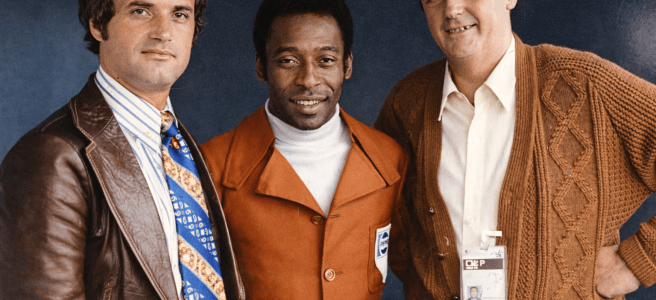

David Ronald Jack, my father, was born on 6th June 1925 in Bolton, Lancashire. David was the only son of David Bone Nightingale (“DBN”) Jack and Kathleen Jack (nee McCormack). David was a sports writer, author and TV Presenter and he and his wife Rose had seven children. David wrote primarily on Association Football for 40 years, split almost 50/50 between working in England and in Australia. David attended and reported on a number of FIFA World Cup tournaments including milestone achievements of Australia’s first ever World Cup Final’s appearance in 1974 as well as being present at Wembley Stadium on the occasion of England’s World Cup victory in July 1966.
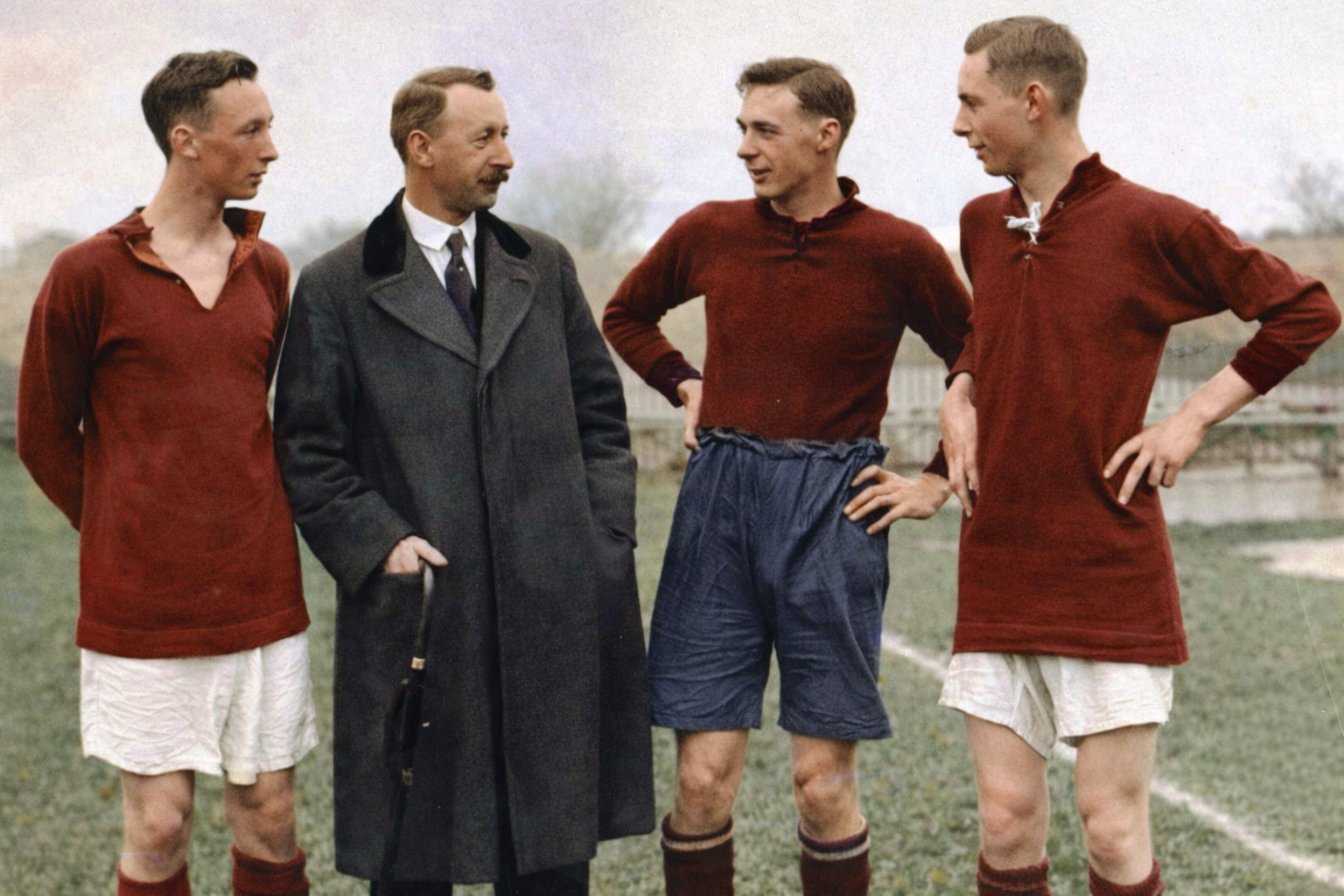
The Jack name had been synonymous with British football for generations. In 1885, David Jack’s grandfather, Bob Jack was amongst the earliest Scottish professional footballers to infiltrate the predominantly amateur game, south of the Scottish border. Bob Jack played professionally for Bolton Wanderers and Preston North End and managed Plymouth Argyle for 29 years. Bob Jack had three sons, Rollo, Donald and David (hereafter referred to as DBN Jack), all professional footballers, although DBN Jack was the stand out.
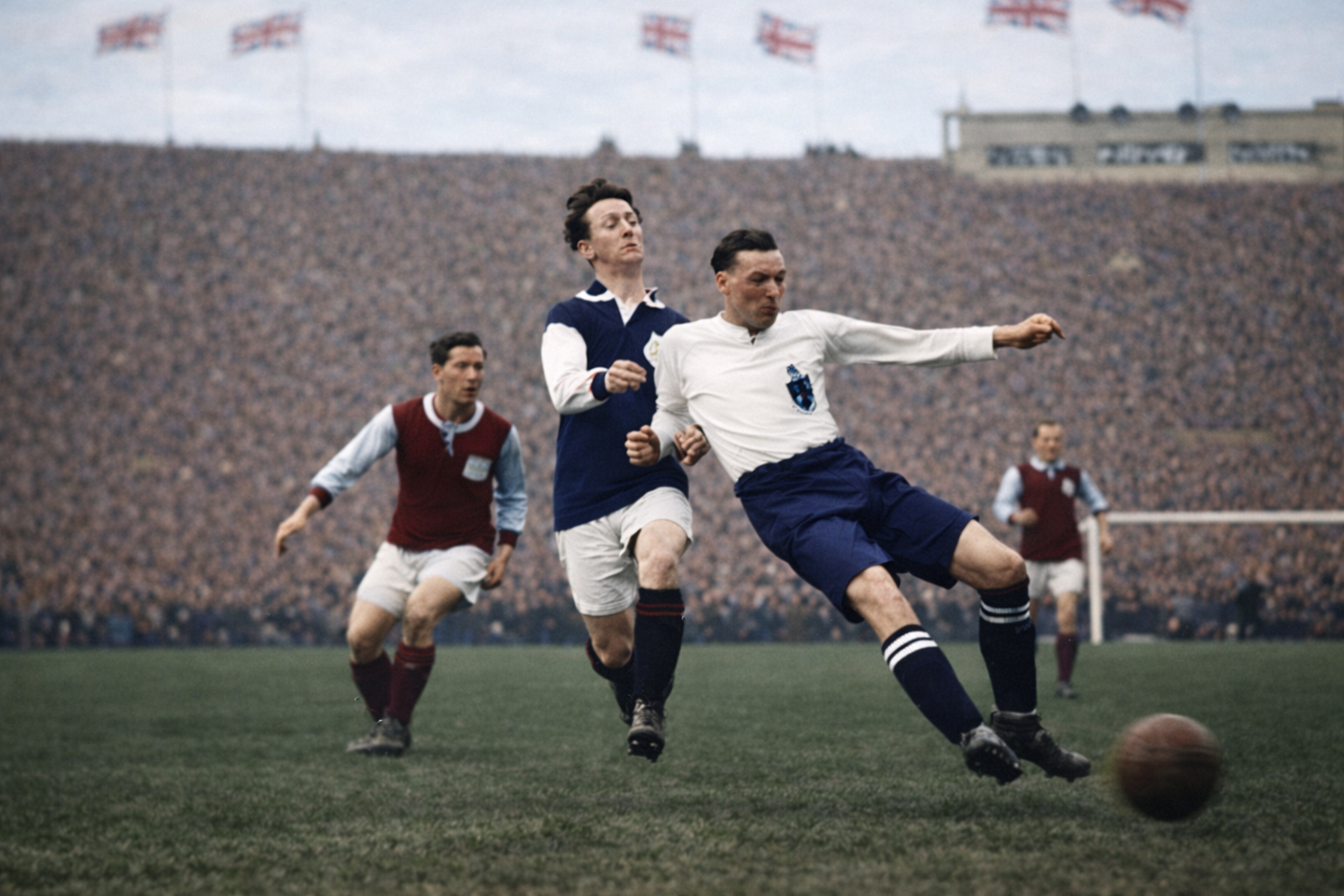
The Jack family excelled in a number of sports, including tennis and Rollo Jack became a high ranking lawn bowls player. DBN Jack scored the first goal in an F.A. Cup Final at Wembley in 1923 and was twice transferred for what were then world record transfer fees. DBN Jack captained England on a number of occasions and his signing by the legendary Arsenal manager, Herbert Chapman in 1928, was the catalyst for almost a decade of continued success for “The Gunners”. DBN Jack scored the only (winning) goal for Bolton Wanderers in the 1926 F.A. Cup Final, just three years after scoring the very first cup final goal at the Empire Stadium, Wembley in 1923.
Having a father who captained England and two professional footballing uncles, it was inevitable that young David might himself look to earn a living playing football. David was a capable centre half and his father considered that David might make a decent third division centre half but in those days, footballers’ wages were capped and David’s father, an English international, was only earning £8 weekly. Young David was encouraged by his father to get a “proper job” so he joined Barclays Bank. Admittedly, banking wages were no better than those of a third division footballing centre half, however behind the banking counter there was less chance of David sustaining a broken leg or knee cruciate ligament injury, so the prospect of long term employment was more secure.
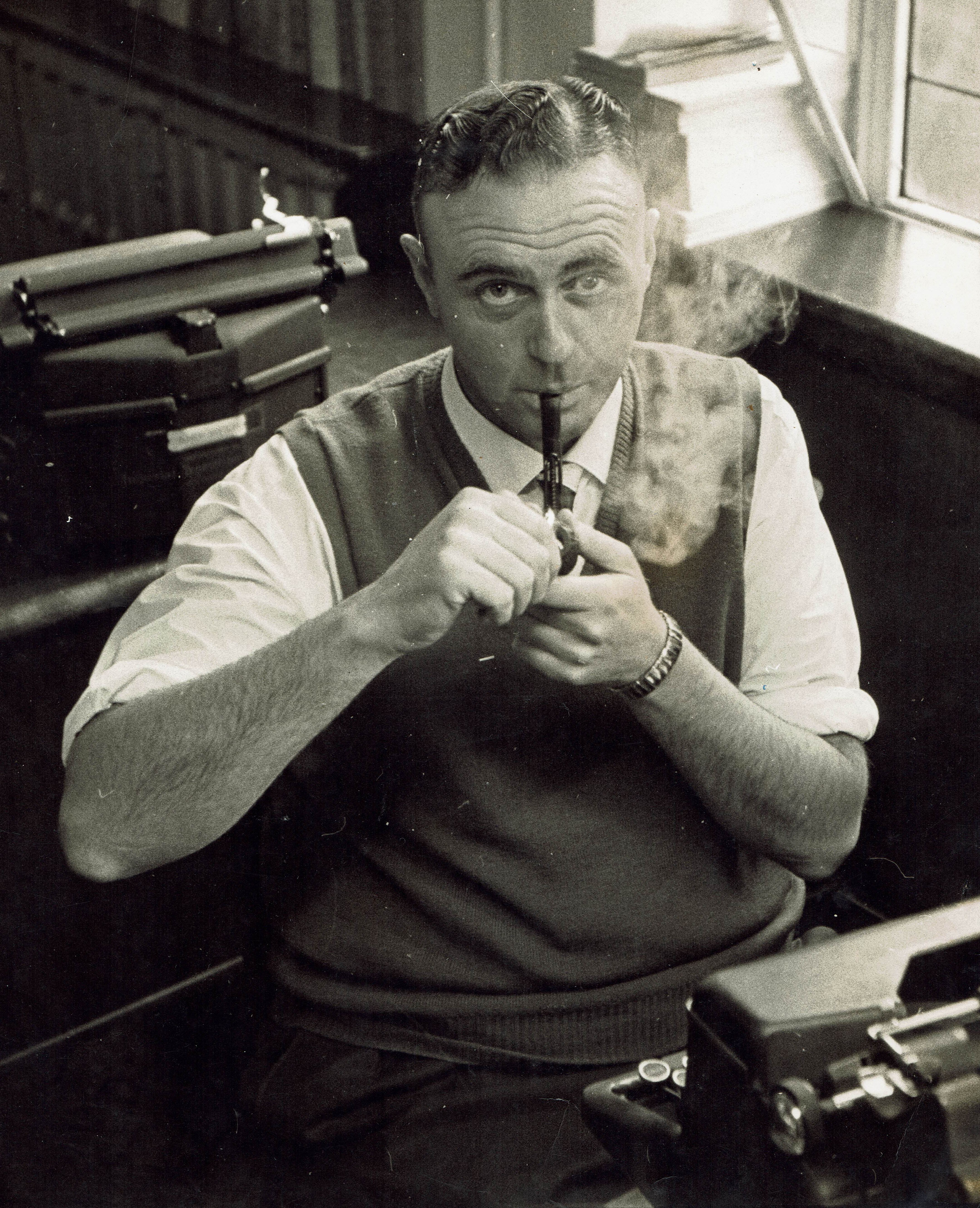
Although working as a London bank teller, David’s desire to earn a living from football was strong and in 1947 he applied for and was successful in securing a cadetship in journalism with the Sunday Empire News. Initially restricted to court reporting and mundane stories of garbage bin and cat theft, David’s break in sports journalism came in November 1947. Not yet considered for matches featuring high flying clubs such as Liverpool, Manchester United or Wolverhampton Wanderers, David’s first match report was an intriguing first round F.A. Cup match between non league club Vauxhall Motors and third division Walsall, with the car assembly specialists losing a close encounter 2-1.
In 1947, English football was a seasonal sport and when not engaged in football writing, David covered weightlifting, wrestling, tennis, cricket, speedway and whatever sport entertained post war Great Britain. With the advent of European football championships and England’s belated inclusion in World Cup football, David’s job took him further afield internationally.
Leaving court reporting behind him and gaining confidence as a writer, David ghosted footballer Len Shackleton’s book “The Clown Prince of Soccer” (Nicholas Kaye Limited 1955). The subject Len Shackleton, was possibly the original “maverick” footballer. A controversial footballer, Shackleton only played a handful of times for England but was famous for his on field party tricks. The book sold well and to this day is still best known for Chapter 9, “The Average Director’s Knowledge of Football” – The chapter was blank.
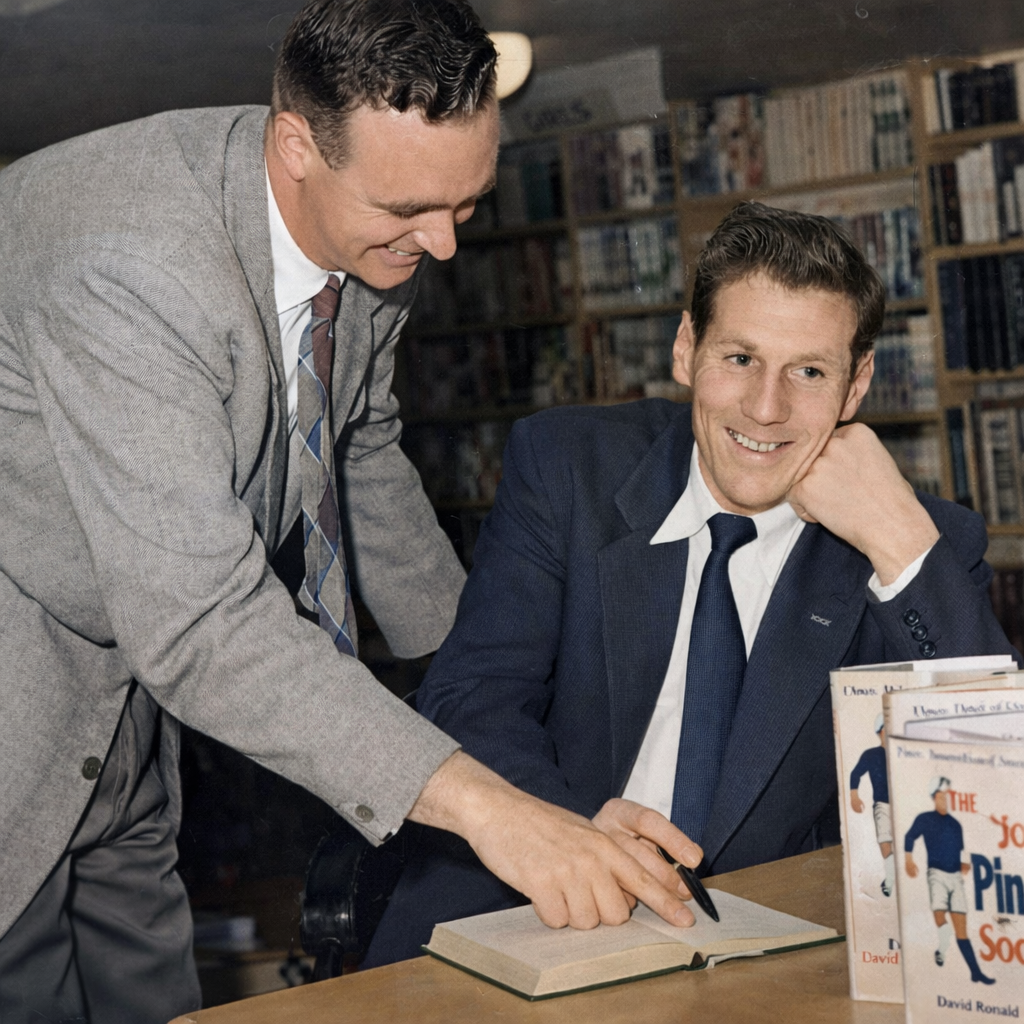
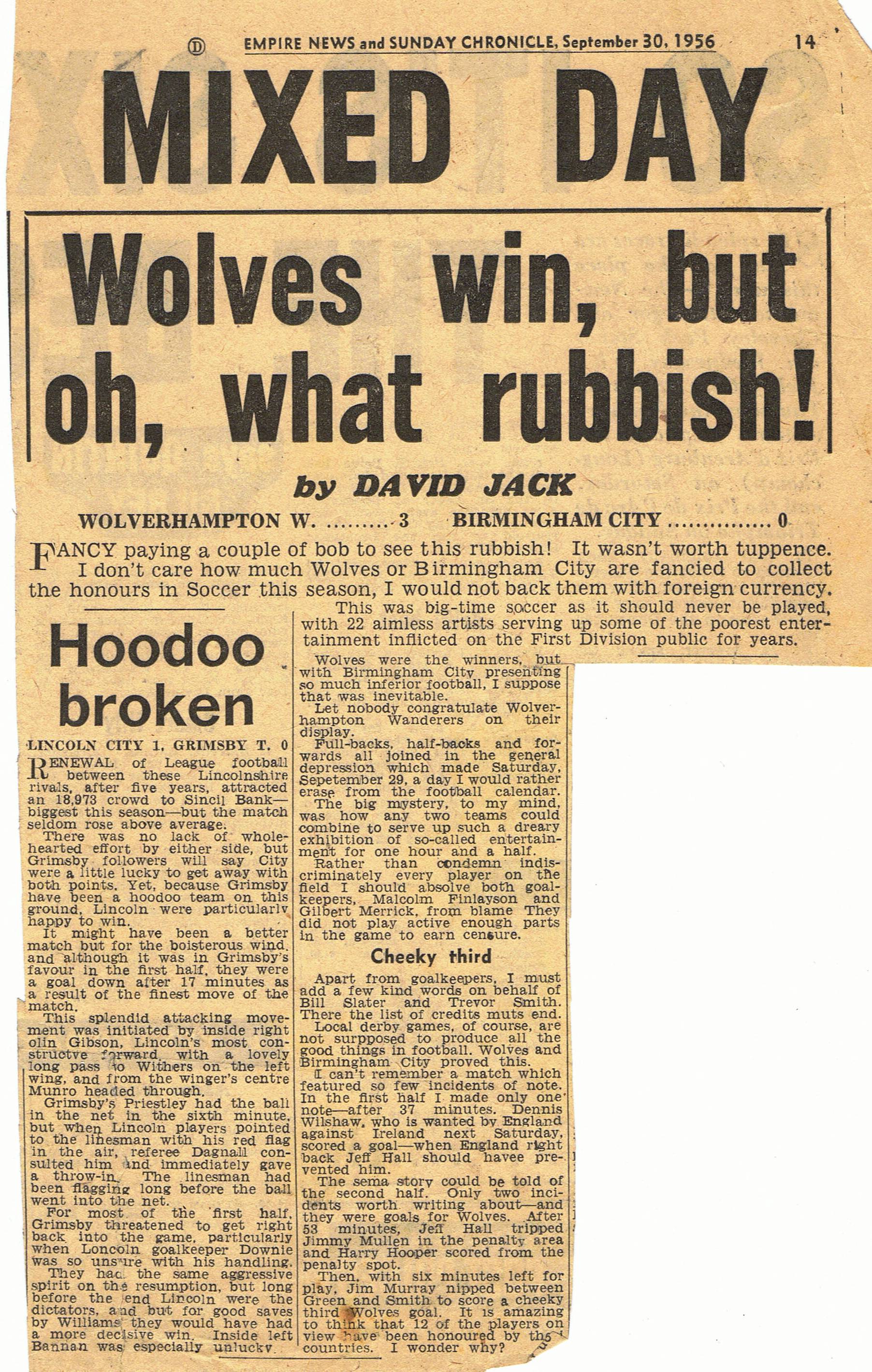
Nearly ten years into his journalism career, David was a reputable and respected football writer. In 1956 however, his reputation risked coming unstuck, the result of a damning but what he considered, honest report of a First Division match between Wolverhampton Wanderers and Birmingham City. Both clubs were unhappy with the report and consequently banned David from press box and directors box facilities at their respective grounds.
In 1957, David ghosted another book, “My Story” (Souvenir Press 1957) Manchester United manager Matt Busby’s autobiography. Although first published in 1957, David revised the book 12 months later, adding another chapter, after the plane crash at Munich the following year, in which eight Manchester United players and eight journalists were killed. Ironically and sadly, the review (below) of “My Story” had been written by the esteemed Manchester based journalist, Donny Davies (“An Old International”) who died in the Munich crash.
It was just good fortune that David was not on board that fateful BEA aeroplane that crashed in Germany on 6th February 1958. David had travelled to Dublin in September 1957 to cover the European Cup preliminary round match between Manchester United against Shamrock Rovers and David had expected to travel to Belgrade to cover a later clash with Red Star Belgrade. David’s editor however, asked him to travel to Stockholm instead, to cover the 1958 FIFA World Cup draw, scheduled for 11th February 1958. The eight journalists who died on board the flight at Munich, returning to England from Belgrade, were all grouped together at the rear of the plane. There was every chance that at the age of four, I could have lost my father, had he travelled to Belgrade.
This was a very difficult time in David’s life. Those journalists who perished at Munich were his friends as well as being colleagues. Two weeks earlier, David’s mother Kathleen died followed, as did his father, later in 1958. After the Munich crash, David was posted permanently by his newspaper to the North West of England.

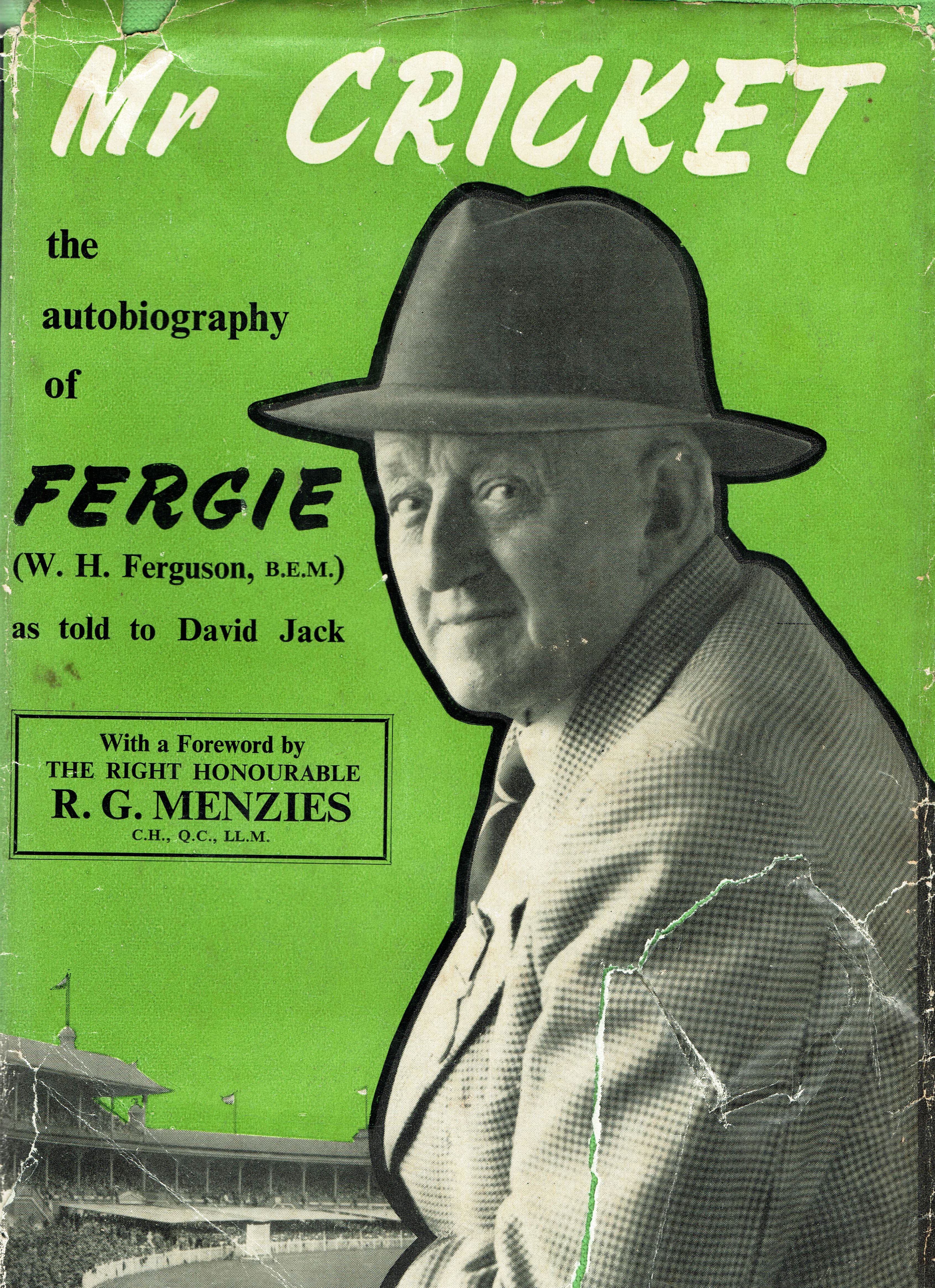
David continued to write sports related biographies, including books on footballers Tom Finney and Jimmy McIlroy as well as Bill Ferguson the official scorer of the Australian cricket team for many years who had travelled with all the famous Australian cricketers, Bradman included, in the first half of the 20th century. The foreword to the book was written by Australian Prime Minister R G Menzies.


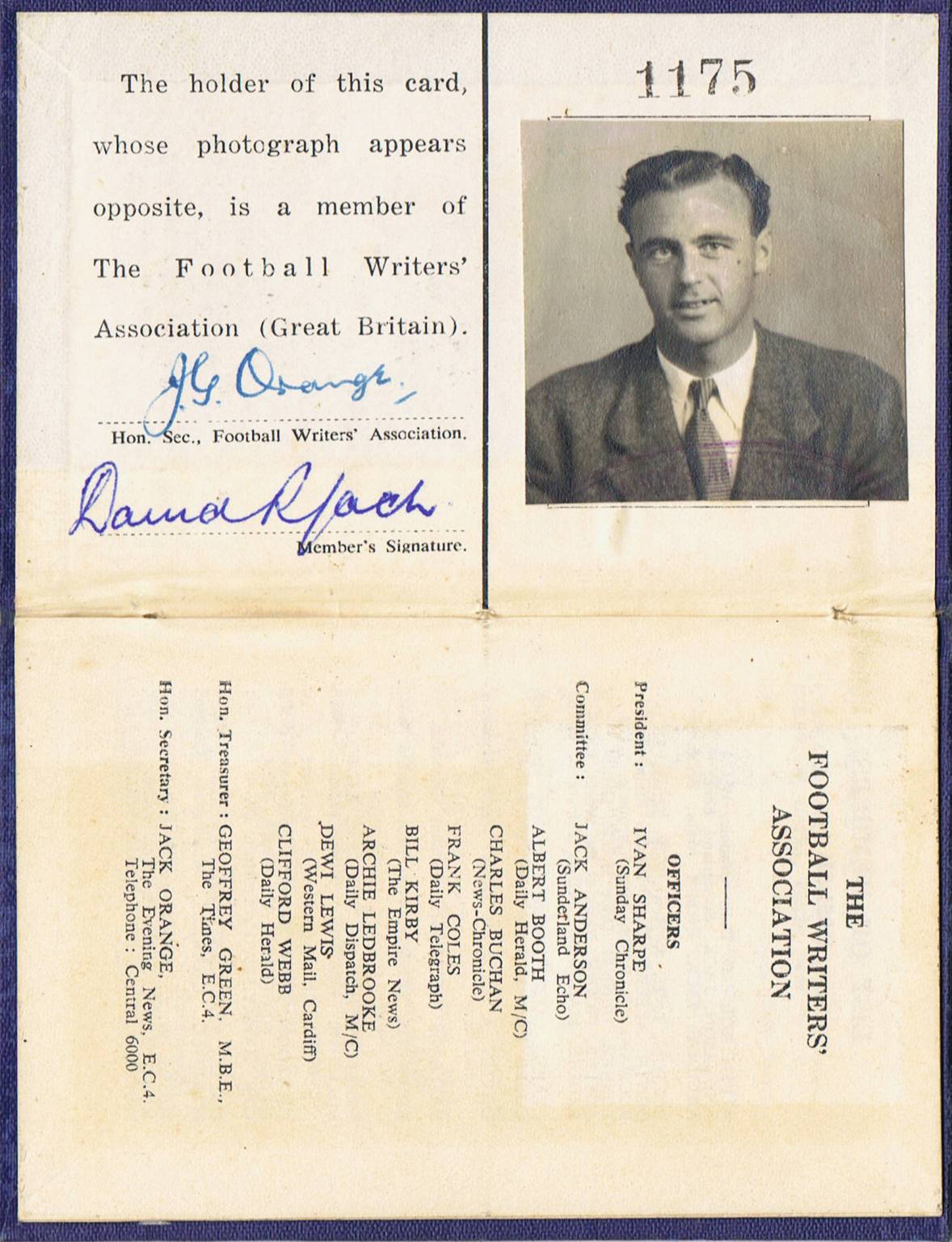
Seeking a new challenge, in 1965, Dad decided that he and my mother would buy a newsagency at Thornton Cleveleys near Blackpool. David continued to write on football and in 1965 was elected Chairman of the Football Writers’ Association (“FWA”) – the first freelance writer to be appointed to that position. As sitting chairman of the FWA, David had the honour of presenting Bobby Charlton with his Footballer of the Year award in 1966, the year of the nation’s biggest ever footballing triumph, the winning of the FIFA World Cup.

By 1966, tired of getting up daily at 5.00 a.m. to take delivery of the morning newspapers and filling in for absentee paper boys in the snow and rain, David decided that the family would emigrate to Australia. In February 1967, David and his family embarked from Southampton on the Chandris Lines ship “S.S. Australis”. The total cost under the assisted passage scheme was just £20 and motivation for this significant life change, was the promise of sunshine and the suggestion that the warmer climate might assist my brother Paul’s asthma.

Setting off from England in 1967, David had no employment guarantee but still nine mouths to feed. Upon arriving in Australia, David had to prove his worth as a journalist, which he achieved by writing a series of articles for Pix magazine. One in particular on Australian jockey Mel Schumacher, caught the notice of the industry and as the Sydney Sun did not have a full time soccer writer. David was offered a permanent job in April 1967. Recognizing that a football environment did exist down under, David soon became an important part of Australian football. Having been used to receiving as much column space as was needed in the United Kingdom, David was often frustrated by the lack of paragraphs allocated here, to what was a minor sport at the professional level. His pleas to his sports’ editors often fell on deaf ears but he continued to try to grow the visibility of Australian football encouraging his employer to support football at the grass roots level.

David was convinced that the way forward for Australian soccer was to attract the non committed fans of the rugby codes and Aussie Rules and to entice Australians and the latent British football fans down under, to watch local soccer. David wanted to have club names changed to clearly identify with a local district rather than having a connection to a European nation. David felt that this was the only way to appeal to the greater population. Though this would be frowned upon today, David’s forceful writings on this subject were not motivated by racial bias but a burning desire to make the whole nation embrace soccer in this country. David had a very good association with the clubs, officials and supporters of those clubs sponsored and supported by post World War II immigrants and he wanted to retain the support of these groups but supplement them with disenchanted rugby and Aussie Rules followers.
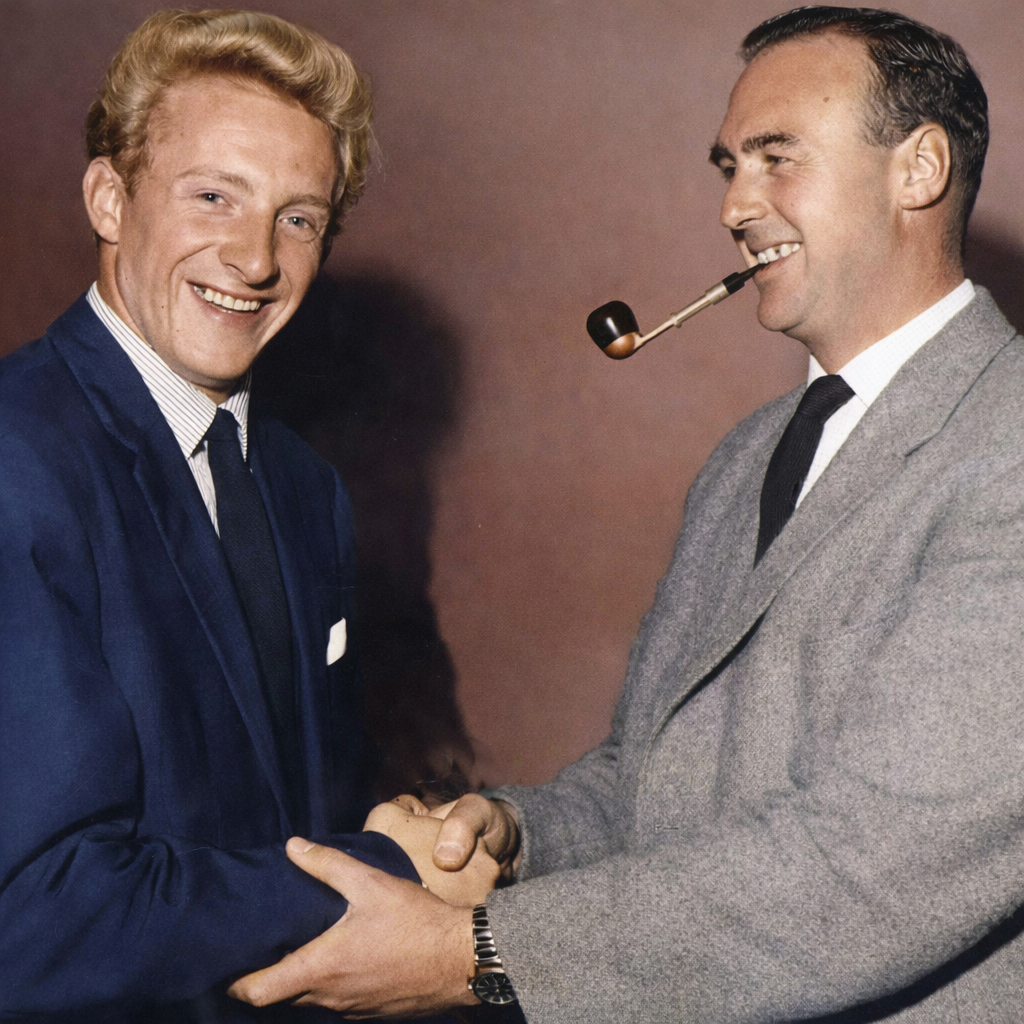
David was never afraid to speak his mind – his experience in the Wolves v Birmingham match attests to this and soon after starting with The Sun newspaper, he had a falling out with his long time friend, Matt Busby. Manchester United played a Sydney XI here in June 1967 and Sydney’s Ron Giles suffered a broken jaw after an off the ball scuffle with United’s livewire, striker Denis Law. David reported Law’s “involvement” in the incident, upsetting Busby the respected Scottish born manager, who would have preferred the incident to be hushed up. Busby, a man of integrity, apologized to David, soon after.
Australia’s qualification for the 1974 FIFA World Cup brought widespread optimism for the future of the game and the media started to provide more coverage of Australian soccer. As a result, David was asked to host a soccer segment on Sunday mornings on Channel 7’s Sports Action which later became Sports World, chaired by former rugby league and union international, Rex Mossop. The weekly appearance was far from lucrative for David, although I do remember the family being well stocked with “delicious hams from Meapro” and numerous bottles of Patra orange juice.

David travelled to the 1974 World Cup Finals in West Germany and by this time, he was happy with his lot in Australia and never contemplated returning to the UK. David’s trademark pipe was familiar with the local football fraternity and David continued to be outspoken about the local game and he received more than one threat of legal action from Sir Arthur George, then chairman of the Australian Soccer Federation. David founded the Australian Soccer Weekly and Soccer Monthly News and sought interest from local publishers for writing a number of books, including the Australian coach, Rale Rasic’s life story. Australian football unfortunately had still not captivated the population sufficiently to attract publishers to Australian football or its’ characters. David did collaborate with Andrew Clues, a UK ex patriot coach in the writing of “Soccer for Coaches & Players” (Australia & New Zealand Book Company 1977). Clues had high hopes for the book, however to this day it remains a “collector’s item”

Until his dying day, David strongly advocated that Australia should not play football in summer and the matter was once debated on SBS television. The former SBS presenter Les Murray and one time Australian coach Eddie Thompson argued in favour of playing in summer. Now, however, whenever watching a local A League game and the heat results in players taking mid half drinks breaks, I think of Dad and say to myself “You were right”!
David lived most of his Australian life on Sydney’s Northern Beaches, notably Fairlight and Harbord (Freshwater) spending many hours on Freshwater Beach, caked in Coppertone sun tan lotion, listening to his adopted country playing cricket against the country of his birth. David continued to play tennis regularly on the court at his and mum’s Harbord home. David often promised an appearance from Ivan Lendl, apparently a friend of the then Sun photographer, Anton Cermak. Lendl never fronted so we had to make do with a less than talented tennis player in Socceroos coach, Rudi Gutendorf.
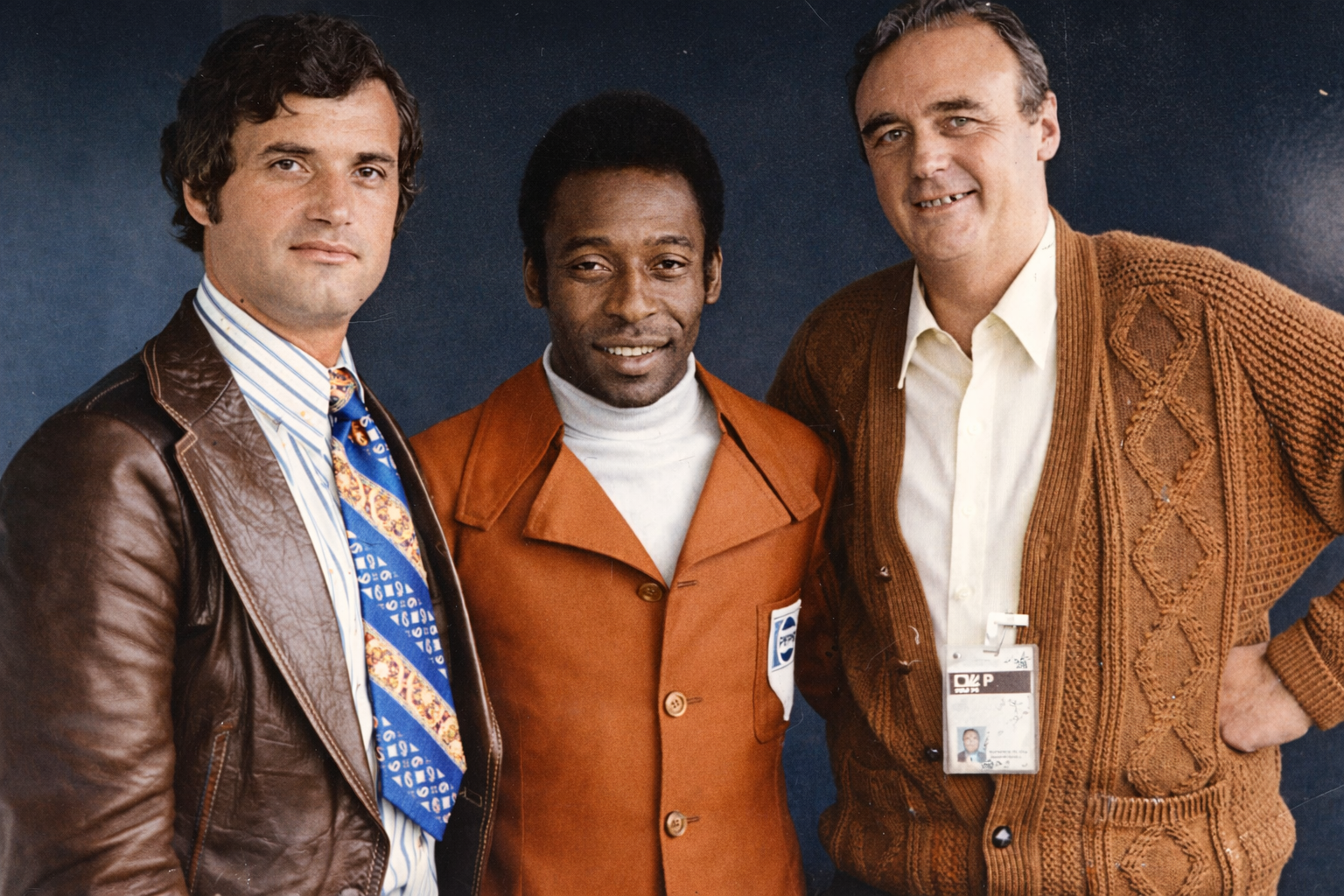
David married Rose Costelloe in December 1950. Rose came from the seaside town of Ballybunion, County Kerry and she and David had seven children. From their wedding day onwards, Rose understood very well the ramifications of marrying into a committed professional sporting family. The wedding ceremony had to be at 11.00 a.m. as her father in law, DBN Jack was then manager of Middlesborough F.C. who were kicking off at White Hart Lane at 3.00 p.m. against Tottenham Hotspurs. The wedding was specifically arranged for that day, to coincide with Middlesborough playing in London.

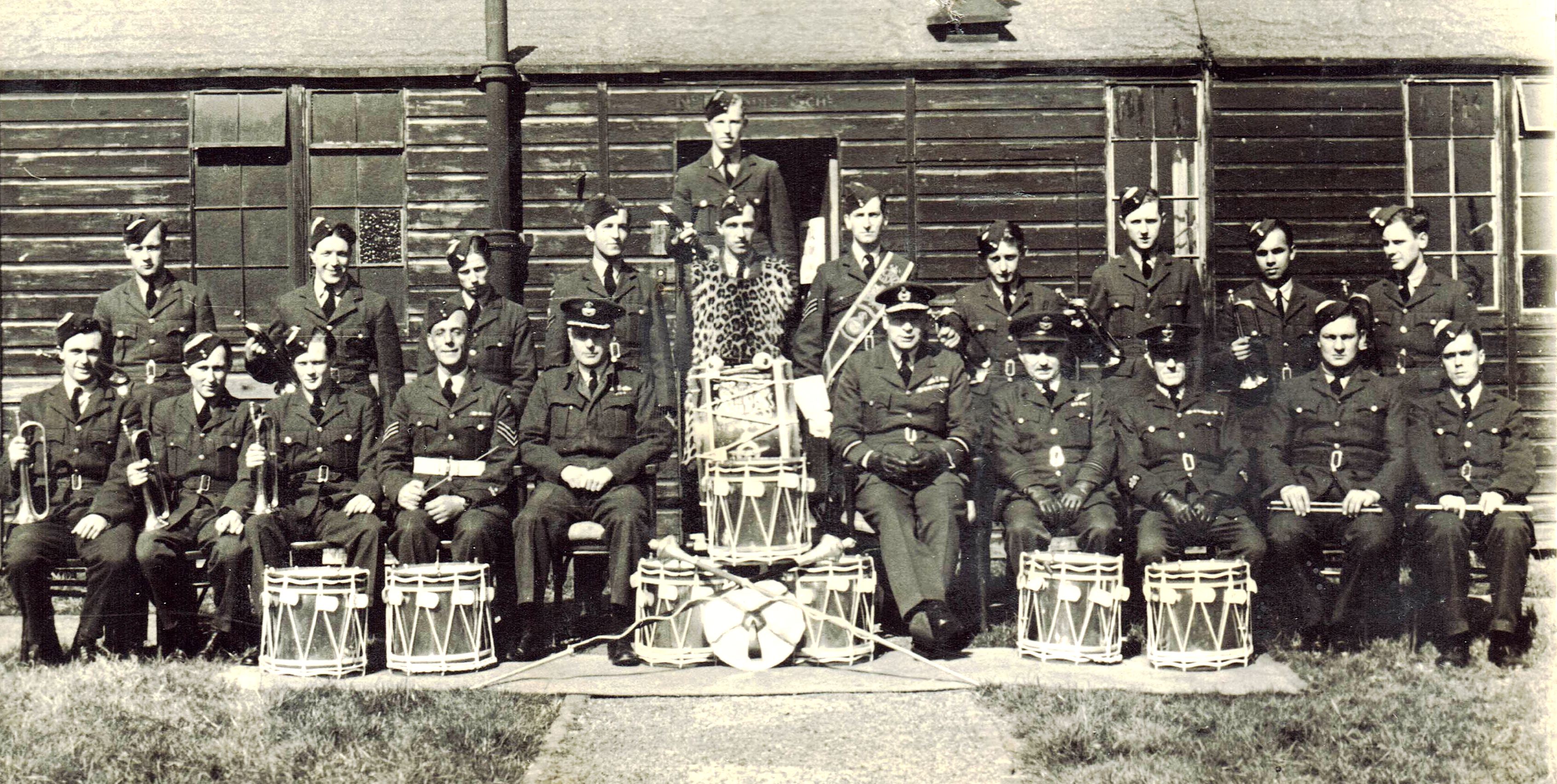
A competent piano player and armed services cornet player, David loved his music, especially Frank Sinatra, Sammy Davis Jnr. and Peggy Lee. He had played cornet in the RAF band at Aldershot during World War II and family photo albums indicate that cornet playing appeared to be David’s pre eminent contribution to the war effort. David however always insisted that he “kept the Sunderland (UK) skies clear of The Hun”. David had a very dry sense of humour, garnered from the British comedy greats of the 1950’s and 1960’s – Spike Milligan, The Goon Show, Tony Hancock, Sid James and of course the silliness of Benny Hill.
David was always calm and thoughtful and loved all of his children equally and they loved him similarly in return. David Jack retired from sports journalism in 1988 and he and Rose moved down to Sussex Inlet on the NSW south coast. David continued to write for the local Probus club. He even started to march on ANZAC Day, perhaps reminiscing about his Royal Air Force days when he could produce some beautiful sounds on his RAF cornet.
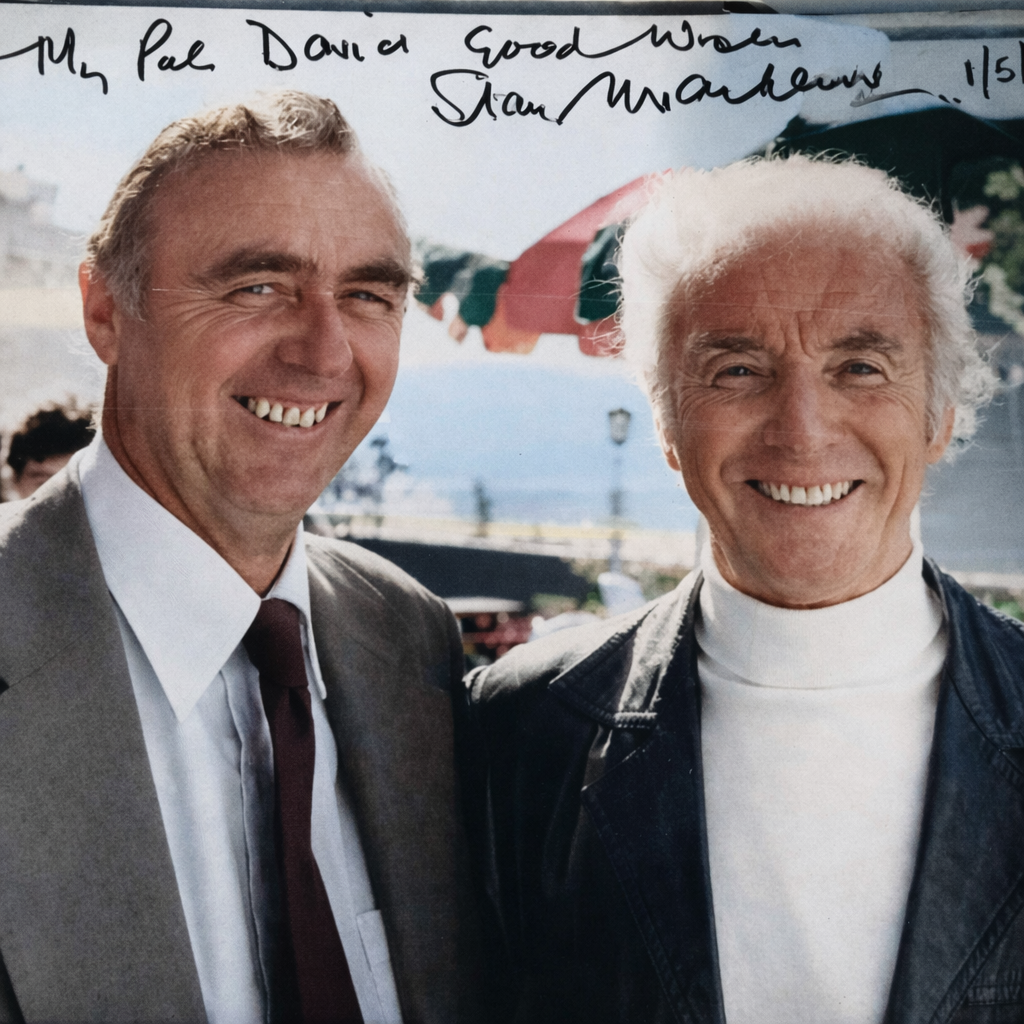
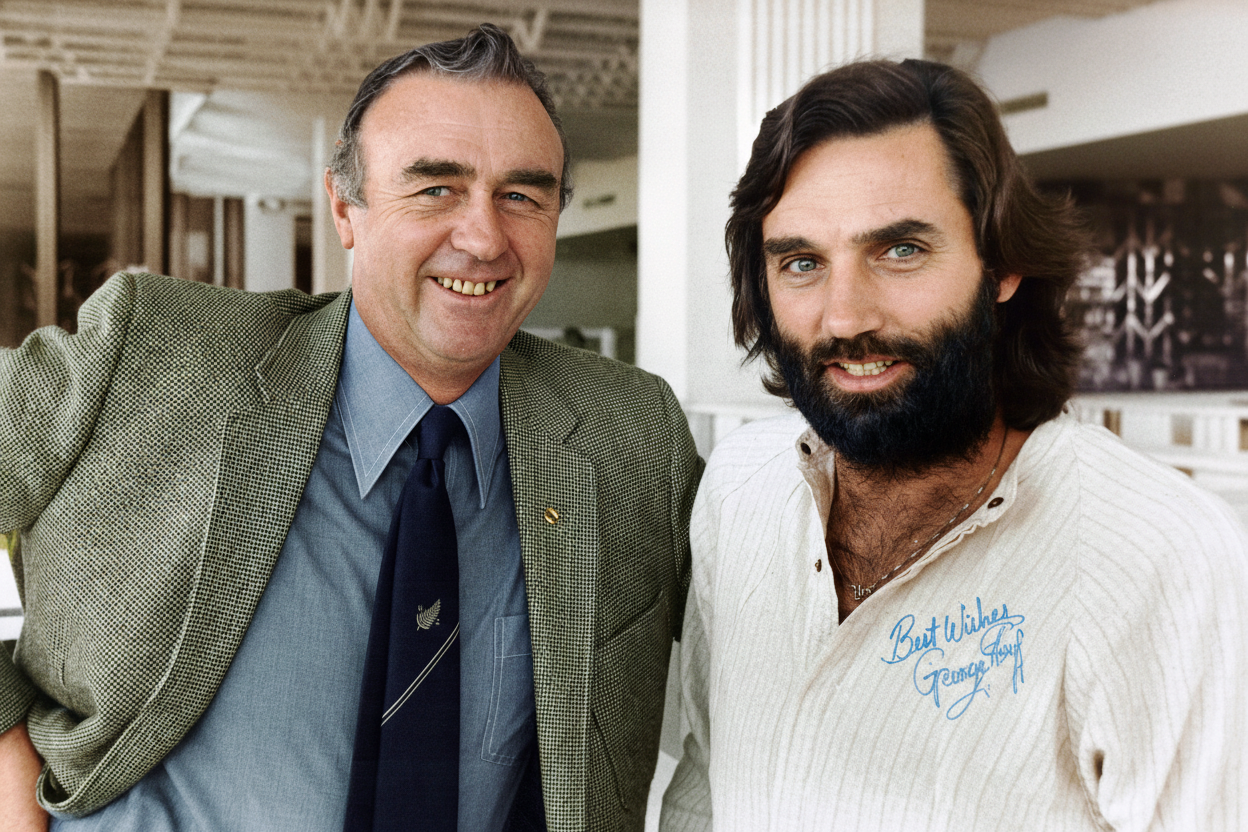
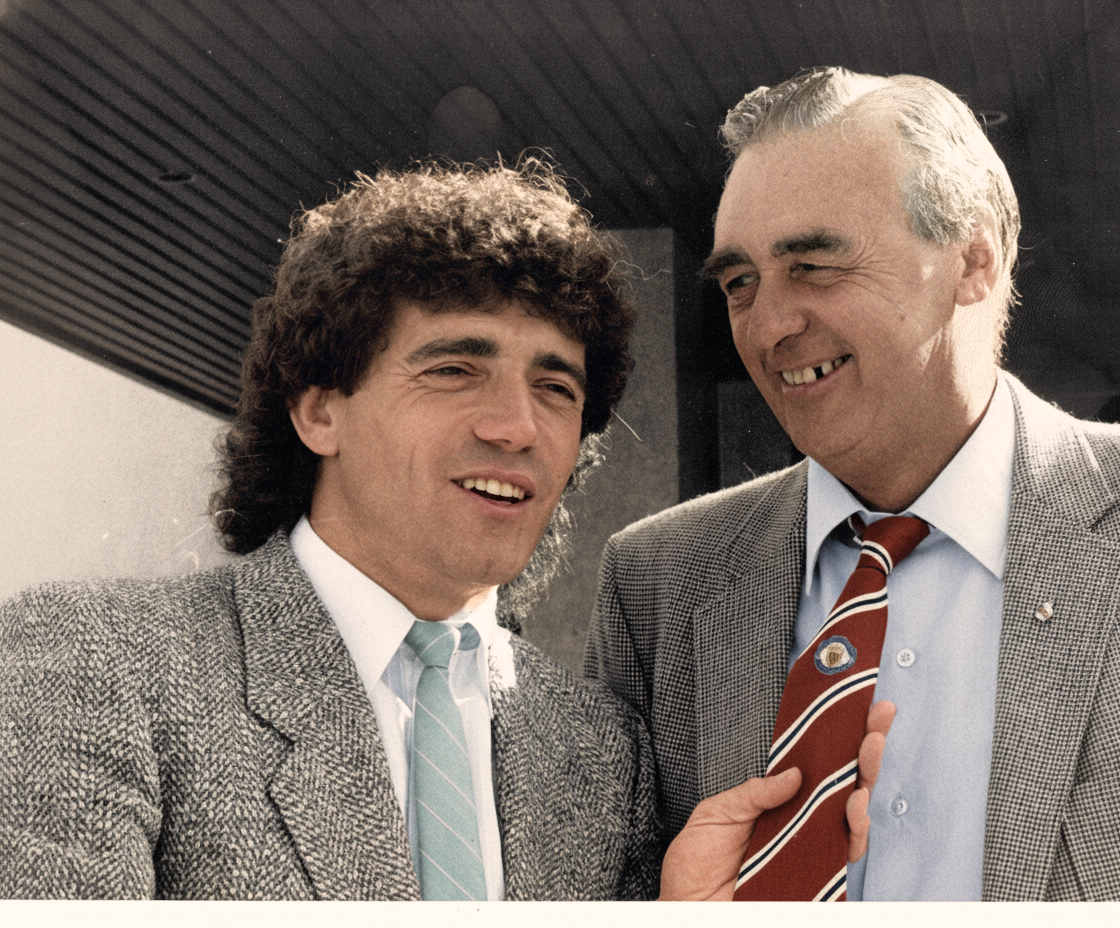
David Ronald Jack died on 1st June 1990 at the age of 64.
Rest in peace Dad.
P.S. All of David’s published books are still selling consistently.
David Jack © 2023

 David Jack
Nice to hear your message David re. your dad. I didn’t realise or even remember that he died as earlier as age 64.
I do remember how good he was as the soccer reporter in Australia, as when you and I played soccer together in the 1970s.
Regards, John ——————– John Hargreaves M: +61 404 828 441 E: jchargreaves@gmail.com
LikeLike
Hi John,
It’s nice to hear from you. I think I had a technical hitch as I was going to post that today which would have been my dad’s 100th birthday !
I think the best years of my football years were in those early days at Wests and we had a lot of very good players and good blokes there ! ☺
Best wishes
David
LikeLike