PLEASE SIR, CAN I HAVE MY GAME BACK?

Big Bash Slog
Big Bash in full colour

I turned on the television recently and watched a sport that reminded me a lot of cricket. Two teams competing with a bat and ball but the ball was white, unlike the player’s attire, which was multicoloured and emblazoned with corporate sponsors logos. One of the “batters” (as described by the commentator), was given out LBW but amazingly, the umpire was advised by a voice in his Sony earphones that he had made a mistake. The LBW decision was incorrect and the batter could continue his innings. This however, would not be for too long as in this particular match, each team could only bat for a total of 10 overs – good heavens, neither Geoffrey Boycott nor Bill Lawry would have time to get off the mark !

Apparently, this is a form of cricket, known as the Big Bash League. Although I had no idea where the players came from, I could only assume that they played grade cricket on the weekends and if successful with their local club, they might get picked for the Sheffield Shield competition (does it still exist?).
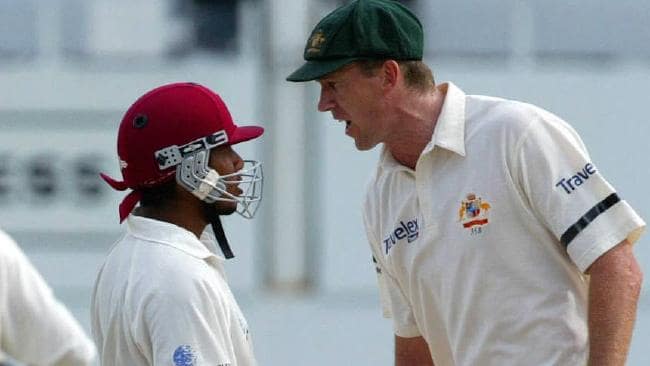
McGrath Sledging
Glenn McGrath having a chat to a West Indian opponent

If you sense that I am slightly disenchanted with modern cricket you are not wrong. My disenchantment however, did not arrive with technicolour Big Bash cricket but had its’ seeds sewn back in the late 1970’s with the advent of  World Series Cricket. The behaviour of Australian cricketers was starting to deteriorate and hit a new low in February 1981 with the underarm bowling incident. Many argue that Ian Chappell was the father of the “ugly Australian cricketer” but Chappell the elder, did have an inherent sense of fair play. His brother Greg however, by ordering Chappell son No. 3 Trevor to bowl underarm against New Zealand in February 1981, set the sportsmanship bar at a new low.

By the time of the Glenn McGrath / Shane Warne era, Australia had become cricket’s “sledging” champions. Sledging is a by product of cricket that runs concurrently with the game itself. Sledging gives players a chance to act like schoolyard bullies and express their machismo, hoping that their childlike behavior gives them some kind of advantage over an opponent. Those who engage in sledging, prefer to call it by the less offensive term of “banter” but whatever you call it, the practice is most unsportsmanlike. Sledging and a decided lack of respect for Australia’s opponents, was the root cause of my cricketing marriage breakdown.

For Australian cricket, unsporting behavior peaked in South Africa in March 2018. The ball tampering affair that found Steve Smith, David Warner and Cameron Bancroft guilty, severed any remaining affection that I might have had for cricket as I knew it. Even though I have fallen out of love with the game of cricket, Paul Simon once sang “preserve your memories, that’s all that’s left you”. These are my cricket memories.

theresa-batting-david-laughing.jpg
Backyard cricket – Theresa takes strike and the author chuckles

Born in England and growing up in Wilmslow, Cheshire, I fell in love with cricket. Like  football, our backyard cricket matches were only punctuated when the ball was hoisted over the fence and into a neighbor’s garden. The penalty of “6 and out” was miniscule compared to the fearful exercise of knocking on the neighbor’s front door, expecting to be confronted by Harper Lee’s Boo Radley or Alfred Hitchcock’s Norman Bates in full rage.

I first recall listening to an Ashes test series in 1961 on my Dad’s car radio. The BBC provided commentary from the soothing southern England country tone of John Arlott coupled with the very posh delivery of Eton and Oxford educated Brian (“Johnners”) Johnston. These and the other BBC commentators could keep me entertained for hours on end – even more so when the English rain would inevitably stop play. Johnston in particular, had a sharp sense of humour and among his classical utterings was, “the bowler’s Holding, the batsman’s Willey.” In 1961 I could not understand how an England team led by the dashing Lord Ted Dexter and boasting fast bowling royalty in F S Trueman and J B Statham had lost a home Ashes series to a bunch of colonials.

Living in Wilmslow, 12 miles south of Manchester, ensured that I was a Lancashire County Cricket club fan. I spent many hours at the Old Trafford cricket ground, watching Lancashire heroes Brian Statham, Peter Lever, Bob Barber and Tommy Greenhough, a leg spinner whose bounce and long, almost comical jaunty run up, has never had an equal in the history of the game.

old-trafford-cricket-1.jpg
Old Trafford Manchester – the pavillion unchanged since 1963

Skip forward a couple of years and I had the misfortune as a Lancashire fan, of travelling to Bramhall Lane, Sheffield on the June long weekend in 1963. The occasion was the Yorkshire v Lancashire, “Roses” fixture and Lancashire were skittled to be all out for not too many, just after lunch on the first day. Yorkshire quickly lost three early wickets but then a bespectacled young man named Geoffrey Boycott and his colleague, W B (Bryan) Stott defied the Lancashire attack for the next two days adding 249 runs for the 4th wicket. I had witnessed Boycott’s maiden county century for Yorkshire and though Boycott’s hundred had probably only taken around four hours, to this nine year old Lancashire supporter, it seemed like a lifetime.

Later that month, England held on for a dramatic draw in the second test match against the West Indies at Lords. A match forever remembered for the aristocratic English batsmen, M C (Colin) Cowdrey, coming out with a broken arm at nine wickets down in the last over of the game, to try and save the test match. Cowdrey ultimately, did not have to face the last two balls from the rampant West Indian speedster, Wesley Winfield Hall, but the memory and excitement of that final over will remain with me forever. I loved cricket.
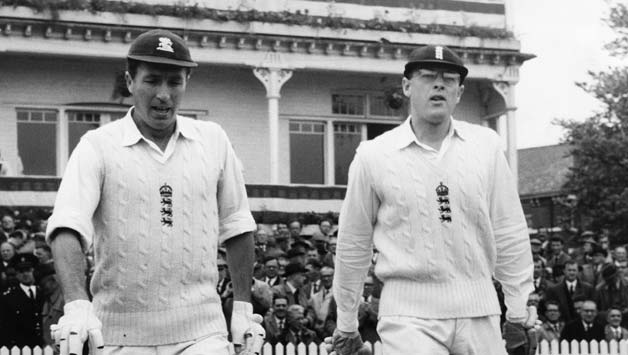
Geoff Boycott
Geoffrey Boycott (right) opening the batting for England in 1964

1967 and my father decided that he and mother Rose should emigrate to Australia with the seven Jack children in tow. How could this happen? How could I be going to live in a country where they didn’t play football (so I thought) and I would be subject to watching the cricketing enemy – Australia ? Those Aussies won’t win me over, I’m a loyal Englishman who will always support Colin Cowdrey, Geoffrey Boycott, John Snow and the like.

But win me over they did and it was possibly the brilliance of Kevin Douglas Walters that struck me on my road to Damascus. Living at Fairlight in Sydney in February 1969, I fondly remember listening to commentary of the Australia v West Indies test match on my father’s National Panasonic transistor radio, complete with removeable brown leather case. Doug Walters was batting with Ian Redpath at the Sydney Cricket Ground and it seemed that every time Walters faced Lance Gibbs, the ageing West Indian offspinner’s deliveries were smashed to the cover boundary fence. Walters ended up scoring 242 in that innings and completed another century (103) in the second innings, the first cricketer to have scored a century and double century in the same test match. I thought, this is the way to bat, this is my country – Australia !

Doug Walters PA Photos
Dashing Doug Walters in his prime

The “Poms” (as I could now call them) came to Australia in 1970-71 and I had to rethink my allegiance when Ray Illingworth, with a lot of help from fast bowler John Snow, led England to a 2-0 series win. There were seven test matches in that series (the third in Melbourne was abandoned without a ball being bowled) and although four tests were drawn, there was always drama and excitement to enjoy. This was cricket. In that same series, the first ever one day international was played. Australia won but the teams were identical to the test match teams, wore the traditional creams with not an advertising logo in sight and played with a red cricket ball. For me, this was still cricket.

In 1971-72, when Apartheid caused cancellation of the South African tour, Australia entertained a very strong Rest of the World outfit. Though not a contest between traditional rivals, the series produced some sublime cricket – Dennis Lillee, flowing black mane and at the height of his bowling powers, destroyed the Rest of the World team in Perth. Lillee, with his delightfully smooth fast bowling action took 8 wickets for 29 runs in the first innings in Perth and the World eleven skipper, West Indian Garfield St. Aubrun Sobers scored a magnificent 254 in Melbourne. The innings of Sobers was the best batting performance that I have ever witnessed, an opinion shared by the great Sir Donald Bradman. The West Indian all rounder consistently square cut all bowlers with grace and venom to the boundary fence and 95% of those 254 runs must have come in boundaries. I loved cricket.
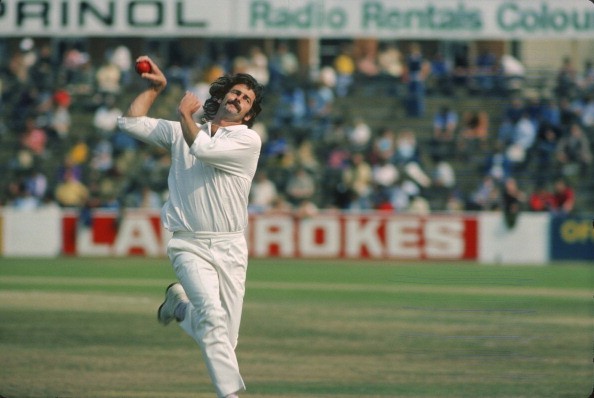
Dennis Lillee
Dennis Keith Lillee in classic fast bowling mode

My fondness for cricket peaked with the 1974-75 Ashes series played in Australia. I must have watched every minute of that series. There was the erratic brutality of Jeff Thomson’s bowling, Tony Greig’s arrogant defiance, the supreme elegancy of Greg Chappell’s batting and a paunchy forty one year old Colin Cowdrey, trying to defy the pace attack of Dennis Lillee and the frightening Jeffrey Robert Thomson.

The high point of the series for me, was Doug Walters’ century in the session between tea and stumps in the second test at Perth. On that Saturday, I ended up being very late for a bank Christmas party, unable to drag myself away from the television. Robert George Dylan (“Bob”) Willis was bowling the last ball of the day to Walters who was on 97 and needing 6 runs to score a century in the final session.

In 2019, a batsman would be content to see out the last ball and maybe collect three singles on the following day to complete his hundred. “Caution” however, did not form part of the Doug Walter’s vocabulary. The six foot seven inch wiry haired Willis, who officially added Dylan to his name in tribute to the legendary singer / songwriter, hurled the ball in short to Walters. The one time Australian army conscript swiveled and hooked the ball somewhere in the direction of heaven’s door. These were the days of black and white television, one camera and certainly no high definition. As the ball disappeared off the face of Walter’s bat, TV viewers could only hope that it would clear the boundary rope. The ball did clear the rope by some margin and immediately hundreds of fans also cleared the rope in the other direction, to mob Kevin Douglas Walters. There may have been better technical batsmen than Walters, more prolific run scorers, but as an Australian cricketing folk hero, none have come close to matching the boy from the NSW town of Dungog.

McCosker Colour
Rick McCosker with broken jaw facing Bob Willis in the 1977 Centenary Test

Cricket continued to be a major part of my life through the 1970’s and early 1980’s. I enjoyed the production line of superb West Indian fast bowlers and the imperious batting of Isaac Vivian Alexander (“Viv”) Richards. The Australians ultimately gained the upper hand over the calypso kings but despite the looming storm clouds of the World Series Cricket revolution, there was still a marvelous centenary test to be played in Melbourne against England in 1977. Among the many highlights of this game, was the plucky performance of one time Rural Bank of NSW colleague, Rick McCosker. The Australian opening batsman had his jaw broken in the first innings but batted at number 11 in the second innings, wired and bandaged up, to add a valuable 54 runs with Rodney Marsh for the last wicket.

Later that year, following the cricketing implosion created by Kerry Packer’s World Series Cricket, I remained loyal to the cricketing establishment. I discovered new heroes in the volatile fast bowler Rodney Hogg, dashing batsmen Peter Toohey and Kim Hughes and a forty one year old cricketing relic, Bobby Simpson. Simpson shrugged off ten years of retirement, returning to captain the “official” Australian team in a home series against India.
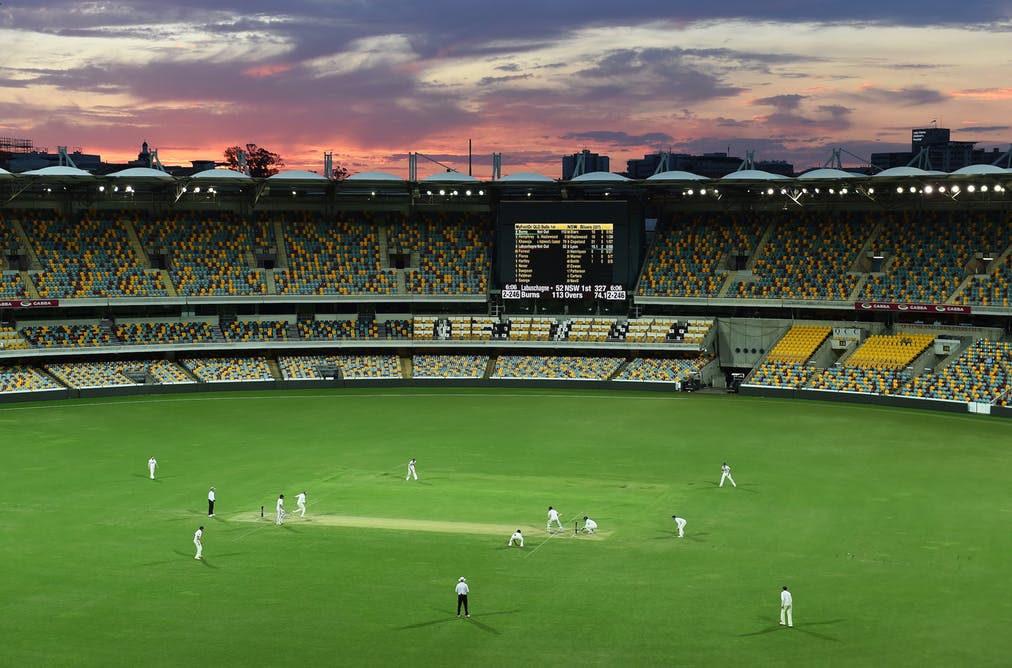
Night Cricket
Night cricket – not for the purists

In the early 1980’s, the divide that was Australian cricket was eventually merged, but for me the damage to the game had been done. One day internationals of just fifty overs per team, had become an equal attraction to Test cricket for the public. Creams had given way to coloured clothing, bad light would not stop play as floodlights took over and the one hundred year old tradition of a cherry red cricket ball had been replaced by a white version that within ten overs was scuffed and discoloured. The behaviour of Australian cricketers continued to deteriorate and my love of cricket was on the decline.

Three or four month tours by the major cricket playing nations, including tussles with county or state teams were becoming rare. There was an abundance of one day 50 over matches, aimed at generating revenue, but these once exciting contests, had started to follow a predictable format. Too many meaningless matches staged and too many obscure, hastily named trophies offered. Many a one day international game had become boring between the 15th and 40th overs. Eventually, the authorities “fixed” this by creating 20/20 cricket, cutting out the tedium of the middle period, but we still had to suffer the never ending 50 over “ODI’s” to satisfy programming demands of the broadcasters and sponsors.

The first international Twenty 20 match was played in 2005 and then the cricket follower had the “luxury” of three different versions to watch. Eventually a pink ball would be added for night cricket, so that one of three different coloured balls might be used. The different forms of the game required a different skill set and upward of 40 players would now represent Australia in any particular summer. Frankly, it became impossible to know who was in what team, which format of the game was being played and for what trophy. As quickly as some of the 20/20 players were capped by their country, they would disappear into cricketing oblivion. My disillusionment continued.

cricket-balls-e1550921845994.jpg
Cricket ball options in 2019

Test match cricket has continued to be popular with the general public but with only passing interest for me. Although the Ashes series remained mostly five match affairs, too many two, three and four match tournaments have evolved. The drama, twists and turns generated during a home test series stretching from late November to early March, are no longer. In 2018 -19 Australia hosted India in a whistle stop four match test series that spanned just one month and one day. Then Sri Lanka arrived for a two test “series.” No sooner had we settled into this two match challenge, than the Sri Lankans were on the plane home. What was the point?

For me, Test cricket was the real attraction, the focal point of the game. There would be meaningful five day contests between bat and ball where there could be enterprising batting but if a two hour occupation of the crease was needed, the batsmen had the technique and the grit to hold on for an honourable draw. Batsmen would preserve their wicket with the tenacity of the 300 Spartans defying the Persians at the Battle of Thermopylae. Yes, we might have had to endure “barnacle” Bill Lawry batting all day to score a half century, but this was Test cricket, a unique sporting experience.

I apologise for wallowing in nostalgia but I do miss the cracking cover drive of a gum chewing Doug Walters and the stubborn defence of a Geoffrey Boycott. Where is Jeff Thomson unleashing the unexpected beamer at an unsuspecting (English) batsmen’s head and the one time roly poly Rodney Marsh, completing yet another “caught Marsh bowled Lillee” dismissal ? What happened to batting technique ? We now have batsmen (no Steve Smith, I won’t call them “batters”) playing improvised 20/20 shots in test cricket, often sacrificing their wicket. Bowlers don’t have to prise out batsmen’s wickets anymore. The backyard taught us that we could all slog, but who today can stroke a ball along the ground between mid wicket and mid on in the vein of Greg Chappell or square cut like Sir Garfield Sobers ? Where are the off spinners who can bowl 8 straight maidens like England’s Fred Titmus or the fast bowlers such as West Indians Andy Roberts and Michael Holding, bowlers with an almost casual run up but deadly delivery ?

Jeff Thomson hurls down another thunderbolt

And I might ask, where are the delicious names that have been sprinkled throughout cricketing history – instead of Arthur Theodore Wallace (“Wally”) Grout or Frederick Sewards Trueman or Sir Curtly Elconn Lynwall Ambrose, we now have Shane Robert Watson and Glenn James Maxwell.  Come on Mr. & Mrs. Watson, Mr. & Mrs. Maxwell, how can your sons be true cricketers being named Shane or Glenn?

To keep the 20/20 cricket follower entertained, we have bowlers serving up fodder for the batsmen’s slogfest. There are endless reviews of contentious appeals, sponsored by an American chicken fast food purveyor and if you need more than 20 runs an over to keep you awake, clichéd anthems will regularly blare out of the P.A. system -“Another One Bites The Dust”, “Eye of The Tiger” and of course,”Howzat ?”

To some, the evolution of cricket may be seen as being positive. There is no doubt that a player hitting a six in the last over to win a 20/20 match can be very exciting or a run out on the last ball to claim victory, but when I look back and compare my cricketing memories with the game as it is in 2019, the modern variety “is just not cricket.”

“Time it was and what a time it was”  (Paul Simon)

 © 2019 David Jack

US TOO, PHIL COLLINS – (we’re not dead yet either)

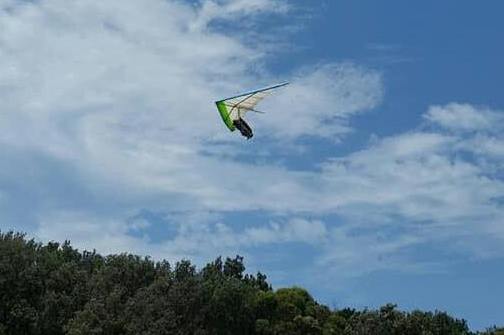
hang glider
    “Have I finalised my will ?” 

We scaled Pat Morton’s, Sis and I
Atop of Lennox Head
And watched the looneys in the sky
Hang on by sail and thread

But some enjoy to fly so high
Instructions fully read
Caring not that they might die
And fall to ground like lead

lennox head loonies 3              Will the family collect the car ?

The hang glide man, quite sincere
Approached us and he said
“Two hundred bucks is not too dear
Please man I need the bread” (local lingo)

I looked at Bern and she at me
Our warning signs were red,
Maybe today was not the day
To die at Lennox Head

annie at lennox head

              Annie – “I’ve seen enough !”

So Annie, Bern and I took off
Quite quickly, must be said
To guard our lives and bank accounts
Atop of Lennox Head

So if you’re on the Byron Road
Keep driving straight ahead
‘Cause if you’re still in living mode
Stay clear of Lennox Head

© David Jack 2019

A CHRISTMAS TALE (SORT OF)

                                         A DIFFERENT NATIVITY

Manda at Christines Nice shot

                                                                     Amanda Robinson

‘Twas not the night before  the Christmas, in fact not even close, 57 nights before to be precise, but don’t let that get in the way of a good Christmas story. It was 30th October 2004 and on this day crowds had come from near and far to celebrate the wedding of Kylie (not Minogue) and Dean (not James) but despite the absence of Hollywood royalty, it was as grand an occasion as Dee Why had witnessed for at least two and a half weeks.

An English born finance broker / band manager (let’s call him “David”) had been secured by the groom to perform a dual role at the wedding. Dean thought that he would engage David as chauffeur on this day as, for one crazy year of his life, David drove a Jaguar. Dean also asked David if he could get some of his friends to create some melodic (sometimes) noises on musical instruments at the wedding feast because, if nothing else they were very cheap.

Now David shared one character trait with the infamous hussy, Fanny Hill. He could not say “no” and although his vocabulary could be voluminous, the one word that was missing was “no”. David accepted the chauffeur and musician role, only telling Dean the night before the wedding that he did in fact no longer drive a burgundy Jaguar but a 1994 blue Ford Fairmont with no air conditioning.

Back to the Christmas story.  The ceremony in the Dee Why church was considered a necessary evil before the dutiful guests could toddle off to the Grand (exaggerated for effect) Cromer Gold Club for beers and champagne. This was to be their reward for enduring the church ceremony.

St. Johns Church Dee Why

                                                      St. John’s Church Dee Why

Just when the guests in the back row of the church were nodding off and those in the front row wished they were in the back row so they could nod off too, a fair young lady stood up amongst the crowd like the bright star rising in the east (Christmas reference). Without having to contend with the traditional discordant sound of a church organ, the fair young lady sang out in a manner so melodic, so clear, so beautiful that even those in the back row stumbled to attention.

David, the footballer / finance broker / chauffeur / entrepreneur was enraptured by the beauty of this voice and thought that he could possibly use this fair young lady in one of his enterprises and it wouldn’t be as chauffeur’s assistant !

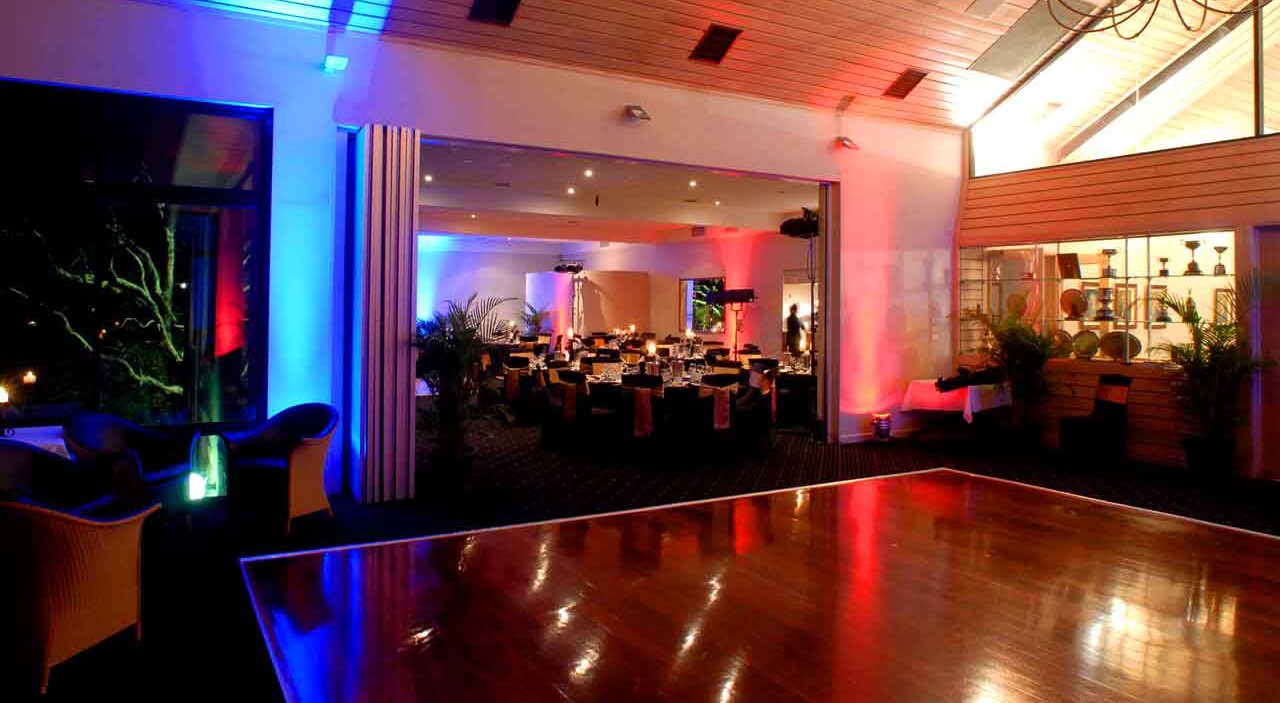
Cromer Golf Club Function Room

                            Cromer Golf Club – site of the birth of another union

After the nuptials were confirmed, the fair young lady and her mother joined the motorcade in a ticker tape parade, through elated crowds on the streets of Dee Why, eventually arriving at the Grand Cromer Golf Club. But for many an hour, David sat on the dock of a bay called Long Reef waiting for the ecstatic Kylie and Dean to have 100 gigabytes of pictures taken on the seashore. This place is called Long Reef because if you go there with bridal parties to have pictures taken, you don’t leave the reef for a Long (Long) time.

David eventually arrived late at the Grand Cromer Golf Club, setting a poor example for his fellow musicians who have honourably mimicked his tardiness to this very day.

The evening passed without incident until Dean, a garrulous Kiwi and sad to say, a relation of mine, decided on that day that they would each break the Guinness World Record for the longest and most mind numbing speeches in the history of wedding receptions. The speeches only ceased when paramedics arrived to treat a number of guests for extreme dehydration (no drinks had been served for 3 hours) and utter boredom.

manda & guitar

                          Amanda with guitar, feeling quite at home

Normal alcohol service eventually resumed and the band played songs that would remain popular (with them at least ) to the present day.

David then cast his mind back to the church and the beautiful voice of the fair young lady. Being from a Catholic upbringing and having been starved of female companionship at school for nine long years, David approached the young lady cautiously. David discovered that the lady with the beautiful voice was called Amanda. At first David wondered whether Amanda’s parents were an unimaginative couple because in 1970’s, the first name in the Book of Girl Baby Names was always “Amanda” but upon meeting them some time later, it became clear that in fact they were both quite intuitive.

But I digress. David asked Amanda (not, if she would marry him because he had already used that line with another Amanda) but if she would like to sing a song or two with the band. Amanda’s mother encouraged her daughter to accept the offer or at least turn the water into wine as they were still suffering from dehydration, but Amanda calmly said to her mum, “my time has not yet come” (biblical reference). When David asked the question, Amanda’s first thought was “yes, if you give me $1,000” but she relented and said “yes” to the man who couldn’t say “no”

BackBeat In Full Flight Compressed

                                                             BackBeat in full flight some time later

That evening at the Cromer Golf Club, Amanda sang in that self same melodic, clear and beautiful voice that she had exhibited in the Dee Why church. Even today, I can still visualise Amanda singing in the church, calm and composed, that very bright star in the east (final Christmas reference). The 30th October 2004 was a day on which a precious union of music and friendship was born. It was indeed a special day, not just for Dean & Kylie Miller but for me.

“For you, ( I hope) there’ll be no more crying,
For you, (I hope ) the sun will (always) be shining,”

                                                                   Christine McVie

December 24th 2013    

© David Jack 2013 
   

MY FOOTBALL UTOPIA

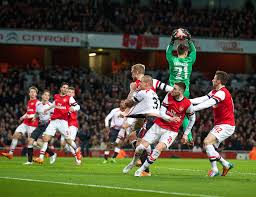
Association Football (“Soccer”) is acknowledged as the World Game, a sport played by more people on this earth, than any other. A sport that in its’ purest form provides a free flowing feast of skill and athleticism, with continual changing of possession and an innumerable number of different ways to score goals.

It is also called the “Beautiful Game” for this very reason. However, the massive increase in money in the professional game over the last 50 years, increasing the “win at all costs” mentality has smeared the sport’s reputation. The behavior of players, with tacit approval from coaches / managers and the authorities has turned the beautiful game into one less so and certainly in this country, has alienated many potential football fans.

When a game comprises maybe 30 – 40 fouls, the sport is not entitled to be called “beautiful”.  When sportsmanship is thrown out the window, as players consistently try to cheat their opponents or the referee, this is not a “beautiful” game.  When a player skillfully dribbles past an opponent but is pulled back or worse still rugby tackled by the defender, this is not a “beautiful” game.

Dear Mr. Infantino, I can no longer stand by and watch the decline of Association Football and I have listed what I consider to be the major current ills of the game and how I would resolve them ;

  1. DIVING 

Robben Diving
Arjen Robben – The Prince of Plummet

Football’s biggest issue. It’s time for referees to take a stand and wave play on when they consider that contact was minimal, not deliberate and that the player should have been able to remain on his or her feet.  Even more galling, when the cheating player is awarded a possible match winning free kick or penalty. Yellow cards must be issued for all instances of diving.

  1. FEIGNING INJURY

Rivaldo
Rivaldo –  Incomparable

This overlaps into the diving category, as many players exaggerate the impact of a tackle to hopefully increase the chance of a free kick. If a player’s injury is such that treatment is required on the pitch, I would have that player remain on the sideline for a minimum of 5 minutes. If a player sits down on the pitch while the game is in progress, the game does not stop. Once the ball is out of play, if treatment is required on the pitch, again the minimum 5 minute “injury bin” will apply.

  1. SHIRT PULLING / HOLDING

Shirt Pulling 3
So annoying for an attacking player

Every occurrence of shirt pulling must receive a yellow card. Even if an advantage is played by the referee, when play stops he MUST issue a card to the offender. If a player goes so far as to rugby tackle an opponent, this must be a red card. If both players are pulling shirts simultaneously, they will both receive cards. Sadly, reverting to pulling back an opponent has become automatic reaction for defenders when they cannot legally tackle effectively.

  1. SET PIECESSet Pieces

Set Pieces

If there is any holding by either attacker or defender at set pieces or players wrapping arms around opponents (even without contact) an immediate free kick (or penalty) is awarded – no warnings from the referee. Under my new rules, players will not be able to deliberately stand offside before a free kick is taken. They must at least be level with the last defender.

  1. COACH’S TECHNICAL AREA

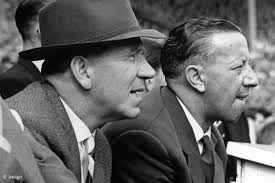
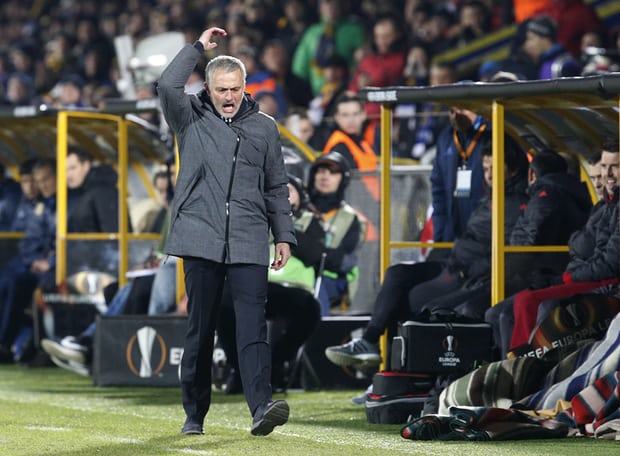
Busby & Muphy         Mourinho

Manchester United managers past & present – a tale of two eras

I will ban the technical area and insist that coaches remain in the dugout or are seated during the game. The technical area is only an excuse for many coaches and managers to express their egotism. The game is not about them. If a coach has to provide instructions to his or her players consistently during a match, I ask the question, “what happens at training during the week?”

  1. CHEATING AT THROW INS

A throw in must be taken where the ball goes out of play. If a player does not take the throw in from the correct spot, they forfeit the throw in. Simple to enforce.

  1. TIME WASTING

Corner Flag
Yellow card under my new rules

Generally, referees have this under control, however one instance of time wasting that must be eradicated from the game is when players take the ball to the corner flag to waste time. Sometimes this happens well before the final whistle and should be viewed as deliberate time wasting and a yellow card issued. The opponent is given no chance of accessing the ball and quite often player frustration leads to nasty incidents

  1. GOAL CELEBRATIONS

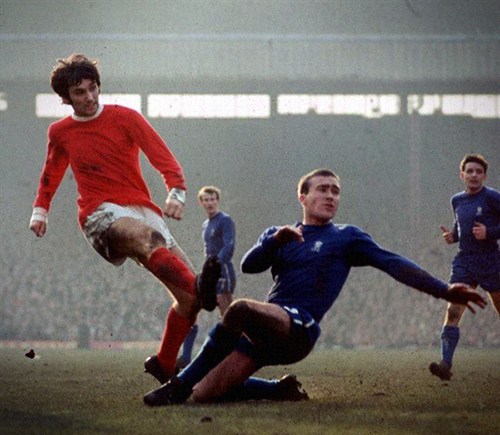
Ronaldo     George Best

1. Cristiano Ronaldo – No thank you            2. George Best – Dignified

A player should not be allowed to leave the pitch in celebration of a goal. Climbing on to fences in front of supporters can be inflammatory and is not necessary. Similarly, other gesture to opposing fans, such as cupping an ear should be banned. For such offences, a yellow card would be issued. If a player removes their shirt in the act of a goal celebration (pure narcissism) a red, not yellow card should be issued. It’s against the rules and if a firm stand is taken, the practice would cease immediately

  1. DISCIPLINE – CUMULATIVE CARDS

Ref
Another slap over the wrist

As it stands in Australia’s A League, a player has to receive 5 yellow cards before a paltry 1 match suspension is handed out. Excessive fouls and the resultant stoppages have a major impact on the flow of the game and if the cumulative card threshold for a suspension was reduced to three, a substantial number of fouls and therefore stoppages in play will be wiped out. Granted there will be occasions where players will mistime a tackle but if a player “mistimes” his tackle on 4 or 5 occasions, questions must be asked of his footballing ability           

  1. VIDEO ASSISTANT REVIEW (“VAR”)

ABOLISHED !!

VAR Half Time
VAR and assistant switch channels during a dull period of play

These may be radical suggestions and applying these changes would have some drastic early consequences for offending players and the game. I believe however, that if these changes could be implemented, we would be on the road to putting the beauty back into the “beautiful”game

“There are those that look at things the way they are and say why? I dream of things that never were and say why not?” – Robert Francis Kennedy

David Jack  ©2018


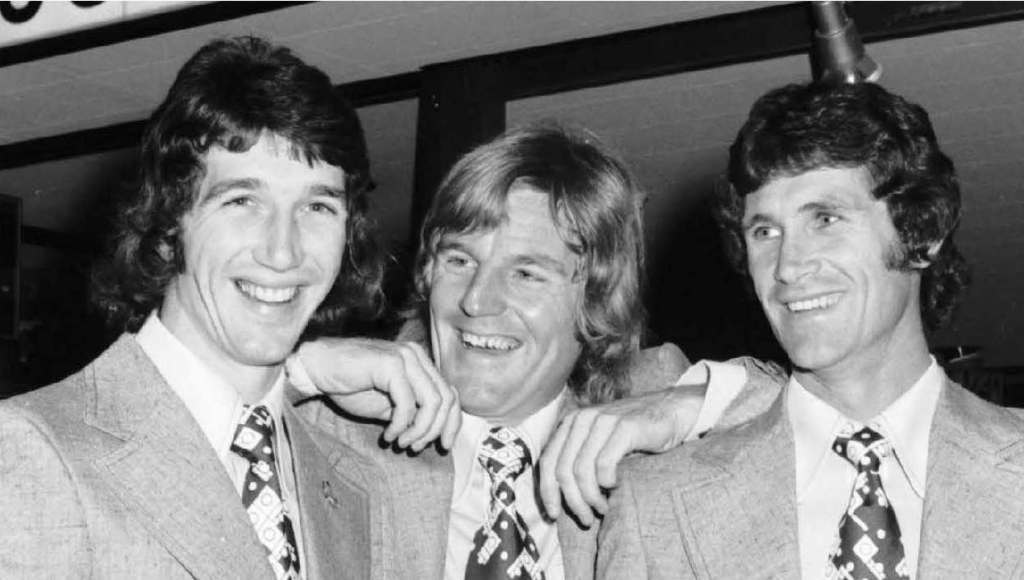
MAY 1968 : SOUTH COAST UNITED 1 MANLY WARRINGAH UNITED 2

South Coast United Big 3.jpg Cropped
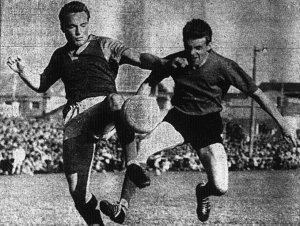
Socceroos Adrian Alston (left) & Max Tolson (right) on the losing side at Woonona Oval May 1968

I have been watching club and international football in Australia since 1967 and if asked to nominate the most memorable match I have witnessed in over 50 years, there are many contenders. Some might expect the 2005 Australia v Uruguay World Cup play off at Homebush Stadium or others might plump for the classic 2013 A League Grand Final, snatched by Brisbane Roar from Central Coast Mariners in quite dramatic circumstances. Then of course there was the tragic, yet so memorable World Cup loss to Iran in Melbourne in November 1997.

Going further back, in October 1979, I saw the glitz and glamour of the New York Cosmos take on Australia at that most unlikely of football grounds, the Sydney Showground. The Showground was overflowing that night (I watched the second half from the touchline), playing host to football luminaries, Franz Beckenbauer, Carlos Alberto and Johann Neeskens. Also at the same venue in 1967, I twice saw reigning English First Division champions Manchester United, with George Best, Denis Law and Bobby Charlton in their prime, take on a team of local part timers.

All great occasions, but the game that I still remember more fondly than any, was a NSW Soccer Federation match that took place at Woonona Oval on 26th May 1968. I was a 14 year old Manly Warringah junior representative player and on that day I travelled with a single coachload of Manly fans to watch our team, Manly Warringah United take on South Coast United, at what was South Coast United’s “fortress,” decades before this term became popular with football fans.

Woonona Ackerley Cropped
Woonona Oval 1960’s South Coast United v Apia Leichhardt

South Coast United played their home games at Woonona Oval (it  was not in fact an oval), a quaint but unfashionable venue north of  Wollongong. This compact, rectangular ground was ideal for  watching football. It was also conducive to playing good football,  being consistently well grassed. The sole miniature grandstand at  the southern end of the ground, also housed the dressing rooms.  When the local fans were at their most raucous, having to trundle  through the South Coast faithful onto and off the pitch was a  daunting experience

On that bleak May afternoon in 1968, about 2,500 home fans and at best, 60 Manly fans had packed into Woonona Oval, to witness the inevitable home team victory. Manly, promoted that season from the second division, had not yet won a match and were firmly rooted at the bottom of the NSW Federation 1st Division table. By that stage of the season, Manly had endured a succession of debilitating defeats, punctuated by the very occasional draw. The threat of relegation always added spice to their games and it was no wonder that the team approached this match at Woonona, with more than a little trepidation.

South Coast United, boasted a large contingent of British players, many recruited by Jimmy Kelly, their player – coach and former English professional. That year they also had a tall, strong young striker in Max Tolson and an equally tall 19 year old Lancashire lad, Adrian Alston, both of whom later were to become members of the 1974 Australian World Cup squad.

The boisterous local crowd were rocked in the 37th minute when Manly took a surprise lead. The home side failed to clear the ball in their penalty area and Manly’s inside left, Archie Harris pounced. Harris a slightly built Scotsman with a skilful touch, controlled the ball and deftly slotted it past George Ramage in the South Coast United goal.

Before the travelling rugged up Manly supporters could toast on their cups of tea, the home side struck back immediately. Ron McGarry, yet another Englishman finally managed to beat Manly goalkeeper Jan Tuinman giving the beseiged custodian no chance with his shot from close range. At 1-1 our coachload of Manly supporters shrugged and consoled ourselves in the knowledge that a return to the second division might herald a return to a victory or two.

Manly’s Hungarian born coach, Denis Adrigan played a counter attacking style of football, not through desire but because it was the only option when his team was under pressure for 90 minutes of every game. That they didn’t suffer more substantial losses in the 1968 season was in no small part due to the brilliant Jan Tuinman, whose performances that campaign saw him remain in the top division with Yugal Prague and Pan Hellenic, following the inevitable relegation of his Manly colleagues.

NSW SOCCER FEDERATION 1968 NEW
            The sorry tale of Manly Warringah United’s 1968 season

The game ebbed away and the travelling support would have been extremely happy with a 1-1 draw at the Woonona footballing graveyard. Fifteen minutes from full time, Manly left back and motor cycle enthusiast Gary Brooks, of the handsome visage and Elvis Presley slicked back jet black hair, played a long ball deep into the South Coast United half. Manly’s speedy diminutive left winger Colin Waller, pounced on the ball outpacing the home defence. Waller, who was a more than handy golfer, from the edge of the penatly area sunk his eighteen metre putt assuredly into the corner of substitute goalkeeper Radburn’s net. Manly were up 2-1. Do miracles happen ?

Manly First Grade 1983.jpg Halved
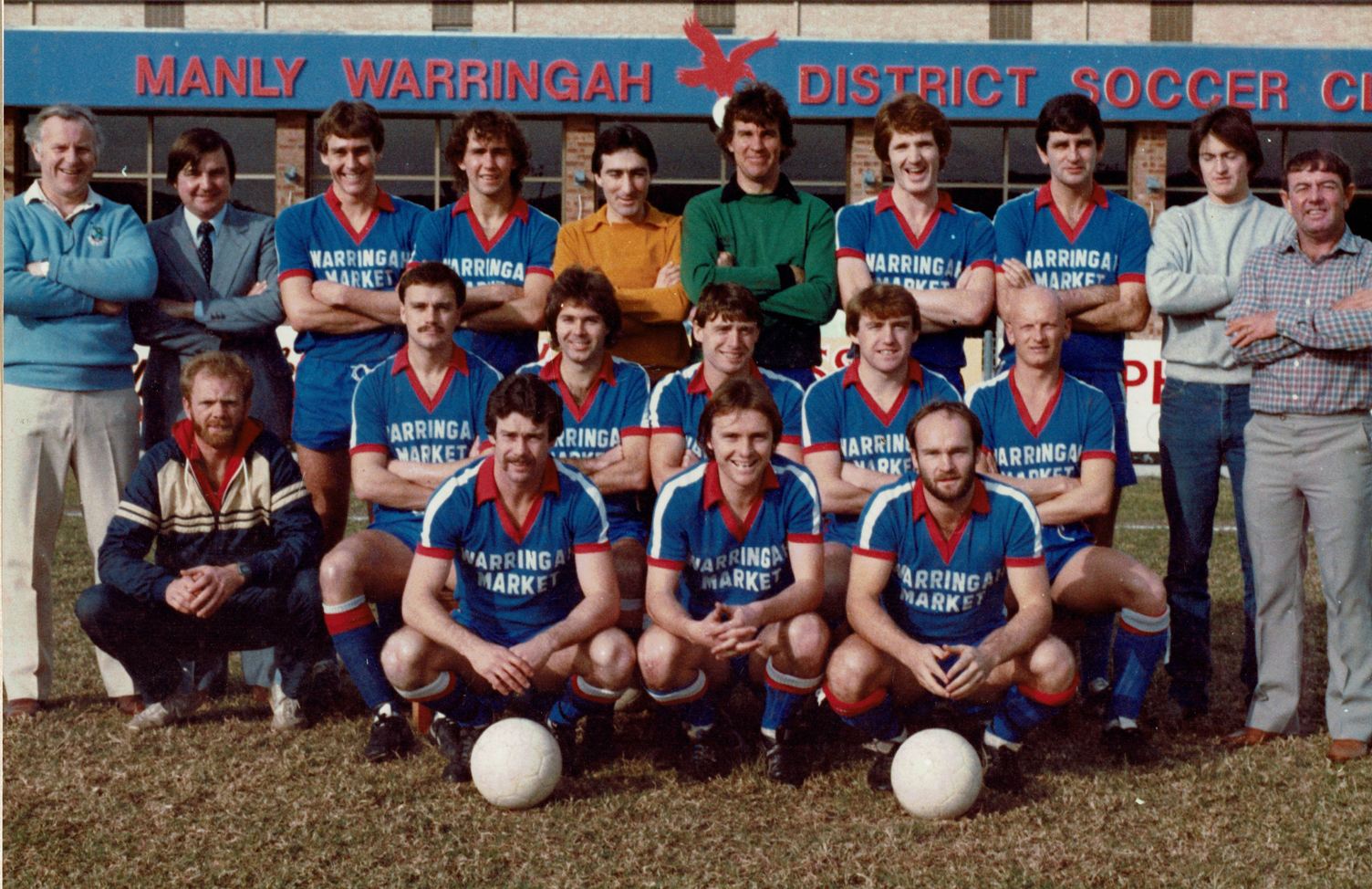
Two of Manly 1968 Heroes Jimmy Hughes (far left) & Hughie Hendry (far right) pictured in 1983

As full time approached, South Coast continued to batter the Manly defence but some incredible goalkeeping by Tuinman enabled Manly to hang on for what was was to be their only victory of that 1968 season.

Tuinman & McGrath.jpg 30%
Manly goalkeeper Jan Tuinman

Considering an almost identical South Coast United team won the NSW Federation premiership the following season, Manly’s victory at Woonona that afternoon, was even more remarkable. The two and a half hour coach trip home was euphoric and the celebrations resembled those of a team that had just been crowned champions.

Now readers might say that’s a nice little football story but what is the point ? The point is that although our top local club football leagues, the Hyundai A League and W League and the various NPL competitions may not be of the standard of an English Premier League, a Bundesliga or La Liga, irrespective of the standard of play, Australian club football can be entertaining, exciting and most enjoyable. I look no further than Woonona Oval, May 26th 1968.

David Jack  © 2020
1966 – ENGLAND’S WORLD CUP

Bobby Moore and the England team celebrate their famous 1966 World Cup win

Too many years have passed since 1966 but for football fans in England, that year came to a climax on Saturday 30th July, the day on which England won the World Cup.  As a young boy living in England at that time, that World Cup held special memories for me, memories that will remain with me forever.

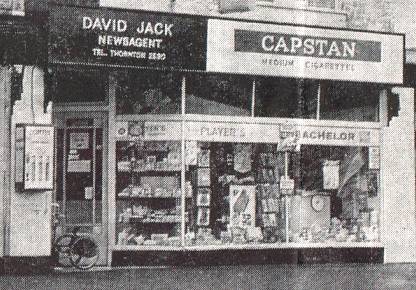
At the time I was a football mad 12 year old Manchester United supporter. In late 1965 my father, then a football writer with the News of the World, inexplicably decided we should move from our comfortable home, 20 minutes drive from Old Trafford to a small town 40 miles away called Thornton Cleveleys.  Dad chose to purchase a newsagency in this little village which was certainly not a centre of high commerce in Lancashire. The rationale for the unexpected newsagency venture was never shared with our mum Rose or the 7 children. We can only assume that Dad thought that he would enjoy getting up at 4.30 a.m. every morning, work 14 hour days and deliver newspapers in the wind, rain and snow. This business venture would not be provident for me on World Cup Final day 30th July 1966

Football was in my father’s blood and despite the business purchase, he would continue to work as a freelance football writer in conjunction with selling newspapers and 20 packs of Woodbine cigarettes. Of course Dad was in the press box at Wembley Stadium on that special day in July 1966 to watch the historic match. It was a match of such footballing significance that England had never before contested nor has since. On that day, others would be left to manage the demands of the Thornton Cleveleys newsagency.

By early 1966, I was coming to grips with our move from Manchester, accepting that my Old Trafford visits would be more infrequent in the future.  Our new home did however have some advantages for a United fan, as manager Matt (later to be Sir Matt) Busby frequently used to take his squad to nearby Blackpool, to prepare for games. The team would stay at the Norbreck Hotel on the beachfront and my friends and I could sit and watch United training on the lawns of the hotel. Soon to be England World Cup heroes, Bobby Charlton and Nobby Stiles, would be playing 5 a side games only metres from where we would be sitting and interaction between players and onlookers was quite common.

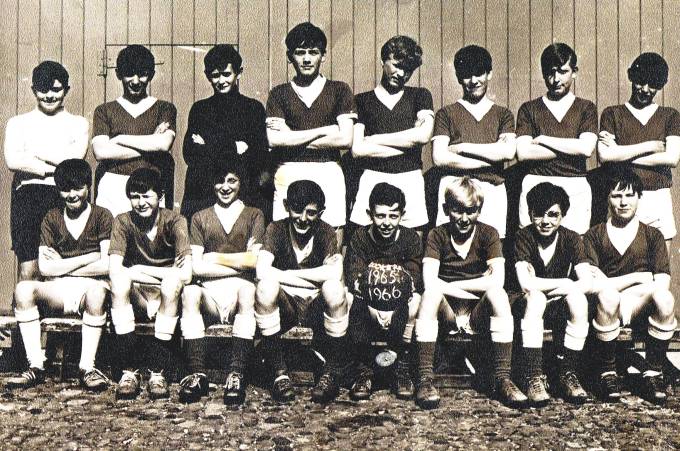
Preston Catholic College 1965-66
That’s me, 12 years old, far left, front row Preston Catholic College 1966

The 1966 World Cup drama unfolded before a ball had been kicked with the cup, then known as the Jules Rimet trophy being stolen from it’s temporary home in London. It was later found wrapped in newspaper in a London suburban garden, by a collie dog called Pickles. The portents were there for what was not going to be an ordinary World Cup competition.

For English football fans, the cup opened with much expectation, possibly too much as England were kept scoreless against Uruguay. For a Manchester United fan however, it was inevitable that Bobby Charlton would light the fuse on England’s road to World Cup glory. In England’s second group match against Mexico, a typical Charlton burst from inside his own half ended with a 25 metre rocket into the Mexican net. It was a wonderful goal and despite an unimpressive win over France in their final group match, England qualified for the quarter finals.

Bobby Charlton Scores V Mexico 1966
Bobby Charlton’s piledriver opens the scoring against Mexico 

The Brazilians came to England as favourites. My father who in Sweden and Chile had seen Brazil’s previous World Cup victories, rated Pele, Garrincha and company very highly. Unfortunately aside from a magnificent Garrincha free kick scored against Bulgaria, the Samba Boys struggled. Pele particularly, suffered brutal treatment from the Bulgarians and Portugese and as in Chile in 1962 the footballing superstar was on the periphery for the tournament.

I attended one match in the tournament, a group game at Old Trafford. Eusebio da Silva Ferreira the greatest player to have come out of the African continent, scored for Portugal in a  3-0 victory over Bulgaria. That Lancashire based group witnessed one of the best ever world cup matches when Hungary beat Brazil 3-1 to knock out the favourites. I clearly remember watching on black and white television, the Hungarian’s second goal – a stunning volley by Janos Farkas after Florein Albert and Ferenc Bene combined beautifully. This will go down as one of world cup’s greatest ever goals.

Janos Farkas celebrates after scoring his wonder goal against Brazil

My World Cup memories include a slight North Korean player named Pak Doo Ik scoring the only goal of the game at Middlesborough to send the Italians packing. Italy, boasting the legendary names Mazzola, Rivera and Facchetti were outplayed by the marauding North Koreans who could have scored three that day. The English Press, at that time not big fans of Italian football, were only too happy to report on the tomato pelting The Azzurri faced upon their return to Italy.

The West Germans and the Argentinians cruised through their groups, the Germans inspired by Franz Beckenbauer, yet to be crowned Der Kaiser. When the Argentine captain Antonio Rattin was sent off (somewhat harshly I can say 47 years later ) in the quarter final against England at Wembley, relations between the two nations sunk to depths only surpassed by the Falklands War, many years later. England manager Alf Ramsey branded the Argentine players “animals” and Ramsey physically intervened to stop players exchanging shirts at full time.

Portugal’s amazing 5-3 quarter final victory over North Korea and four Eusebio goals meant that England would have to face the in form Portugese in the semi final. There was minor controversy when the game was conveniently (for England) switched from provincial Goodison Park to Wembley. England had played all their games at Wembley but if this move had upset the Portugese, which certainly it had, the English press weren’t reporting it. Once again Manchester United’s Bobby Charlton was the matchwinner scoring both goals in the semi final as England beat Portugal by the odd goal in three. We all looked forward to Saturday 30th July 1966 and the final against West Germany.

England Line Up
England & West Germany line up for the 1966 World Cup Final

I had been brought up on boy’s magazines, The Victor and The Rover, where invariably the cover story centred around some act of heroism by a British soldier almost always against the Germans in World Wars 1 or 2.  Being an avid and gullible reader, I had the utmost confidence that, as in the comic books, England would beat West Germany to win the World Cup final just because we were the “good guys”. That the home country were to wear Manchester United red in the final was one good reason to expect an England win.

In July 1966 The Kinks were on top of the pop charts with Sunny Afternoon but on the Saturday morning of the match, there had been drenching rain at the Empire Stadium in London. By midday however the rain had cleared for what all England hoped would be a very sunny afternoon.

Wolfgang Weber scores West Germany’s last minute equaliser – so near yet so far for England ?

Helmut Haller, a dynamic blonde striker opened the scoring for the Germans after 12 minutes. England equalized soon after through Geoff Hurst, the find of the tournament and when his West Ham colleague Martin Peters put England ahead in the 78th minute, all of England sensed our time had come for football glory. The 90th minute and West Germany are awarded a free kick on the edge of the penalty box. When the ball is deflected more than once and ends up within the outstretched foot of Wolfgang Weber, we prayed for a miracle but goalkeeper Gordon Banks was beaten.  It was 2-2 and extra time beckoned.

When Weber slid home this agonising, 90th minute equalizer at Wembley Stadium on 30th July 1966, forcing the World Cup Final to extra time, not one of the seven regular paper boys turned up to the Thornton Cleveley’s newsagency to deliver the Saturday afternoon papers. Our mother Rose said to big sister Theresa and I “the papers must go out  – off you go”. Despite my pleas, I missed that historic half an hour of football.

I’m on my Raleigh pushbike and delivering newspapers like a paper boy possessed. Ninety eight minutes into the match and the redheaded Alan Ball makes another exhaustive run down the right touchline and cuts the ball back. Geoff Hurst kills the ball and crashes a shot against the underside of the crossbar. Surely the ball was over the line. “no” say the Germans. Swiss referee Gottfried Dienst consults with his Russian linesman and without hesitation, the linesman nods in the affirmative and the goal is awarded.  It’s 3-2 and the German players are distraught – England euphoric. To this day the Germans won’t accept that this third goal was legitimate

Geoff Hurst’s controversial third goal for England – was it over the line ?

West Germany continues to press for an equalizer then Bobby Moore releases Geoff Hurst  into the West German half. Alan Ball, socks around his ankles, is away to Hurst’s right but Hurst ploughs ahead towards the West German penalty area. Spectators are already on the pitch when the BBC’s Kenneth Wolstenholme utters possibly the best known words in the history of football commentary “some people are on the pitch. They think it’s all over – it is now” as Geoff Hurst smashes the ball past the weary German goalkeeper, Hans Tilkowski.  Jubilation for England – utter despair for the courageous West German team.

England had won the World Cup, my parent’s customers got their newspapers and I got paid two shillings for the paper round. Even Pickles the collie dog had reason to be happy, being invited to the official England World Cup celebrations. Of course, I did eventually get to see that magical thirty minutes of extra time and have relived the tournament many times, courtesy of the wonderful documentary “Goal”

World Cup Win 1966
Bobby Charlton holds aloft the Jules Rimet World Cup trophy

As a music lover, I consider myself blessed to have been brought up in England in the swinging sixties but also as a football fan, I could have wished for nothing better than to witness the country of my birth, England win the World Cup in my homeland

David Jack

Copyright 2014

ALESSANDRO DEL PIERO”Il Pinturicchio”

THE TURF 16th November 2013

ADP’s DIVING PROBLEM

ADP[1]

by David Jack  :  November 16, 2013

Alessandro Del Piero has been a great footballer and would probably rate in the top 5 Italian players of all time. He continues to deliver in the A-League, not the playground of the most technical players but nevertheless a league that is fast and physical. In A-League History “Il Pinturicchio’s” goalscoring record is quite outstanding on a goals per game average.

There is however an aspect to his game that is dividing fans and football purists. Alessandro Del Piero is suffering from the “Humpty Dumpty” syndrome. He can’t stop falling down and all the king’s horses and men, in the form of Fox Sports and SBS Football commentators are not just turning a blind eye to this aspect of his game, but praising him effusively for this practice.

Whether he is impeded by an opponent, runs into one or kicks a player in the lower leg so that he can fall over (don’t laugh), Del Piero can achieve the same result – a free kick. In modern football apparently this practice, known as “drawing the foul” is called a skill. You will probably find it on page 13 of “Football in the 21st Century”.

Del Piero’s play acting is described by his coach, Frank Farina as the sign of a “genius”. Farina’s theory is glowingly supported by the TV football networks. Of course these stakeholders all have a vested interest (TV ratings) in putting the most positive spin on the antics of the Italian “genius”.

It’s clear that Del Piero no longer has the pace to go past players, so rather than lose the ball, he will collide with an opponent or in the case of the comical goal he scored against the Newcastle Jets earlier this year, the defenders will collide with themselves. Let’s stop this façade. A player falling over at the slightest touch is not a skill to be lauded or the sign of a genius. It’s gamesmanship to be kind, cheating to be blunt.

One concern with Del Piero and his Humpty Dumpty tactics is that young Australian players are going to imitate Del Piero and attempt to “draw the foul”. (I really dislike this phrase) The other important concern is that the number of “fouls” committed on Del Piero has a detrimental effect on the match as a spectacle. I love to watch a good football match with flowing moves and attackers using their skills to beat defenders. Where there are maybe 40 free kicks in a game however the match becomes much less enjoyable.

I think back to the days of Garrincha, Pele, Stanley Matthews, Johan Cryuff and George Best, all wonderful dribblers of the ball. These truly great players would never have let an opponent bring them down, if at all possible but would delight in the many ways in which they could go past their opponents and in the case of Best, often beat the same player twice.

The Del Piero “brand” itself guarantees that 90% of his tumbles are rewarded with a free kick primarily because he is Alessandro Del Piero. Referees have double standards and should treat Del Piero exactly as they would other players. Jeronimo Neumann from Adelaide United, going to ground in similar situations, would accumulate many cards but Del Piero is apparently immune to censure. Del Piero is not the only guilty player but is the most prolific in earning free kicks. There are many A-League players, including Thomas Broich and Matt Simon who also come to mind for exaggerating the extent of the tackle. I do not condone their behaviour either.

The A-League undoubtedly needs players of the calibre of Alessandro Del Piero – football superstars who can generate crowds and help grow the game in Australia. What Australian football doesn’t need is the boring spectacle of a game stopping every 90 seconds because Humpty Dumpty has fallen off his wall again.

Copyright 2013

CAN WE EVER WIN THE WORLD CUP ?

FIFA World Cup – Football’s Holy Grail

By nature I am a very upbeat, positive person – the eternal optimist – so it goes against the grain for me to state that Australia will never win the World Cup. It is possible that FFA boss David Gallop could be right in predicting that eventually our brand of football will become the national game, but to win a World Cup is beyond all imagination.

I say this because Australia does not have a football culture, a pre requisite for winning the premier international football tournament. We have thousands of very talented boys and girls who love their football for 5 or 6 months a year but for most, that’s where it stops. I know that there are organised Futsal and 5 A Side competitions in the off season but participation rates are a fraction of those in the winter season. With a great climate and so many alternative pastimes (not least FIFA 2015), young Australian footballers have other distractions. As such they are not normally found honing their soccer skills in the warmer months. Until large numbers of kids voluntarily go down to the local park every afternoon to play with their friends, this country won’t produce truly great players.

Football in Europe and South America engulfs the lives of millions of people. Many people in South American nations have long endured great poverty and the only relief for most was, and still is, a football. In fact many kids did not even have a football but like Pele, made do with a grapefruit or a sock stuffed with newspapers and tied with string. Football became ingrained in the lives of South Americans and it was from their impoverished environment that many wonderful South American footballers emerged. Today the poorer nations, notably in Africa, are producing exceptional footballers. Like Pele, the first and greatest ever African footballer Eusebio, learned to play with an improvised football – newspapers wrapped up into a ball. Life expectations in poor African communities are very minimal but football can provide a means for young Africans to achieve status and financial security. Football is now the primary sporting recreation of most African nations and has become part of African culture. It is quite possible that the World Cup winner could be an African nation in the not too distant future.

imagesCAA614NM
The Black Pearl & The Black Panther – Pele & Eusebio

Though my family was not poor, I was the product of a “football culture.” As a boy in England, my life revolved around football. My grandfather captained England and is acknowledged as one of that country’s all time greats. My father was a football writer for 35 years and naturally I fell in love with the game very early in life. I grew up watching the best players in the U.K. and occasionally those of other nations and I tried to imitate them whenever I could find time. I would play in the driving rain and the snow and it was this devotion that consumed me. I was always in trouble because of football, whether coming home from school late with another pair of shoes destroyed, arriving after dark from playing at the local park or covered in mud from pretending I was a goalkeeper. I was obsessed by football to such an extent that we used to play football in the guard’s compartment of the train on the way to school. I loved football and though my career may not have panned out as it could have, living in a football environment was a major factor in my football development.

I have lived in Australia for 47 years and although we have produced some very good players, to be fair there have been very few exceptional ones. Our Australian kids are coached from the age of 5 & 6 but no amount of coaching is going to produce a Pele, Messi, Maradonna or Best. We have numerous private coaching academies and district representative coaching organisations around the country. You can write your coaching curricula and playing systems until the letters and numbers fade on your keyboard but no amount of textbook coaching is going to enable young Aussie players to embrace the spirit of the game, so important for producing outstanding players. If Australian parents were unable to take their children to training and games, would their offspring be prepared to travel regularly on public transport to play their football? I don’t believe that they would but I am sure that their counterparts in Africa and South America would find a way to get to their football match. It comes back to having a real love of the game, being part of a football culture. Unless the neighbours to the right of you and to the left of you are football fanatics and the bus driver asks you for the Sydney FC result, the football vibe will never become part of this nation’s DNA.

Barefoot youngsters in Ecuador hone their footballing skills

Can we create a football culture? Not the least of our obstacles is our geographical isolation. This and financial limitations, makes it extremely difficult to attract the best European and South American stars at the peak of their careers. Players who could inspire our young players, and prove real drawcards for the footballing public. Australia can provide short term financial gain for a few select marquee players, Alessandro Del Piero immediately comes to mind but with all due respect, the Del Piero who wore the Sydney FC shirt, was well past his peak. If he was to have come here 15 years earlier, his impact on Australian football would have been immense.

images
Alessandro Del Piero – a superb player but now past his prime

The established media is another barrier to developing a football culture or mindset. Though Rugby League registrations are at an embarrassingly low level and Rugby Union is not growing at youth level, the sporting media is still reluctant to give football enough coverage to make Australians more conscious of the round ball game. Though the game in this country has come a long way since the days of being viewed solely as a game played by immigrants, our brand of football still needs to be accepted by the wider community to become a dominant force in the Australian sporting environment.The Hyundai A League is currently at a level that will satisfy diehard Aussie football fans but not the unconverted. There has always been a core group of supporters for Australian club soccer but the A League needs a decided lift in the ability of the players and the consequent improvement in the standard of play to be able to poach fans from other football codes. Once this happens we are on our way to having a football culture. The popularity of soccer in Australia could then eclipse that of the other football codes, save AFL in Melbourne. This may in turn lay the seeds to create a football culture in Australia and a possible World Cup win. In the meantime, I will not be ordering my “Australia – World Cup Winners” tee shirt just yet.

David Jack

Copyright 2014

STAR GAZING OR STARS GRAZING ?

A BRIEF HISTORY OF GUEST AND MARQUEE  PLAYERS IN AUSTRALIAN FOOTBALL

David Villa
Melbourne City prize recruit David Villa

The signing of Spanish star David Villa by Melbourne City for an alleged 10 game stint prior to the 2014-15 A League season was thought to be the icing on a cakeful of guest / marquee players who have turned out for Australian clubs over more than fifty years. Aussie signings didn’t appear to come much better than Villa. A then current Spanish international and World Cup squad member, Villa was still scoring goals for the reigning world champions. How could a player of Villa’s quality be anything but a huge success, a massive fillip for the local game ? Well Villa’s Melbourne City stint was cut very short and with such a name player failing to produce the goods, it’s worth looking back on our football history to assess whether the presence of overseas “stars” has produced a positive return for the local game ?

I first appreciated the value and pulling power of an overseas guest player in the winter of 1968 at L. M. Graham Reserve Manly, a suburban football ground that now doubles as a dog park. On that Sunday afternoon Takis Loukanidis, capped 26 times for Greece came to Graham’s Reserve. I was a 14 year old youth player with Manly and our senior team were playing Pan Hellenic, one of the big drawcards in the old NSW Federation Division One.

Arriving late in the week, Loukanidis did not play that Sunday afternoon but that did not stop 4,500 fans turning up in the hope of catching a glimpse of the Greek star. At half time Loukanidis took a stroll around the pitch perimeter before entering the public toilet. I clearly remember 300 Hellenic fans following Loukanidis around the ground and parking themselves outside that very unfashionable men’s toilet. The presence of Loukanidis doubled the probable crowd figure that day and one benefit of a guest player was immediately evident.

Takis
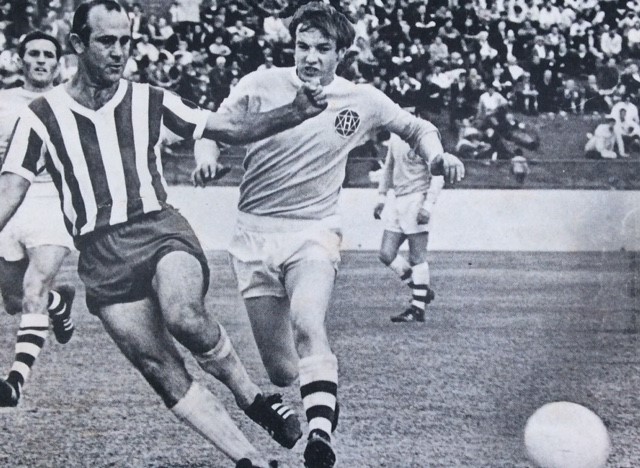
Takis Loukanidis challenged by Hakoah’s Chris Spilarewicz at the Sydney Sportsground

At 30 years of age, this was Loukanidis’s first stint in Sydney with Pan Hellenic, the best supported, but perennial underachievers in the NSW Federation. Hellenic came second that season, their highest position during the Pan Hellenic (pre Sydney Olympic) years. Loukanidis was an inspiration to the team and at 30 he was still sharp. Loukanidis’s magnetism swelled the Hellenic crowds and the regular chant of “Takis Takis” reverberating around their Wentworth Park home ground almost carried them to a first ever premiership. Loukanidis returned to Sydney the following year as player coach, but a year older his impact was less profound and Hellenic struggled for much of the season. As a guest player Loukanidis was a success, helping to improve the performance of Pan Hellenic and boost their gate receipts.

Takis Loukanidis is only one of dozens of notable overseas players who have had played for Australian clubs with varying degrees of success. The first foreign players to have an impact on the local game and possibly the greatest from a playing perspective, were Leo Baumgartner, Walter Tamandl and Karl Jaros. Having toured Australia in 1957 with the crack Austrian club, F K Vienna, Baumgartner and Tamandl fell in love with the Australian beaches, the climate and the way of life and were not swayed solely by the size of the promised pay packet.

With Baumgartner, Tamandl, Jaros and another Austrian Herbert Ninaus, (Sydney based) Prague swept all before them in the NSW Federation First Division in 1959, State Federations being the highest level of competition at that time. These players all in their late twenties and at the peak of the ability, helped to grow the crowds and raise the profile of Australian soccer. The overall standard of football also improved as other clubs were compelled to recruit overseas to match the performance of the glamour club, Prague. This was a golden era for Australian football and the four Austrians and the well supported “migrant” clubs were largely responsible for the good health of the sport.

Graham's Reserve Takis' Toilet
Graham’s Reserve Manly today and the toilet facilties used by Takis Loukanidis in 1968

Age does weary old footballers however and the aura of the Austrian stars and FC Sydney Prague dimmed in the mid sixties and  crowds suffered. It was at this time that BBC   Match of the Day started to screen in Australia and local football fans became infatuated with the British game. Over the next 10 years, a who’s who of British football appeared fleetingly for Australian clubs. Ray Clemence, Bobby Charlton, Francis Lee, Charlie George, Trevor Francis, Malcolm   Macdonald, Kevin  Keegan, Paul Mariner and Ian  Rush were just some who came here, principally for the purpose of earning a few bucks. Most of these played one or two games and did very little for the local game. Just about all were past their best.

Admittedly they drew a few more spectators through the turnstiles but when appearance money, accommodation and air fares were taken into account, the host club and Australian football saw little benefit for their financial outlay.

Charlie George & Susan
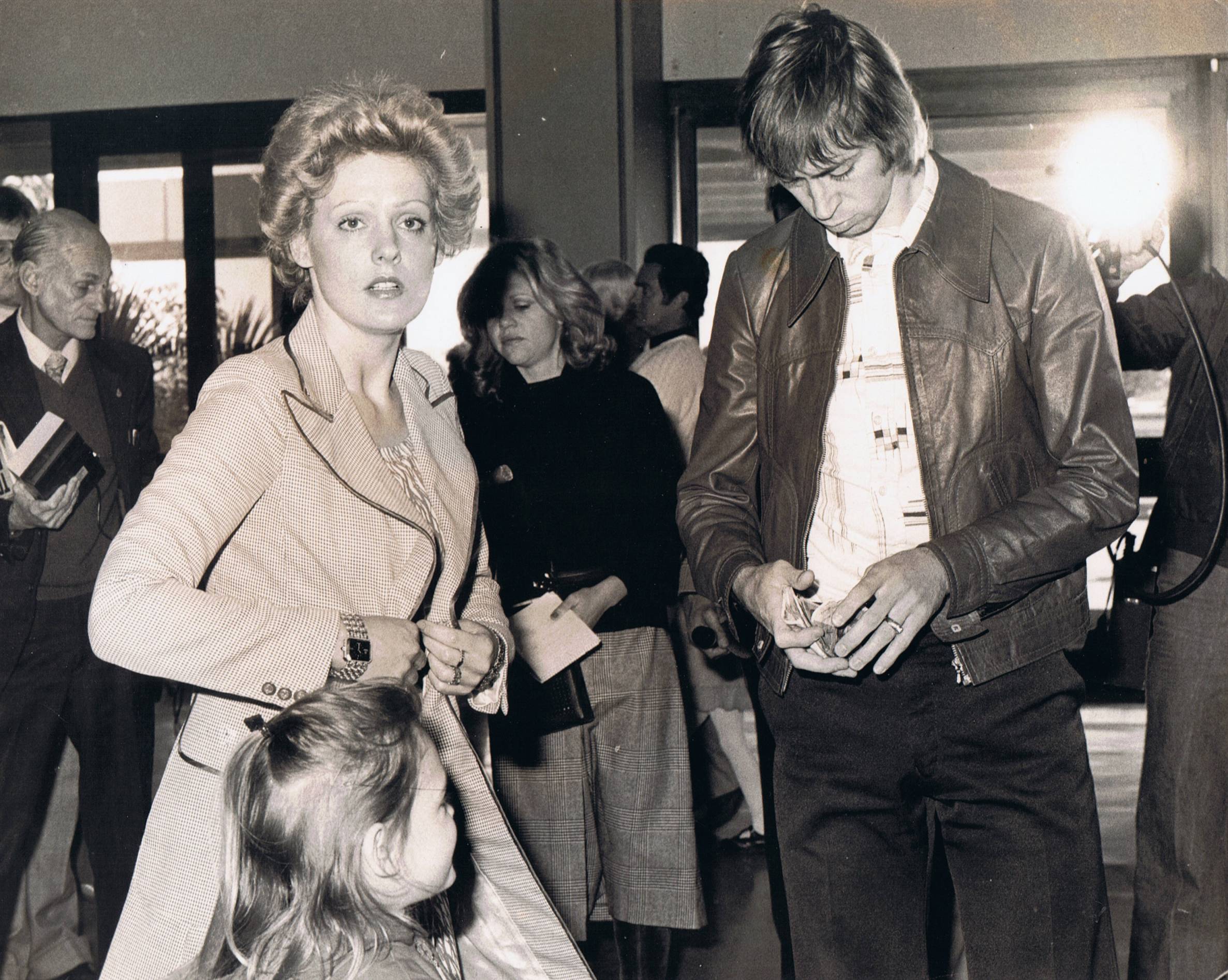
Charlie George leaving Sydney Airport after an NSL stint with St. George

Non British imports also arrived to show their wares. Former Italian stars, the then 36 year old Francesco Graziani (Apia Leichhardt) and 34 year old Nicola Berti (Northern Spirit) were largely ineffectual in the old National Soccer League. Likewise Argentine Osvaldo Ardiles at 33 played just one game for St. George in the NSL – what was the point ? Local clubs were always looking for that big pay day and on field success, but the impact of these former World Cup stars was minimal on both fronts.

In 1983, a 37 year old George Best, the greatest footballer to have played for an Australian club, made four appearances for Brisbane Lions. Best a former European Footballer of the Year who effectively had retired over 10 years earlier, was a shadow of the wonderful player who dominated British football for nearly a decade. Best increased the gate takings during his brief stay but his impact on the pitch was minimal and Brisbane Lions were none the better for his four outings. The primary purpose of Best’s visit down under was obvious when, on the same trip he turned out for Dee Why a second division NSW State League team against Manly for the sake of a $5,000 match fee. I played against Best that night and although the 2,000 odd spectators enjoyed what was an entertaining game, the presence of a once great footballer on a poorly lit Cromer Park Dee Why, left no legacy for Australian football.

AF48F4D2E9D24222A9117AD87A5FF3A9
The greatest footballer to have played for an Australian club

The inception of the Hyundai A League brought the “marquee” player – not just a short term guest player but a longer term proposition signed for a season or more. In 2005 the former Manchester United star Dwight Yorke was one of the first and still most successful of the marquee players. Not only did his presence with Sydney FC draw the crowds but his contribution on the field was a catalyst for the club taking out the inaugural A League competition. Yorke scored 7 goals for Sydney FC that season and was the ideal pin up boy for the new league.

Yorke was replaced at Sydney by the Brazilian Juninho. Early on Juninho lit up Aussie (now Allianz) Stadium but a malicious tackle by a Los Angeles Galaxy defender in a meaningless exhibition match, virtually ended his playing career with Sydney. Subsequently Sydney FC employed Nicky Carle, John Aloisi and Brett Emerton on the big money but none of them performed at a level befitting the salaries they were earning. Crowds were average and Sydney FC’s performances likewise.

Not too many clubs earned value for money with their marquee players. Marco Flores was an exception at Adelaide United but when the same club recruited the former Brazilian star Romario briefly in 2007, his almost comical quest to score his 1000th goal, overtook any other apparent reason for his inclusion in the Adelaide line up.

Romario’s fellow countryman, Mario Jardel was signed as the Newcastle Jets marquee in 2007. Jardel arrived with a big reputation but unfortunately an even bigger waistline. It was claimed that Jardel had been working very hard on his fitness prior to joining the Jets, however to see his midriff bursting the stripes of a Jets shirt gave lie to this. Eleven appearances, mostly off the bench with no goals was a sad return for a one time Brazilian international.

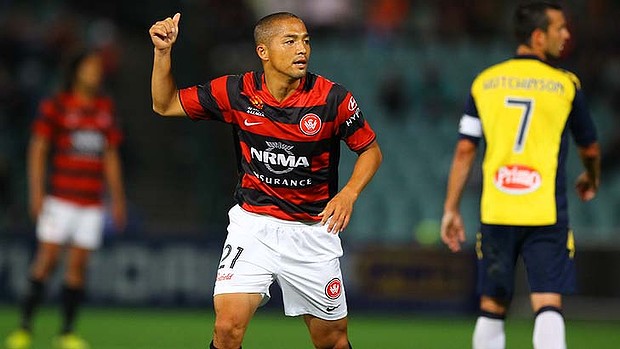
Shinji 2
Shinji Ono – a big hit with the Western Sydney Wanderers fans

Former Liverpool star Robbie Fowler was a qualified success in his spell with North Queensland Fury and Perth Glory but with the Fury disappearing from the A League and Perth Glory unconvincing after his departure, there was clearly no long term benefit for Australian football. Shinji Ono performed well for West Sydney Wanderers, Emile Heskey less so for Newcastle Jets. Both  players however were in their thirties and they would have been more influential had they arrived a couple of years earlier. Ono and Heskey do deserve credit for the manner in which they promoted their clubs and contributed to the image of the local game. William Gallas likewise at Perth Glory was a handy acquisition though old enough to play local over 35 football.

Harry Kewell, the long time darling of Australian football fans, less so football journalists, arrived back in Australia in August 2011 as Melbourne Victory’s marquee. Kewell returned to much fanfare and expectation but sadly for Kewell and local fans, injury and later family illness cut short his playing stint. When he turned his back on Victory after a truncated unprofitable stay, the journalistic knives were out again.

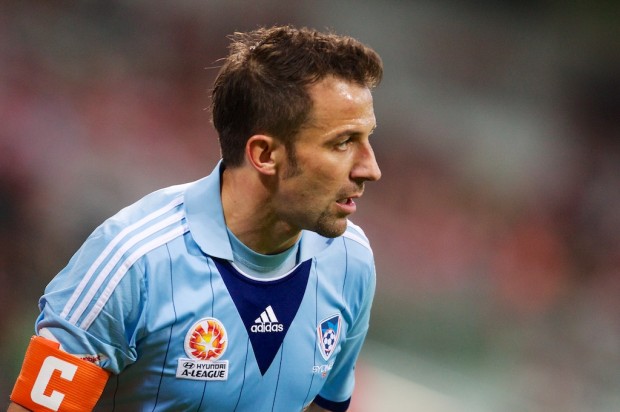
ADP
Alessandro Del Piero – The Marquis of Marquees

Alessandro Del Piero, the best credentialed of all A League marquees delivered on many fronts. Certainly in a his first season, sales of Sydney F.C. replica shirts boomed, crowds both home and away surged and the football world at large sat up and took notice of Australian football. Sydney F.C. fans fell in love with “Il Pinturicchio” and Del Piero fell in love with the harbour city. In his first season despite his 38 years, Del Piero showed why he had long been the sweetheart of Italian football. In ADP’s second year a series of niggly injuries, a number of poor team performances and grumblings on the terraces saw the aura of the former Juve superstar dim. Del Piero’s on field contribution became marginal and despite a couple of trademark goals and the occasional marvellous touch or pass, the “use by” date of Alessandro Del Piero was now there for all to see including a few fawning media commentators.

Mario Jardel
The none too slim Mario Jardel

While few could doubt that the Del Piero marquee project had been a success, that success was tempered by the massive cost to bring him to Sydney FC. The signing of Del Piero could also have been indirectly responsible for the downfall of coaches Ian Crook and then Frank Farina both of whom encountered difficulty in building a successful modern football team around an ageing superstar. Compared to his welcome in September 2012, the Italian star almost sneaked out the back door following a disappointing 2013-14 season finale. Del Piero’s sojourn to Australia however was instrumental in advertising our domestic competition to the world.

When looking for the prototype marquee player, you need look no further than Brisbane Roar’s Thomas Broich. If the success of a marquee player is measured by on field results, the former German Under 21 international is by far the best example we have seen. Arriving in Australia at the relatively young age of 29, the two time Johnny Warren Medal winner has been a superb player for Brisbane Roar. Primarily due to Broich, Brisbane Roar has been the most successful team in the history of the A League. Yes, Broich has been well paid but he has also paid his dues to Australian football.

Thomas Broich
Thomas Broich, the most influential import in the history of the A League

Is there a future for the marquee in Australian football ? Is it practical or prudent to pay a massive amount of money for one player who will often be on the wrong side of 30 ? Is the Hyundai A League a retirement village for once talented footballers or have overseas guest or marquee players still got something to offer the local game ? I believe that we should persist with the marquee concept but it is critical that clubs source the right type of player at the right price at the right age. It is imperative that the player can perform consistently at an exceptional level as well as having the “name” and the capacity to attract more patrons to our football grounds. Any more Mario Jardels would be an embarrassment to the Hyundai A League. If however, every club could unearth a Thomas Broich or fund an Alessandro Del Piero or a David Villa, crowds would surely grow, playing standards would lift and Australian club football would prosper.

David Jack         Copyright 2014

THE (“MLB”) AND HIS FATHER GO TO SCHOOL

Kieran Enjoys His Yoghurt
The lovely Kieran – butter wouldn’t melt in his mouth but ice cream would

One day the MLB and his father had to find an alternative way to get to school, due to a malfunctioning motor vehicle. The father being the wise man that he wasn’t, pinpointed the bus the night before on his surprisingly up to date timetable. The father told the MLB that the bus would pick the two of them up at Sir Thomas Mitchell Drive at 8.32 a.m. There was no doubt in the father’s mind about this Thomas being the pick up point.

Father and MLB stood twenty metres away from the bus stop to avoid the burning sun. The father stood in the shade of a withering bottlebrush and the MLB stood in the shade of his father, standing in the shade of the bottlebrush. When the bus had not appeared by 8.42 a.m. the Ruth, married to the man with a lawnmower welded to his arms, arrived. “Would you like a lift anywhere ?” she said. The father said “No but my wife would like one under her bottom“. After the little bit of banter, father and MLB got into the car. MLB legs, arms, school bag and recently polished Clarks shoes flailing wildly, climbed over the baby seat in the back of the car. Fortunately baby was not on board.

The Ruth said she was going to Forestville which was in the opposite direction, so father and MLB left her company at Forest Way in the hope of sponging another lift. The father approached a young teenage girl standing on the corner watching all the cars going by. “Is this a bus stop?” asked the father with the beads of sweat on his face obviously causing some consternation within the mind of the young girl. When she finally composed herself and looked down at the beautiful blonde boy, she realised that he could not be in the custody of a paedophile. “Yes” she replied.

Although it was a bus stop, the next bus that arrived did not stop at the stop but went around the corner. The father grabbed the bag of the MLB, to which the MLB was attached and hurried after the bus. The driver opened the door as the MLB searched in vain for his new bus pass. MLB was bitterly disappointed that after waiting so long for his pass, he would not get to use it. He was determined to ensure that his mother’s efforts to obtain his bus pass would not be in vain. Five minutes elapsed with the driver saying 43 times “don’t worry about it”. Finally MLB produced the document smothered in Cottees strawberry jam and squashed sandwich remains and held it proudly aloft.

The father saw the beautiful little one get on the bus, praying to Jesus, Mary and Joseph that the very patient bus driver would carry him safely to The Belrose Public School. The father was by now saturated in sweat and carried on his way to meet the $30 million dollar client. The beautiful little MLB arrived safely at school on time.

P.S. The father declared that this was the most humid day of all time and that the “MLB” (Miserable Little Bastard) was really not so.

To Kieran

With love 

Dad x